MercoPress. South Atlantic News Agency



Argentine Lower House discusses YPF bill; CFK should stamp it into law next week
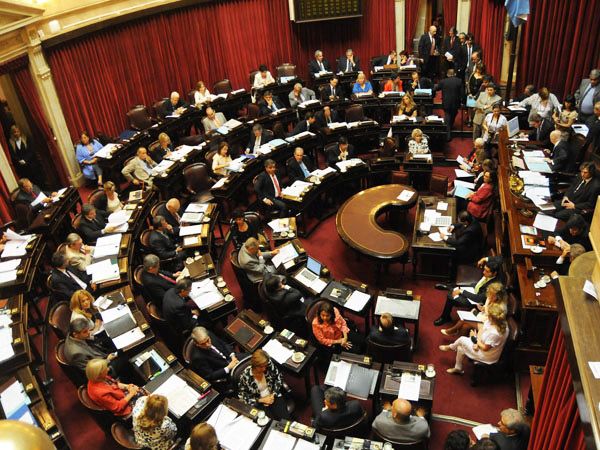 The Argentine Congress almost unanimously supported the seizure: next battle compensation discussions with Repsol
 Committees of Argentina’s Lower House of Congress began a plenary session on Thursday in order to clear the YPF expropriation bill for debate, which was approved early morning by the Senate.
The bill calls for the expropriation of 51% stake in YPF oil and gas giant, which are currently held by Spain-based energy company Repsol. The bill includes both the oil and gas branches. If cleared by lawmakers, it will be debated on May 2 and 3 next week. The bill will then be ready for Cristina Fernandez to stamp her signature.
The session began at mid morning led by the Energy and Fuel committee and the Budget and Treasury committee, and was taking place on the second floor of the Congress.
Lawmaker Agustín Rossi made it clear that with regard to the YPF expropriation bill, which was last night approved in the Senate, “the aim is for committees in the Lower House to clear the topic for debate today (Thursday), in order for it to debate and pass the bill into law over the course of two days next week.”
The Senate passed Repsol-YPF expropriation bill early Thursday after debating for more than 15 hours with 63 votes in favour, 3 against and 4 abstained from voting. With a total of 72 members at the Upper House, there were only two absents, while 70 senators could vote for the expropriation.
One of the absentees was Senator Carlos Menem, who as president (1989/1999) sold the Argentine flag oil and gas complex to Spain’s Repsol.
Prior to the debate the foreseen result was already clear, as the national government, with the additional support of the Radical Civic Union (UCR) and the Broad Progressive Front (FAP) had already secured 80% of the vote.
A survey published last weekend by local polling company Poliarquía showed 62 percent of respondents agreed with the expropriation, with 23% against it.
“The government's bill doesn't reflect a capricious or random decision,” ruling party senator Marcelo Fuentes said during the long-standing debate. “It's a logical result stemming from the need to reverse free-market thinking in energy policy.”
“Moments like this define whose side you are on,” said Kirchnerite Senator Daniel Filmus, who added: “Are you on the side of the national interest or are you are fighting the side of those who pray on our natural resources.”
Once the takeover becomes law, attention will turn to the compensation Argentina will pay Repsol for its majority stake in YPF. Officials have already said it will be far lower than the 9.3 billion dollars the company has requested.


Top Comments
Disclaimer & comment rules-

-

-

Read all commentsKFC addressing the congress members, “”Compadres, your country salutes you for showing the courage to vote this proposal into law. Your money will be in your Swiss Bank accounts within 24 hours. Yanqi dollars of course.”
Apr 26th, 2012 - 10:15 pm 0#1 Thats not the reason they're all bandwagoning behind this. The selfish reason the opposition may have for supporting this isn't bribes, but that they'd lose their seats nexts time if they were seen by the public to oppose this obviously beneficial national cause =)
Apr 27th, 2012 - 01:58 am 0Pray = to get down on your kness and hope - often with palms pressed together in front of your face.
Apr 27th, 2012 - 05:42 am 0Prey = to hunt like a predator.
Commenting for this story is now closed.
If you have a Facebook account, become a fan and comment on our Facebook Page!