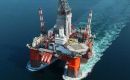
Britain forecasted to import 80% of gas consumed as early as 2016
Britain’s declining oil and gas industry may be a minnow on the world stage, 20th largest oil producer and 15th largest gas producer in 2010, but it is still remarkably important for jobs and the UK economy, reports Citywire.
Taxes on production accounted for a fifth of total corporation taxes received by the Exchequer in 2011/12, according to industry lobby group Oil & Gas UK. And the industry employed 440,000 people (in 2010) across the UK (with some 45% of these in Scotland).
The UK government forecasts that even amid vast investment into renewable energy sources, the UK will still need oil and gas for 70% of its energy needs in 2020. But even the lobbyists admit companies operating in the North Sea are ‘fighting hard to stand still’.
Oil and gas production from the UK sector of the North Sea peaked in 1999, with just 40% of oil and gas reserves left to be extracted. Declining North Sea gas production has made the UK a net importer, with supplies coming from an increasingly diverse line-up of countries.
According to some estimates, by 2016 as much as 80% of the gas consumed in the UK will come from imports.
Operating in the North Sea is an ‘uncertain business’ given the lower rates of return in smaller discoveries. WWF-UK, in its fury at a tax break for the industry announced in the March Budget, fairly described it as a ‘dying industry with no long-term prospects’.
It’s no surprise that the big companies, which can more easily extract oil and gas elsewhere, are withdrawing, while smaller ones seek survival through consolidation. This week BP announced it was selling two of its North Sea fields as part of the ‘active management’ of its portfolio there.
Still, as pointed out by a report from analysts at Edison last year, despite ‘significant challenges’, there is still ‘much to play for’ in the last push for British oil and gas.



14 comments Feed
Note: Comments do not reflect MercoPress’ opinions. They are the personal view of our users. We wish to keep this as open and unregulated as possible. However, rude or foul language, discriminative comments (based on ethnicity, religion, gender, nationality, sexual orientation or the sort), spamming or any other offensive or inappropriate behaviour will not be tolerated. Please report any inadequate posts to the editor. Comments must be in English. Thank you.
That's easy, if we all just eat more baked beans we'd have all the wind that we need. :0D
What do they teach these days? I could draw a map of the world at the age of 11-12 years - I even knew where the Falklands were...(but then we did have lots of the world map in colonial reds...) Much of that gone now, and Commonwealth instead. It may escape some peoples notice that the Commonwealth does have as much power to expel the UK, as the UK has to join others to do the same if required to others. But all on consensus. It couldn't survive otherwise.
So much for a colonial power (as some ignorant Argentinians- but not all- with their 1940's school primers, would try to make us believe.)
One mile high
Sails of 1/2 a mile
Anything is possible
www.presstv.ir/detail/248537.html
”One big gigantic windmill. One mile high. Sails of 1/2 a mile (dragging on the floor then? Anything (sensible) is possible.”
Regrettably windmills really are a dead lossand not at all 'sensible'. They NEVER pay back their manufacturing, siting and running costs EVER.
Their utility is approx 7%. Though the BBC always quote the installed capacity (which they know is never ever achied, not even close).
If the wind fails: no electricity. If the wind is too high: no electricity. If the operators fail to stop the blades before the wind rises about max operating speed there is an excellent chance of alternator burn-out and THAT is expensive to repair, if it is indeed possible to repair (the loss of control is usually a failure of the system computer although brake failure is very common).
Have a look on the web for 'windmill fires'.
www.youtube.com/watch?v=rkGXoE3RFZ8
www.youtube.com/watch?v=jCyQD83NLDc
A comphrehensive report on the various disasters that are windfarms is given here:
www.caithnesswindfarms.co.uk/accidents.pdf
As a professional engineer these devices are a disgrace to the engineers that designed, made and constructed them. They are nothing but a gigantic con, one every taxpayer to the UK is paying for in vastly increased electricity prices because of 'encouragements' paid out by the government.
OK, I will go and have a ly down in a darkened room now.
What about using the full potential of our rivers, and build,
[i think] turbines, to create power from the fast running streams,/rivers ,
Find a very long river, and install a few, along the route,
Im not an engineer,
But there must be a way of creating enough electricity to serve the British isles,
Away from some of these greedy companies
Just a thought
?
Yes, you can use rivers but the power is somewhat limited (due to minimal drops in height from one end to another), except for the Severn Barrage which was based on tidal flow. Do you remember that one?
It was done to death by environmentalists and the cowardice of the politicians.
But what do you expect from politicians that cannot even get it into their head that the UK WILL have severe shortfalls in energy because the time to act to avoid this disaster has already passed.
Prevarication over nuclear (the only real option in my judgement) and the EU emmission dictats that mean the vast majority of the coal burning stations will have to be closed very shortly IS going to put the UK into third world supply, just like Argentina.
Do you remember the 'power shedding' where everyone lost power for so many hours a day? Get ready it will be back with a vengeance.
There is no thing such as 'quick build' for the number of power stations needed to avoid this politically driven disaster. But when it starts the politicians then in power will just say 'not me gov'.
you can bet they wont suffer the outcome,
but as you say, they have been told, time and time again, but they dont listen , untill its to late,
thanks
Commenting for this story is now closed.
If you have a Facebook account, become a fan and comment on our Facebook Page!