MercoPress. South Atlantic News Agency



Patagonian Tragedy to Be Remembered at London’s Royal Albert Hall
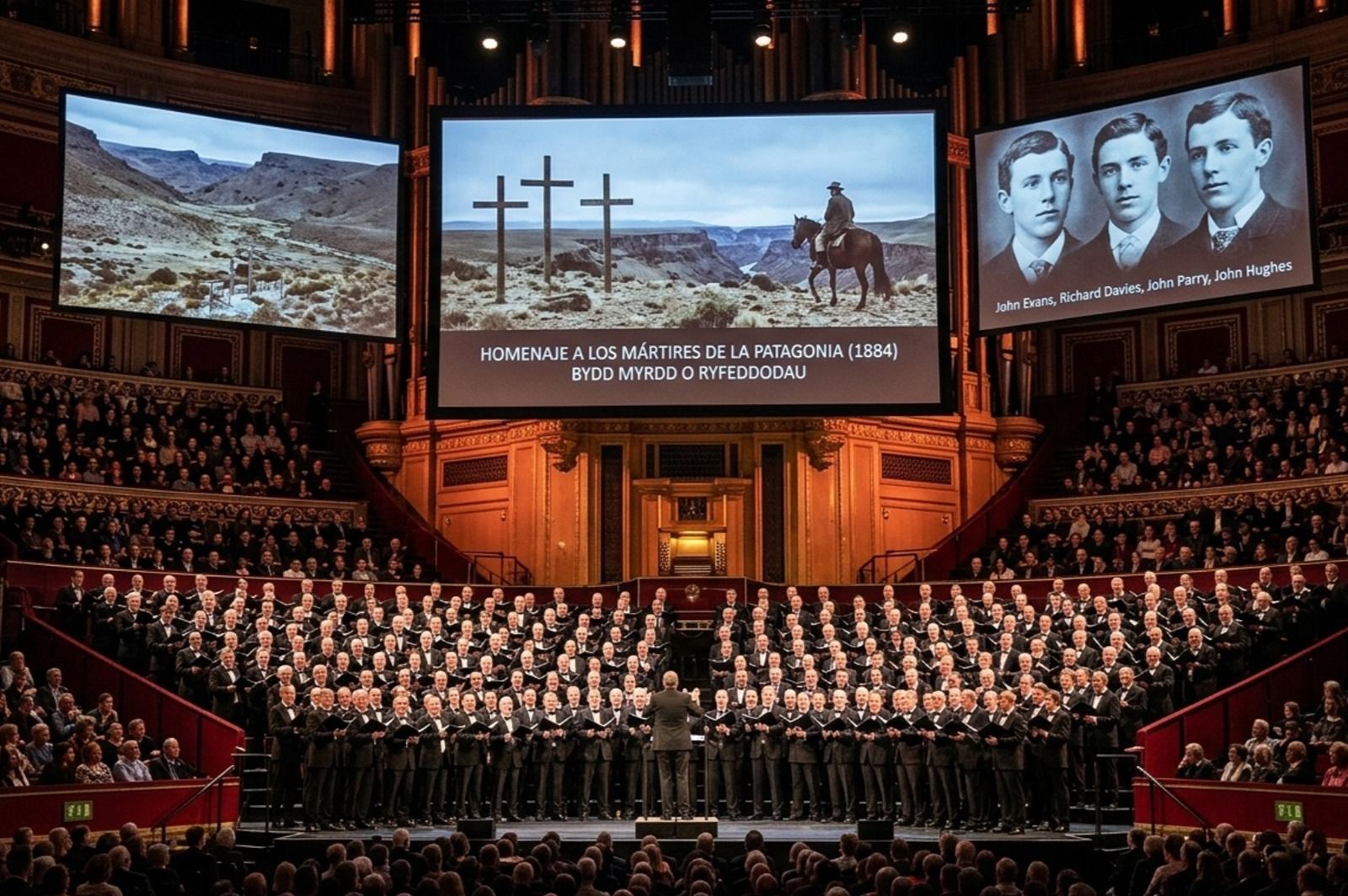 The project began when acclaimed Welsh composer Robat Arwyn visited Patagonia and met local historian Jeremy Wood in Esquel
 A little-known but deeply poignant chapter of Patagonian history will be brought to life this June at one of the world’s most prestigious venues, London’s Royal Albert Hall.
The story dates back to 1884, during General Julio Argentino Roca’s “Conquest of the Desert,” a turbulent period in Argentina’s history. At the time, members of the Welsh settler community in Patagonia were venturing into the vast, largely unexplored interior of what is now Chubut Province in search of gold.
Among them were four young men — John Evans, Richard Davies, John Parry and John Hughes — who set out from Gaiman in October 1883. After months of exploration, including a fruitless search for gold near Gualjaina, they began their journey back to the Atlantic coast.
Tragedy struck near present-day Las Plumas. The group was attacked by a troop of indigenous people, and three of the men were killed, falling from their horses. Only John Evans survived, reportedly saved by the remarkable actions of his horse, Malacara, which leapt into a ravine that their pursuers’ horses refused to cross.
Unaware of his companions’ fate, Evans returned to Rawson, then the territorial capital, where he organised a search party of more than 40 men. After travelling over 200 kilometres across the desert, they were led to the scene by circling vultures. There they discovered a harrowing sight: the bodies of the three men had been brutally mutilated and scattered.
The Welsh settlers, deeply religious, gathered the remains and laid their friends to rest in a communal grave. As they did so, they began to sing a funeral hymn familiar to them all, Bydd Myrdd o Ryfeddodau (“There Will Be Myriads of Wonders”). According to Evans’ later account, the mourners were unable to finish the hymn, overcome with grief.
The killings came as a profound shock. By then, the Welsh had lived in Patagonia for nearly two decades and had generally maintained peaceful and cooperative relations with the region’s indigenous peoples.
Today, a marble monument marks the gravesite, bearing the names of the three men and commemorating the tragic events of that summer’s day. While their memory endures, the hymn sung at their burial gradually faded from use and disappeared from many Welsh hymnals more than a century ago.
Now, that lost hymn — and the story behind it — is being revived.
The project began when acclaimed Welsh composer Robat Arwyn visited Patagonia and met local historian Jeremy Wood in Esquel. Moved by the account of the tragedy, Wood expressed a long-held wish to hear the hymn performed again by a large male choir, as it had been at the burial in 1884.
Although unfamiliar with the piece, Arwyn was deeply affected by the story and resolved to compose a new work inspired by it. He later admitted that the process was challenging, requiring several attempts before he felt he had done justice to the men who had died so tragically.
When the composition was finally completed, Wood presented it to the internationally renowned London Welsh Male Voice Choir. The choir quickly embraced the piece, recognising its emotional depth and significance.
So powerful was the work that it has been chosen as the centrepiece of a major choral performance at the Royal Albert Hall on 7 June. In preparation, the music was distributed two years ago to 20 male voice choirs from around the world, including groups from Australia, Hong Kong, South Africa and Norway.
On the night, around 800 singers — all performing from memory — will unite in a moving tribute to the three young men who lost their lives in Patagonia more than 140 years ago.


Top Comments
Disclaimer & comment rulesCommenting for this story is now closed.
If you have a Facebook account, become a fan and comment on our Facebook Page!