MercoPress. South Atlantic News Agency
Health & Science
-
Tuesday, April 8th 2008 - 21:00 UTC
Two human fatal cases of mad cow reported in Spain

The human variant of the mad cow disease, (bovine spongiform encephalopathy), BSE killed two persons, one three months ago and the other last week, Spain announced this week on public radio.
-
Monday, March 31st 2008 - 21:00 UTC
Army joins dengue epidemic combat in Rio do Janeiro
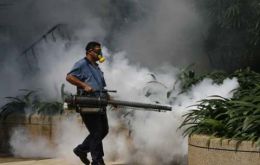
Brazilian Armed Forces joined on Monday the fight against dengue fever in Rio do Janeiro Monday setting up three field hospitals to combat an epidemic that has caused 54 deaths in 2008 and has surged to 1.4 new cases each minute.
-
Monday, March 31st 2008 - 21:00 UTC
WTO rules against EU import ban of beef with hormones

The World Trade Organization on Monday backed United States and Canadian arguments against the European Union's import ban on beef treated with hormones.
-
Sunday, March 30th 2008 - 21:00 UTC
UN climate change talks kick off in Bangkok
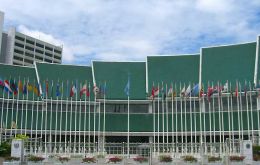
A fresh round of United Nations-sponsored climate change talks, expected to draw 1,000 participants, will kick off next week in Bangkok, Thailand.
-
Thursday, March 27th 2008 - 21:00 UTC
Dengue death toll in Rio do Janeiro: 54 and 60 suspects

Rio de Janeiro state officials admitted on Thursday that the mosquito transmitted dengue epidemic has claimed at least 54 lives January, health officials said Thursday. Hospitals have reported a total of 114 deaths from the mosquito-borne disease, but 60 of those cases are still being investigated.
-
Thursday, March 27th 2008 - 21:00 UTC
EC warns Italy over contaminated mozzarella
Italy has not done enough to ensure contaminated mozzarella cheese does not reach consumers said the European Commission and warned Italy to take further urgent action, or risk a ban on exports of the cheese from the Campania region, reports BBC.
-
Tuesday, March 25th 2008 - 21:00 UTC
Earthquake strikes northern Chile, no damage reported

A 6.1-magnitude quake has hit northern Chile close to the border with Bolivia, the US Geological Survey reports.
-
Tuesday, March 25th 2008 - 21:00 UTC
Falklands' coast ideal, say visiting windsurfers

A DUO of windsurfers from England and Argentina say a fortnight they spent exploring the Falklands coastline far exceeded their expectations.
-
Saturday, March 22nd 2008 - 21:00 UTC
Military helps Rio State tackle dengue
Brazil's Defence Minister Nelson Jobim says the military is ready to help the city of Rio de Janeiro deal with rising numbers of dengue fever cases.
-
Saturday, March 22nd 2008 - 21:00 UTC
March 22: World Water Day
The international observance of World Water Day is an initiative that grew out of the 1992 United Nations Conference on Environment and Development (UNCED) in Rio de Janeiro.
