MercoPress. South Atlantic News Agency


Central bank can have operational autonomy but “it is not independent”
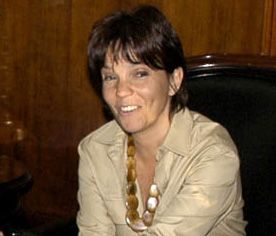 Mercedes Marcó del Pont, Argentina’s new central bank governor promised “no surprises with the US dollar”
 Argentina’s newly appointed Central Bank president Mercedes Marcó del Pont, said she “believes in the Central Bank' operational autonomy,” but expressed “it cannot be independent”. She also said they would “work rigorously and continue their policies to bring calm in the currency exchange market.”
“I ask everyone to remain calm since exchange and monetary policies will be completely reasonable, provide stability and continue deepening the model,” she declared, while explaining she isn't thinking of any “sudden raise or adjustment” in the dollar value.
As she was leaving her home towards the CB offices mid morning Thursday, Marcó del Pont expressed that “everything we've achieved so far, from reserves accumulation and economic growth to internal market expansion and exports, has been done because of a solid economic policy.”
The Argentine government officially appointed her as CB Governor after confirming the sacking of Martín Perez Redrado from office, ending this way a long power struggle between the ruling party and the opposition that debated whether President Fernández de Kirchners’ emergency DNU decree, ousting Perez Redrado, had been constitutional or not.
The next congressional debate is whether the Argentine Executive can withdraw international reserves from the bank to pay sovereign debts, disguised under a Bicentennial Fund, with which the Cristina Kirchner administration is planning to address pending debts with Argentine sovereign (defaulted) sovereign bonds, estimated in 20 billion USD and approximately 7 billion USD with the Club of Paris.
The conflict was triggered when Mrs. Kirchner ordered the bank to release 6.9 billion USD for the Bicentennial Fund. Former bank president Perez Redrado refused on grounds it was Congress that had to decide the issue and was supported by a federal court with two injunctions: one freezing the bank’s funds and another delaying his ousting as head of the bank.
Events have not gone unnoticed internationally. The “Financial Times” said “Argentina president picks ally to head bank.”
“Mercedes Marcó del Pont, who had been head of the state-run Banco de la Nación, takes the helm amid growing expectations in financial markets and among opposition politicians that the government will now dilute the autonomy of the institution as it seeks to push ahead with plans to tap reserves,” it affirmed.
The Wall Street Journal said that naming a Kirchner close ally as president of the central bank is a move that “could herald major changes at the institution following the exit of Martín Redrado”.
It added that “her appointment raises concerns that the Argentine government would seek more direct control over the central bank and its reserves.” “There are also fears that the institution is less likely to tame rising prices,” the paper wrote.


Top Comments
Disclaimer & comment rules-

Read all commentsThe so-called Bicentennial Fund - according to the government that presented a 59-page explanation to the Supreme Court - is NOT to pay external debt BUT 'general expenses'. There is something worst that Vulture Funds, and that is Vulture States!
Feb 08th, 2010 - 05:24 pm 0Commenting for this story is now closed.
If you have a Facebook account, become a fan and comment on our Facebook Page!