MercoPress. South Atlantic News Agency


Chile: death toll reaches 300; basic services gradually recovering
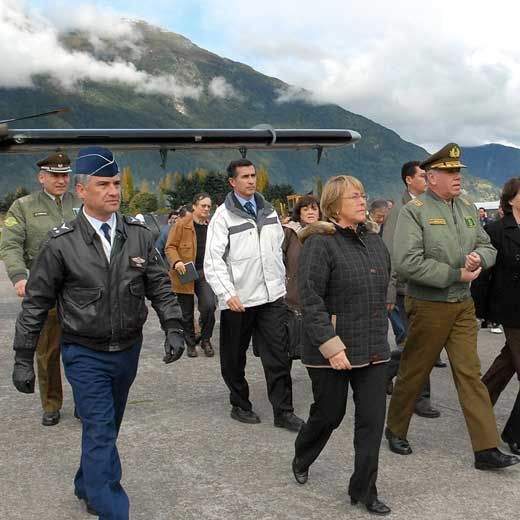 Chilean President Michelle Bachelet says more than 2 million people have been affected by earthquake.
 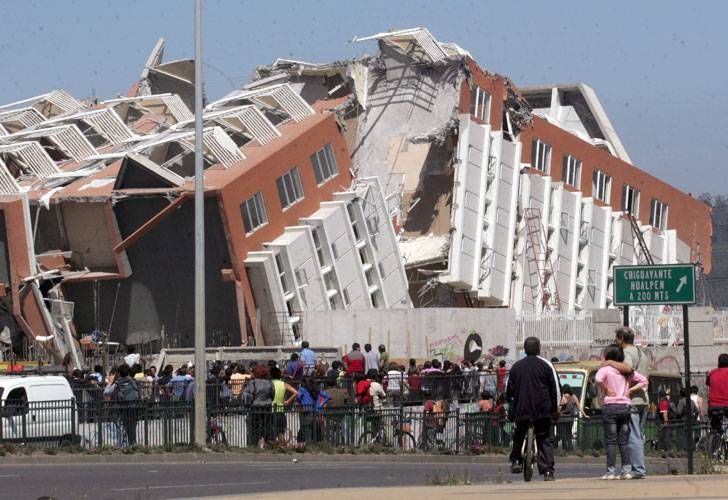 Scenes of the magnitude of the disaster.
 The death toll in the massive 8.8-magnitude earthquake that struck central Chile on Saturday has risen to at least 300 people, Interior Minister Edmundo Perez Yoma said in Santiago at 20:00 local time.
“This is a catastrophe of immense proportions, so it will be very difficult to give precise figures” Perez Yoma told reporters at the headquarters of the Chilean National Emergency Office.
Highways were sliced into pieces, rubble piled across streets and buildings were reduced to little more than heaps of wood after Saturday's pre-dawn earthquake struck about 325km northeast of the capital Santiago.
Nations around the world's largest ocean scrambled to evacuate coastal areas as they braced for walls of water as high as three meters. But there was no news of damage as the tsunami struck New Zealand and Tahiti.
The massive quake plunged much of the Chilean capital Santiago into darkness, snapping power lines and severing communications. The international airport was closed for at least 24 hours after being damaged. Basic services such as water and power and the communications system are still down in the main areas struck by the quake.
“The tragedy is enormous. The earthquake is one of the most important in the world's history, with an enormous capacity of destruction,” the Chilean ambassador to the US, Jose Goñi, told CNN television. But he offered reassurances, saying: “The situation is under control. I think we can manage this crisis”.
Chile’s long experience with earthquakes, with records going back 400 years when the Spanish empire, and strict building codes have helped to cut drastically human losses. However at mid day many residents who lost their homes or are not allowed to return because of the precarious conditions, as well as hotel foreign passengers remained camped in the parks, plazas and streets.
It was the second major earthquake to hit the region in seven weeks after up to 300,000 people were killed in Haiti last month and 1.2 million left homeless by a 7.0-magnitude quake. It is also being considered one of the worst in the last half century.
Many Chileans were still in nightclubs partying at the start of the weekend when the quake struck before dawn, ripping up roads, bringing roofs crashing down and toppling power lines.
The US Geological Survey said it had recorded more than 51 aftershocks ranging from 4.9 to 6.9 in magnitude since the pre-dawn quake.
A huge wave measuring 2.34 meters crashed onto the Chilean coastal town of Talcahuano just after the quake struck at 3:34am.
Easter Island, home to about 4,000 people and its mysterious statues, was partially evacuated, but the tsunami wave was not as big as feared reaching just over 30cm.
Roger Bilham, a professor of geological sciences at the University of Colorado, said the waves were racing across the Pacific Ocean at 720km/h.
“Mid-ocean, the wave is traveling at around the speed of a jet plane,” Bilham told AFP.
Concepcion, about 115km southwest of the epicenter, was said by local TV to be among the first Chilean cities hit by waves.
Earthquake-prone Chile lies along the Pacific rim of fire and is regularly rocked by quakes, but damage is often limited as they mostly hit in remote desert regions. However in May 1960 up to 5700 people were killed in the 9.5-magnitude Great Chilean Earthquake, which triggered a huge tsunami that reached as far as eastern New Zealand.
Meantime it was reported that the tsunami unleashed by the quake off Chile has killed five people and left 11 others missing on the remote Juan Fernandez Island also known as the Robinson Crusoe islands. Two aid ships, two helicopters and a plane have been sent to the small archipelago of some 600 inhabitants more than 700 kilometres offshore in the Pacific Ocean.
The casualties were confirmed by Ivan de la Masa, the governor of Valparaiso, the nearest city on the Chilean mainland. A huge wave measuring 2.34 metres crashed onto the Chilean coastal town of Talcahuano just after the quake struck.
The Robinson Crusoe islands get their name from the hero of Daniel Defoe's novel, whose adventures were based on those of Alexander Selkirk, a Scottish sailor marooned there in real life by his captain in 1704.-


Top Comments
Disclaimer & comment rules-

-

-

Read all commentsAll Argentines are deeply saaddened over this terrible tragedy. We will all like to espress our heartfelt condolensces and solidarity to our Chilean brothers and sisters. As in times past, we are ready to stand side by side our neighbors with whatever assistance they may request.
Feb 28th, 2010 - 06:01 pm 0Yes, it has been a tragedy of enormous proportions...This article is out of date; there are more than 800 dead people and counting; and near 2 million homeless; no water, no food, no energy. We need to move faster and do whatever we can to help. The country´s topography makes the management of post disaster aids quite difficult... Thanks to God for they being much more organized than Haiti was. My deepest condolences and support to Chilean people in this painfull time.
Mar 01st, 2010 - 03:09 am 0Reality sets in on Chiles' leadership. Only now is the true magnitude of this tragedy being realized. Chiles President, Michele Bachilet, has finally accepted international aid. The first assistance comes from it's historic close neighbor, Argentina. Aid comes in the form of two field hospitals, water purification equipment, vaccines, emergency communicatrion equipment, etc. etc. THIS IS A TIME TO SET POLITICS ASIDE AND TO JOIN TOGETHER TO OFFER THE CHILEAN PEOPLE OUR SUPPORT AND SOLIDARITY. Argentines do not pride themselves in having to provide help in these types of situations, but hopefully this assistance will serve the Chilean people well and will contribute to a quick recovery.
Mar 01st, 2010 - 04:37 am 0Commenting for this story is now closed.
If you have a Facebook account, become a fan and comment on our Facebook Page!