MercoPress. South Atlantic News Agency

Human Rights Watch calls on Chavez to eliminate office to control public debate
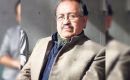
 José Miguel Vivanco, Americas’ director at Human Rights Watch (Photo AFP)
 Venezuela should close a recently created office that grants President Hugo Chávez administration broad powers to limit public debate, Human Rights Watch said Wednesday in a release. The government should also stop seeking to discredit human rights defenders and prosecuting critics.
On June 1, 2010, President Hugo Chávez issued a presidential decree creating the Center for Situational Studies of the Nation (Centro de Estudio Situacional de la Nación, CESNA), which has broad powers to limit public dissemination of “information, facts or circumstance[s]” that it decides should be confidential.
In addition, Chávez has called for criminal investigations of human rights organizations that are alleged to receive funding from the United States. The government has also failed to provide protection for human rights defenders who have received threats and has prosecuted critics of government actions or policies.
“President Chávez has created a new tool for controlling public debate in Venezuela,” said José Miguel Vivanco, Americas’ director at Human Rights Watch. “The new decree would allow the president to block the discussion of topics that are inconvenient for his government, blatantly violating the rights of expression and to information, which are at the heart of a democratic society.”
The June 1 decree that establishes CESNA within the Ministry of the Interior and Justice states that the center will “compile, process and analyze” information from government offices and civil society “regarding any aspect of national interest.”
The center's president, appointed by Chavez and the ministry, has the power to declare that “any information, fact, or circumstance” is “reserved, classified, or of limited release.”
The subsequent release by government officials of information that could “compromise the security and defense of the Nation” is subject to criminal penalties, under the Venezuelan National Security Law. The decree includes a clause providing that “laws, rules of procedure, or other norms” may grant the center new powers.
The decree's language is so broad that it could allow the government to block dissemination of information, not only by state entities, but also by non-state actors, including civil society groups and the media. The American Convention on Human Rights (ACHR) explicitly prohibits such censorship, and such arbitrary restrictions on the right to receive and impart information are incompatible with Venezuela's obligations, as a party to the ACHR and the International Covenant on Civil and Political Rights.
In related news the Chavez administration announced it would name government representative to the board of opposition broadcaster Globovision. The move is required because the state is now a minority shareholder of Globovision, he said.
Chavez said the government claims ownership of 25.8% of the shares of the company that were owned by two companies that the government took over.
One of the companies is Banco Federal, a failed bank that was owned by Nelson Mezerhane before the government took it over. Mezerhane's bank, which owned a 20% stake in Globovision, now belongs to the government, as do the shares, Chavez said.
A second company that the government took over owned a 5.8 percent share, the president said. Together, the government's stake in Globovision is large enough to name a representative to its board.
“We're obligated” Chavez said. “It's not that we want to or don't want to”.
In a statement read on air Globovision said that the only way that a new member of the board can be chosen is by approval of 55% or more of the shareholders.
“Beyond the people who may be sitting on its board, the editorial line of Globovision has no percentage of shares. The editorial policy of Globovision cannot be expropriated or intervened,” the statement said.
Chavez's announcement was the latest in a long-running feud between the president and Globovision.
The owner of Globovision, Guillermo Zuloaga, is currently wanted in Venezuela for allegedly illegally storing vehicles at his Caracas home with the intent to sell them for a profit. His son, also named Guillermo, also is wanted.Zuloaga and his son has said that he is being persecuted for political purposes and that the charges are trumped up.
International human rights groups have criticized the legal action against Zuloaga and other Chavez critics, calling such actions an attempt to silence them.
Globovision is the last remaining television broadcaster that openly carries an anti-Chavez line. Chavez refused to renew the license of another opposition station, RCTV, allegedly over telecommunication regulation violations.


Top Comments
Disclaimer & comment rules-

-

-

Read all commentsVivanco was a lackey of Pinochet's gov. Does a “human rights” NGO deserve credibility when its director has a history of support to a right-wing dictatorship? I'm not well informed on Venezuelan domestic affairs. As such, I won't comment on Chávez's relationship with Globovisión. But one thing I know, as a citizen of a South American country, is that media outlets in here are not impartial - perhaps they're less impartial than anywhere in the world. They have an agenda, and agenda with a clear conservative streak that includes the denigration of democratically elected left-leaning leaders in the region. Chávez's a clear autocratic streak, that is quite obvious. But one shouldn't take his dispute with the Ven. media as something that it isn't. And it isn't the struggle of an autocrat against means of communication that fight for freedom of expression or democracy. If Ven. media were in favour of democracy, they wouldn't have given positive coverage to the 2002 Ven. coup against the Chávez adm - a coup that was also openly fêted by media outlets continent-wide. On the one hand, a leftist politican who wants to impose his distorted worldview on Venezuelans; on the other hand, right-leaning media conglomerates that want to impose their distorted worldview on Venezuelans - that is all what the this struggle amounts to. That Chávez has authoritarians instincts, is merely a fact that the Venezuelan media exploit to portray themselves as pro-democracy.
Jul 22nd, 2010 - 06:20 pm 0Does anybody expect Chavez to pay any attention? He's only in power because he denies democratic and human rights.
Jul 22nd, 2010 - 06:22 pm 0Bit like asking a coyote to stop stealing animals killed by other predators.
“He's only in power because he denies democratic and human rights.”
Jul 22nd, 2010 - 06:58 pm 0He's in power because he was elected by his people - and elected twice, no less.
Commenting for this story is now closed.
If you have a Facebook account, become a fan and comment on our Facebook Page!