MercoPress. South Atlantic News Agency



Final trip for HMS Gloucester after Falklands’ duties and Saxon Warrior exercise
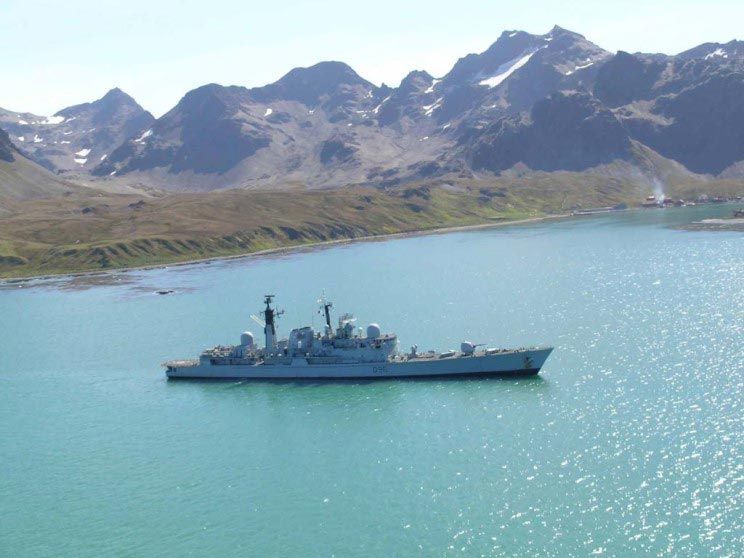 The Type 42 destroyer Fighting G, a common sight in the South Atlantic
 Veteran warship HMS Gloucester, the Fighting G, which spent most of her last twelve months in South Atlantic duties in the Falklands and South Georgia, returned to Portsmouth for the last time Monday 23.
The 29 year-old Type 42 destroyer holds the record for the first successful engagement of a missile by another missile in combat at sea during the Gulf War. She is being decommissioned next month as the Royal Navy’s fleet of ageing Type 42s is gradually being phased out to make way for the new hi-tech Type 45 destroyers.
HMS Gloucester – which has clocked up 787,928 miles during service across the globe, marked her final entry to the Naval Base in traditional fashion by flying a decommissioning pennant. She has just paid a farewell visit to her affiliated namesake city and was returning from Exercise Saxon Warrior involving Royal Navy, French, Spanish warships and a United States carrier force in war games off the south-west coast of the UK.
Her Commanding Officer, Commander David George, said: “I cannot express how proud I am of the ship. She came in for the last time having given the cream of the US Navy a run for their money in one of the biggest exercises off the south coast for years.
“It was a very emotional final entry for the very best of ships, but she is 29 years old and with more than 750,000 miles under belt, there are more capable Type 45 destroyers now taking the stage and Gloucester’s time has come to bow out with dignity.”
HMS Gloucester was built by Vosper Thornycroft in Southampton and launched on November 2 1982 by the Duchess of Gloucester. At 463ft long the ship was the longest vessel built at the shipyard since the Second World War.
Nicknamed the Fighting G, Gloucester’s most notable action came in January 1991 when she was escorting the American battleship USS Missouri close to the Kuwaiti coast during the Gulf War.
As the Missouri came under attack by an Iraqi Seersucker missile, Gloucester fired a salvo of Sea Darts to knock it from the sky in what proved to be the first validated, successful missile versus missile strike of its kind.
Gloucester’s Lynx helicopter was also in the thick of action during the war, attacking seven Iraqi naval ships with its Sea Skua missiles.
The ship saw action of a different kind during the Israel-Lebanon conflict of 2006. She was the first Royal Navy vessel to evacuate British nationals from Beirut, making three trips taking Britons to safety in Cyprus.
And the ship made the headlines again in 2010 during her final overseas deployment with a £4 million drug bust. She intercepted the yacht Tortuga in the mid-Atlantic, smuggling £4 million of cocaine, on passage to the Falkland Islands.
On South Atlantic patrol HMS Gloucester’s activities ranged from conducting photographic conservation surveys for the British Antarctic Survey in South Georgia to representing the UK at the Expo Naval trade fair in Valparaiso, Chile – an exhibition of defense technology.
The majority of her time was spent patrolling the Falkland Islands where she exercised with the Army and the RAF’s Falklands-based Typhoon fighter aircraft to hone her skills at working in a tri-service environment.
The Duchess of Gloucester was among more than 1,000 friends and family to welcome the ship home from the seven-month South Atlantic mission last March.


Top Comments
Disclaimer & comment rules-

-

-

Read all commentsAnother great ship to be proud of
May 23rd, 2011 - 10:47 pm 0but will be replaced by an even more powerfull ship,
we pitty the argentine , sitting all alone in port,
Whatever... they're lucky we only had 5 Exocets otherwise this piece of junk would be at the bottom of the sea in Malvinas.
May 24th, 2011 - 06:19 am 0Old news.
You would have struggled to sink a ship which was built 5 months after you lost the war Martin...Jeezuz your numb in the head :)
May 24th, 2011 - 07:58 am 0Commenting for this story is now closed.
If you have a Facebook account, become a fan and comment on our Facebook Page!