MercoPress. South Atlantic News Agency


More than 100 journalists killed in 2011; call on the UN for protection action
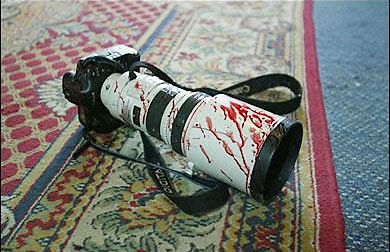 Pakistan, Iraq and Mexico the deadliest cases (Photo AFP)
 More than 100 journalists or other media staffs were killed in 2011, up from last year's toll, the International Federation of Journalists (IFJ) said, calling on UN Secretary General Bank Ki-moon to act to help protect the profession.
Violence against the media was worst in Pakistan, Iraq and Mexico, each of which saw 11 deaths. In total, 106 were killed in 2011, compared with 94 in 2010. In addition, 20 journalists or other media staff, died in accidents and natural disasters, the IFJ said.
Most of those named by IFJ were frontline journalists. The rest were cameramen, drivers and other media support staff.
The Brussels-based IFJ blamed the 2011 death toll on governments' failure to protect journalists and punish those responsible for violence against them.
It has written to the UN secretary general calling for action.
“In a situation where governments are in denial or indifferent to what has become a regular pattern of targeted killings of journalists, it is incumbent upon yourself and the United Nations to remind them of their responsibility to protect journalists,” IFJ President Jim Boumelha wrote in a letter to Ban made public on Friday.
The IFJ represents more than 600,000 journalists in 131 countries around the world.
Earlier this month, Reporters Without Borders (RSF) reported 66 journalists had been killed worldwide in 2011 and said Pakistan had been the second most dangerous country for news coverage for the second year running.


Top Comments
Disclaimer & comment rules-

-

-

Read all commentsArguably the most dangerous profession in the world.
Jan 01st, 2012 - 11:12 am 0There's something interesting about that: a tiny little country, Honduras, has accounted for a very significant share of those murders since the 2009 coup. Yet Iapa, an organization which Mercopress often touts whenever it has something negative to say about a left-wing administration in South America, strangely says nothing about that subject. More on The Guardian: http://www.guardian.co.uk/media/greenslade/2011/sep/29/honduras-journalist-safety?CMP=twt_gu
Jan 02nd, 2012 - 12:44 am 0Feliz Ano Novo, Geoff!
Jan 02nd, 2012 - 12:53 am 0(Random English-language sentence so Mercopress won't remove my message.)
Commenting for this story is now closed.
If you have a Facebook account, become a fan and comment on our Facebook Page!