MercoPress. South Atlantic News Agency


Shallow canals and low water levels obstruct Argentina’s main grains terminal
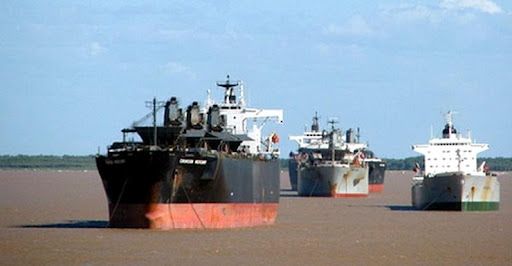 The Parana, one of the busiest rivers in the region
 The grounding of two bulk carriers one in the Parana River and a second in the Martin Garcia access canal are evidence of the frail fluvial communications system between the River Plate and the Atlantic, reports the press from the port of Rosario, Argentina’s second largest city and among the world’s main grain export terminals.
Furthermore the situation is considered critical by shipping agents and the grain business in Argentina and Uruguay since in 2014 the Panama Canal will have completed its expansion and deeper dredging, which means that a new generation of vessels with more draught will be sailing sea lanes.
Last August the bulk carrier “Alexandria” grounded in the Martin Garcia River Plate canal. The vessel 179 metres long and with a draught of 8.68 metres had loaded 19.300 tons of wheat for Brazil in San Lorenzo on the Parana River.
Only a week ago “Aristeas P” another bulk carrier (189 metres long and 9.96 draught) with 30.516 tons of soybean by-products grounded in a bank of sand and mud at kilometre 390 of the Parana River, where it remained stuck for over a week in spite of all the tugs’ efforts.
Over a hundred vessels had to wait for that time, and shipments of wheat and other grains and oilseeds were paralyzed.
The development of Argentina and Uruguay and other countries from the region, producers of grains and oilseeds which are bulk transported in great volumes need of an efficient transport and freight system to remain competitive. Given the low unitary value of the cargo they are most vulnerable to the cost of maritime transport.
“These incidents are evidence of the limitations and challenges that navigation canals in the Parana River and the River Plate represent for the agriculture industry and need to be addressed on time”, said Alberto Tello, an official with the Rosario Maritime Centre.
The Martin Garcia canal is 9.75 metres deep and Argentina and Uruguay have agreed to dredge it to 10.40 metres, which has become the minimum depth for cargo traffic in the River Plate.
And what determines bulk carriers’ tonnage and size: one of the factors is the depths of the Panama Canal (12.5 metres) and the Suez canal (15 metres), and the most common vessel has been the Panamax (compatible with the Panama Canal)
However in two years time, August 2014 the ambitious expansion works of the Panama Canal will be ready and the Post-Panamax vessels will become king. Panama Canal locks depth will increase from 12.8 metres to 18.3 metres, which means more efficient and economic to run bulk carriers, and obviously with greater draught.
Currently significant delays in the port of Rosario and navigation operations along the Parana River are occurring, since vessels that finish their loading cannot set sail because of insufficient water level, and those in the Rio de la Plata cannot navigate and are waiting to be able to come up to the loading areas.
“Imagine the situation in a couple of years when the Panama Canal begins operating with 18 metres”, underlined Alberto Tello.


Top Comments
Disclaimer & comment rules-

-

-

Read all commentsAn absolute and complete lack of forward planning.
Jan 31st, 2012 - 11:50 am 0Uruguay has been flagging this problem for years, as Argentina's sloth affects greatly its own import/export capability because of the commonality of waterways.
Argentina had 8 years of “boom” so they claim. Yet you walk around downtown BA and you have broken sidewalks, piles of garbage, villas, beggars, blackouts, ABSOLUTELY CRUMBLING INFRASTRUCTURE EVERYWHERE YOU LOOK! Where did all the $ go? Most gov'ts improve infrastructure during the good times. Now what? They're heading into a major downturn and they are no better off than they were in 2001!
Jan 31st, 2012 - 12:41 pm 0It will all be the fault of Uruguay according to CFK for not 'insisting' that we do something about it!
Jan 31st, 2012 - 02:17 pm 0Commenting for this story is now closed.
If you have a Facebook account, become a fan and comment on our Facebook Page!