MercoPress. South Atlantic News Agency


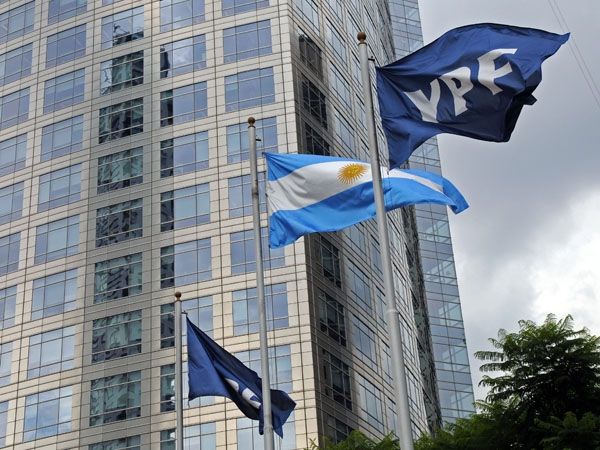
“New” YPF first shareholders’ meeting turns dividends into investment fund
 The investment fund holds 1.3bn dollars
 Argentina’s seized oil and gas corporation YPF drastically cut dividend payments and created an investment fund following the first shareholders meeting since the nationalization by President Cristina Fernandez.
YPF approved the results of the 2011 budget and allocated dividend payments of 66 million dollars, or 5.7% of last year’s profit, according to a regulatory filing distributed after the shareholder meeting on Tuesday.
Argentina seized 51% of YPF from Spain’s Repsol SA as President Cristina Fernandez government seeks to halt declining oil output and stem fuel imports that doubled to 9.4 billion dollars last year.
The Argentine government opposed the original suggestion for this year from Repsol which was for YPF to distribute 80% of profits as dividends.
Shareholders also expressed their opposition to “the previous administration characterized by falling oil and gas reserves, production and exploration,” the company said in the statement.
Chief Executive Officer Miguel Galuccio allocated 1.3 billion dollars of earnings toward total planned investment in 2012 of 3.5 billion. Investment last year, under Repsol, was 3.1 billion, according to a filing sent to the stock exchange in February.
YPF shares have tumbled 49% in Buenos Aires trading this year
The meeting which lasted over six hours was headed by YPF CEO Miguel Galuccio and the government’s Economic Policy Secretary Axel Kiciloff. Repsol representatives also attended since the Spanish group still holds a 12% stake; Itau bank from Brazil with 3.6% also sent a representative as did the group Inbursa which holds 8.3%. This last group belongs to Mexican communications tycoon, Carlos Slim
The shareholders assembly coincides with the launching by the Argentine government of an aggressive campaign to attract foreign investors and help the company develop its full potential.
CEO Galuccio is preparing a tour of the US in search of investors in Houston and New York with promises YPF is rapidly recovering the levels of production it had a few years ago and lost during the management of Spain’s Repsol.


Top Comments
Disclaimer & comment rules-

-

-

Read all commentsPreparing a tour of the US to seek investment???
Jul 18th, 2012 - 08:43 am 0Does this guy like being laughed at?
If the investment by Repsol wasn't a good enough deal for YPF then why on earth would a US company want to accept a worse deal with all the added country risk involved?
Argentina doesn't seem to understand that people invest for profit - not to further the agenda of the national government.
Most nations try to attract investment but South American nations have the attitude that they are doing the investors a favour. Money goes where it receives the best returns. Not a difficult concept.
An excellent decision =)
Jul 18th, 2012 - 10:09 am 0BK you're a idiot or you just like to fuck with people.
Jul 18th, 2012 - 10:30 am 0Commenting for this story is now closed.
If you have a Facebook account, become a fan and comment on our Facebook Page!