MercoPress. South Atlantic News Agency


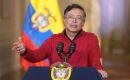
Colombia withdraws from UN Justice Court angry at latest ruling on Caribbean islands
 President Santos made the announcement and left Colombian navy vessels in the disputed waters
 Colombia has withdrawn from a treaty that binds it to the UN International Court of Justice in anger at a ruling that shifts some of its resource-rich waters to Nicaragua, President Juan Manuel Santos announced on Wednesday.
The Hague-based court last week reduced an expanse of sea belonging to Colombia, drawing a demarcation line in favour of Nicaragua even while saying a cluster of disputed islands in the western Caribbean belonged to Colombia and not to Managua.
The decision set off a scramble in Bogotá to see how to overturn the verdict and avoid diplomatic conflict with Nicaragua's President Daniel Ortega, who sent ships to the area.
Santos has ordered the Colombian navy to remain in the waters granted to Managua.
“The highest national interests demand that territorial and maritime limits are set by agreements as has always been the case in Colombian judicial tradition, and not via rulings uttered by the International Court of Justice,” Santos said.
“This is the moment for national unity. This is the moment that the country has to unite.”
The 1948 treaty, known as the Bogotá Pact, recognizes ICJ rulings to find peaceful solutions to signatories' conflicts.
Leaving the pact would mean Colombia is not obliged to heed the court's ruling on any potential bids by Nicaragua to seek additional territory, the government has said. But its withdrawal would not have a retroactive effect, and it would be obliged to comply with last week's ruling.
Ortega has said he expects Colombia to recognize the court decision, which is binding, but experts have said Colombia may reject it and seek to negotiate a new border pact.
Colombia's withdrawal “doesn't influence under any circumstance” the court's ruling, Carlos Arguello, Managua's representative at The Hague, told reporters.


Top Comments
Disclaimer & comment rules-

-

-

Read all commentsdo we take this as [q] for CFK to do the same perhaps,
Nov 29th, 2012 - 12:16 am 0Wonder what Santos wants to distract from...
Nov 29th, 2012 - 12:19 am 0If you agree to take something to court, you accept that things mightn't go your way. To throw a hissy fit because the judge ruled against them is frankly childish and ludicrous. They knew the risks, if they didn't want that turnout they shouldn't have gone to court in the first place.
Nov 29th, 2012 - 06:31 am 0Commenting for this story is now closed.
If you have a Facebook account, become a fan and comment on our Facebook Page!