Gibraltar anticipates rough year with Spain because of Treaty of Utrecht 300 years
Gibraltar must remain steadfast in its own position on sovereignty the Chief Minister Fabian Picardo has made clear. In a wide-ranging New Year message broadcast last week on GBC Mr Picardo took up the recent remarks made by Spain’s ruling party (Partido Popular) and urged them to return to tripartite dialogue as the (opposition) PSOE in Andalucia is also urging.
“Despite – or because of – these economic problems, the Partido Popular government in Madrid has lost no opportunity to attempt to damage our economy and aggressively pursue their claim to our sovereignty relying on the Treaty of Utrecht that will be 300 years old this year,” said Mr Picardo.
He said that the PP mayor of Algeciras, Jose Ignacio Landaluce recently made clear that the state of the relationship between Gibraltar and Spain today related “specifically to their policy on how Gibraltar should be treated and nothing else.”
“I believe that the politics of attacking Gibraltar’s economy at every opportunity, not pursuing the trilateral process for dialogue and now trying to unilaterally rescind parts of the Cordoba agreements will backfire on the Partido Popular and Spain as a whole. Conversely, we and the UK have repeatedly stated that we remain strongly committed to the trilateral process for dialogue,” said the Chief Minister.
But he noted that the PSOE Socialist party in Spain has tabled a motion in the Andalucian parliament calling for the PP’s policy of confrontation to be abandoned and for the trilateral process to be restarted.
“In partnership with the UK we will ensure that there will be no return to bilateralism over our territory; that there will be no progress by Spain in its attempts to damage our economy; and there will be no advance whatsoever of Spain’s claims to sovereignty over our land or our waters.”
Mr Picardo also revealed that regulations on fishing, referred to an ongoing controversy with Spain will be published shortly.
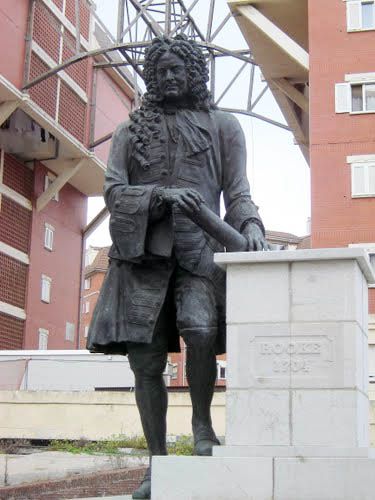
In 1704 an Anglo-Dutch force led by Admiral Sir George Rooke captured Gibraltar in 1704 on behalf of the Archduke Charles, pretender to the Spanish Throne. The territory was eventually ceded to Great Britain by Spain in the 1713 Treaty of Utrecht as part of the settlement of the War of the Spanish Succession. In that treaty, Spain ceded to Great Britain the full and entire propriety of the town and castle of Gibraltar, together with the port, fortifications, and forts thereunto belonging … for ever, without any exception or impediment whatsoever.
Should the British Crown ever wish to relinquish Gibraltar, a reversion clause holds that the territory would first be offered to Spain, And in case it shall hereafter seem meet to the Crown of Great Britain to grant, sell or by any means to alienate there from the propriety of the said town of Gibraltar, it is hereby agreed and concluded that the preference of having the sale shall always be given to the Crown of Spain before any others.


16 comments Feed
Note: Comments do not reflect MercoPress’ opinions. They are the personal view of our users. We wish to keep this as open and unregulated as possible. However, rude or foul language, discriminative comments (based on ethnicity, religion, gender, nationality, sexual orientation or the sort), spamming or any other offensive or inappropriate behaviour will not be tolerated. Please report any inadequate posts to the editor. Comments must be in English. Thank you.
Chapter 1 Article 1 Paragraph 2
“To develop friendly relations among nations based on respect for the principle of equal rights and self-determination of peoples”
Gibraltar is the only country that can decide its future and the UK has agreed to this.
Also it really doesn't matter what the Treaty of Utrecht said about the British Crown relinquishing Gibraltar, as international law has moved on from there.
Article 103 of the UN Charter:
In the event of a conflict between the obligations of the Members of the United Nations under the present Charter and their obligations under any other international agreement, their obligations under the present Charter shall prevail.
So the Treaty of Utrecht's provisions on sovereignty being a sole choice between the UK and Spain is no longer valid under international law.
Sorry Spain!
ooh, diego garcia!
ooh, imperialists!
ooh, lack of irony in my words!
ooh, England when I mean the UK!
ooh, not realising that people in glass houses shouldn't throw stones!
ooh, not knowing the meaning of legally binding documents!
There, so if you have anything left, feel free to post.
Gibraltar will have to decide if it stays in, or comes out with us,
If they come with us, as we predict, the Spanish will be pulling their hair out,
And would have lost any chance of any talks, a bit like argieland,
Greed gets you nothing , zero , zilch …
.
It is pure obfuscation to insist, as the UK does, that the current inhabitants of Gibraltar have a right under the principle of self-determination to determine the nationality of the land they live in. Under international law there are territorial limitations to the right of self-determination for transplanted populations living in colonial enclaves where a pre-colonial claim of sovereignty exists. This is the case with Gibraltar.
A coloniser cannot legally disrupt the territorial integrity of another State by implanting its own population unto the territory it is colonising. In cases such as these, the inhabitants of the territory have a right to have their ‘interests’ considered but they have no right to unilaterally determine the nationality of the land they live in.
Both the UN and ICJ have confirmed that the principle of territorial integrity complements and constrains the right to self-determination in cases such as Gibraltar. UN Resolution 1514 (XV) (1960) specifically states that ‘any attempt aimed at the partial or total disruption of the national unity and the territorial integrity of a country is incompatible with the purposes and principles of the Charter of the United Nations.’ Any attempt by the colony of Gibraltar to establish itself as an independent nation would disrupt the national unity and the territorial integrity of Spain. The crucial UN decision with reference to Gibraltar was the adoption of Resolution 2353 in December 1967 which gave primacy to Spain’s claim to the restoration of its territorial integrity over Gibraltar’s claim to the right to self-determination.
Spain has never recognised British sovereignty over the Bay of Algeciras. Not surprisingly therefore, it will continue to ignore the protests of the colony of Gibraltar and its British Governor and continue to exert its sovereignty in any
*6 It would be good to see The uk pull out of the EU, that way the waiting lines at the border between Spain and Gib would go from 2 hours to 10 for the Gibs.hahahaha HOPE CAME MORON PULLS OUT FOR ONCE AND FOR ALL FROM THE EU sick of listening to you lot complaining about the EU..bugger off for ever!! bye bye baby.That way EU students who are studying English (which is a billion dollar industry) would go to Ireland to learn English ..for example.
*
Here's to the next 300 :-)
www.youtube.com/watch?v=EmOH5f1J1Uc
Yes, the UN lists Gibraltar as a territory that needs to be decolonised by the UK.
Decolonised, not recolonised.
UN and ICJ have confirmed that the principle of territorial integrity complements and constrains the right to self-determination in cases such as Gibraltar
No they have not.
UN Resolution 1514 (XV) (1960) specifically talks of self-determination just like the UN Charter. The UN Charter doesn't talk about territorial integrity. Gibraltar has not been part of Spain for 300 years so Spanish territorial integrity is less affected by this than it was by the independence of the colonies in its former empire.
Resolution 2353 in December 1967 which gave primacy to Spain’s claim to the restoration of its territorial integrity over Gibraltar’s claim to the right to self-determination
Nice try but fail. It certainly does not. It uses the word CONSIDERING when talking of territorial integrity and national unity. This does not give PRIMACY. And even then it qualifies it by saying any colonial situation shouldn't disrupt territorial integrity or national unity. Not independence.
It does however say that the interests of the inhabitants should be safeguarded by any decolonisation. That would rule out handing Gibraltar to Spain.
Portugal was once part of Spain for a short time. Does its existence on the Iberian Peninsula disrupt Spain's territorial integrity?
Also Gibraltar is not part of the Spanish nation so cannot disrupt the national unity of Spain.
All countries end and have a border so Gibraltar is not affecting Spain's territorial integrity or national unity.
East Timor and South Sudan show that self-determination trump the territorial integrity and national unity of a country.
There's no argument against self determination, which is why it is in the UN Charter when so many other legal principles aren't.
You are clearly not up to date with what happened in 2008 when Argentina and Spain introduced a proposal at the UN to limit the principle of self-determination to cases where there is no dispute over sovereignty.
You lost. Heavily. The GA assembly affirmed that, in the process of decolonization, there was no alternative to the principle of self-determination, which was also a fundamental human right.
www.un.org/News/Press/docs/2008/gaspd406.doc.htm
Your attemtpt to distort the purpose of resolution 1514 won't work either. The reference to territorial integrity in that resolution was intended to ensure that acts of self-determination occur within the established boundaries of colonies, and so to avoid Bantustanisation or similar subterfuges in the decolonization process. It does not, and was never intended to, support irredentist territorial claims masquerading under the name of decolonization.
Besides all the French and Spanish have done, is basically incorporated their ex colonies into the main stream.
Something Britain failed to do, for some reason,
But perhaps if Britain did the same, then all this rubbish would have to stop would it not.
Perhaps Britain should try it, at least in the short term.
Stop plagiarising cobber, find your own material!
Like the way you expressed yourself in the rest of your post, pot-kettle-black!
Commenting for this story is now closed.
If you have a Facebook account, become a fan and comment on our Facebook Page!