Argentina urges ‘workable’ solution from US appeals court to dispute with holdout bondholders
Argentina's defence urged a US appeals court on Wednesday to come up with a workable solution to its long-running fight with so-called holdout bondholders, and assured the country will not pay an amount exceeding the one set in the debt-swaps.
We're trying to persuade the court to do something which is workable and doesn't create a terrible confrontation, the lawyer, Jonathan Blackman, said during oral arguments before the 2nd US Circuit Court of Appeals in New York.
He also said that the country would not voluntarily obey an order to pay holdout bondholders in full.
The court is considering a lower court's order that Argentina must pay 1.3 billion dollars to a group of dissident bondholders stemming from the country's 2002 default.
“So the answer is you will not obey any order but the one you propose?” U.S. Circuit Judge Reena Raggi asked Blackman during more than two hours of arguments.
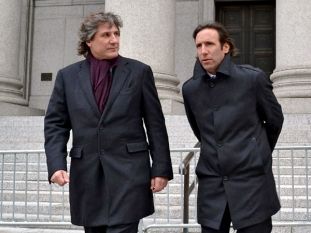
“We would not voluntarily obey such an order,” Blackman said. Hernan Lorenzino, Argentina’s minister of economy, and Vice President Amado Boudou sat at the counsel table as the lawyer addressed the panel.
Blackman claimed that a lower-court order obliging it to pay the defaulted bonds whenever it makes payments on restructured debt violates its sovereignty, threatens to trigger a new financial crisis and would quadruple the number of Argentine bond cases in New York federal court, rather than resolving them.
“If that’s the confrontation the court seeks with the injunctions, that are the court’s decision,” Blackman said. “We’re representing a government and governments will not be told to do things that fundamentally violate their principles,” he said.
Holders of defaulted bonds, led by Elliott Management Corp.’s NML Capital Ltd., run by billionaire hedge-fund manager Paul Singer, and Aurelius Capital Management, have won U.S. court judgments recognizing their right to be paid and are asking the appeals court to uphold the lower court to give them the ability to collect the 1.3 billion they say they’re owed.
Argentina says a ruling in the creditors’ favor would open it up to more than 43 billion in additional claims it can’t pay. The country defaulted on a record 95 billion in debt in 2001. Holders of about 91% of the bonds agreed to take new exchange bonds in 2005 and 2010, at a deep discount.
Theodore Olson, in defense of NML Capital and Aurelius Capital argued that Argentina was “never” willing to negotiate and recalled President Cristina Fernandez words “to the vulture funds, not one dollar”.
The appeals panel heard arguments from both sides, as well as from lawyers for the Exchange Bondholder’s Group, which represents holders of the restructured debt, and for Bank of New York Mellon Corp., the indenture trustee for the restructured bonds. The court may not rule for weeks or months.
Judges expressed doubt about arguments by BNY Mellon that it can’t be subject to US District Judge Thomas Griesa’s order barring third parties from helping Argentina pay the holders of restructured bonds without also paying the defaulted bondholders. Blocking BNY Mellon is key to the defaulted bondholders’ efforts to halt payments on the restructured bonds as a means of forcing payment to them.
“Argentina cannot violate this injunction without participation of the Bank of New York” Olson told the judges. Holders of the defaulted debt are seeking “what they are owed,” he said.
The holdout creditors are seeking to uphold rulings by Griesa that require Argentina to pay them the full amount they’re owed whenever it makes a required payment to the holders of the exchange bonds. The Exchange Bondholder Group claims the ruling improperly threatens their investment.
“We’re innocent parties,” attorney David Boies argued for the Exchange Bondholder Group. “I represent people who did what they thought was right. All I’m saying is what they did shouldn’t count against them.”
Griesa’s order shouldn’t apply to restructured debt holders, Boies told the panel. The court can’t hold them hostage, he said.
“If you allow Judge Griesa’s injunction to exist unchanged, everybody in this courtroom knows what’s going to happen,” Boies argued. “Argentina is going to default.”
The appeals court has already affirmed Griesa’s ruling that an equal-treatment, or pari passu, clause in the original bond agreements prevents Argentina from treating defaulted bondholders less favorably than exchange bondholders. The appellate court upheld an injunction issued by Griesa that barred Argentina from paying the exchange bondholders without also paying holders of defaulted debt.



54 comments Feed
Note: Comments do not reflect MercoPress’ opinions. They are the personal view of our users. We wish to keep this as open and unregulated as possible. However, rude or foul language, discriminative comments (based on ethnicity, religion, gender, nationality, sexual orientation or the sort), spamming or any other offensive or inappropriate behaviour will not be tolerated. Please report any inadequate posts to the editor. Comments must be in English. Thank you.
The trouble is it will probably end up in the Supreme Court and take years more to realise a result.
Always the victim.”
That is fucking funny....what principles??
.........and just who's 'default' is that then?
'Argentina says a ruling in the creditors’ favor would open it up to more than 43 billion in additional claims it can’t pay. The country defaulted on a record 95 billion in debt in 2001. Holders of about 91% of the bonds agreed to take new exchange bonds in 2005 and 2010, at a deep discount.'
Again. Who's fault is that? What's more, Argentina is supposedely booming and is positively rolling around in ready cash. Why not just pay your debts? Then you can move on, slate clen, heads held high.
But paying their debts violates their sovereignty
Not having the Falklands violates their sovereignty
They get violated quite a lot LOL.
But that will not alter one bit what the judge will decide and we will then see if the argies default.
I and many others think that AR is broke and has no money to pay in any event. This legal parade is just a way of holding on to whatever course of loans or credit they can wangle out of the rest of the world.
When it is clear to TMBOA that no more money is forthcoming from any other source, then they will default on everything.
This will not end well for Argentina, I'm sure CFK thinks she can tie this up in the courts until she is gone and the next gov't will have to clean it up and she may be right.
A deal will be struck and Argentina will get off the hook.
The USA gov't is not supporting Argentina in any way. The Fed/Treasury thought the solution that Griesa came up with involving the banks was unworkable but they'll come up with a one that works and Arg will have to abide by it or say goodbye to the world's financial system.
The hilarity abounds!
1) The Sut Ct will rule that US courts can not enforce the collection of debts against a foreign sovereign nation as a matter of historical judicial policy, however the case is one which seeks to enjoin a US bank trustee to do act which would constitue a violation of the bond contract based upon the pari passu clause contained in the contract. To the extent the existing bond contract would prohibit the trustee from paying it is valid as against the trustee. So, all you foreign sovereign nations make sure your bond contracts eliminate or alter the pari passu language if you want to avoid this result using US trustees on US soil.
2) In this law suit the plaintiffs have asserted the right to be paid in a suit seeking an injunction based upon contract principles. If I remember correctly, the reason the plaintiffs prevailed is that the lower court ruled that the pari passu clause in the original bond contract was deemed violated when ARG sought to pay more to those borrowers who had agreed to accept susbstituted bonds than to the holdout plaintiff bondholders.
The plaintiff funds never reduced the bond contract obligation to a judgment for money because if they did, the judgment would, by law, supercede and extinguish the contract. If so, the pari passu clause would be vitiated. By law the plaintiffs would have no contractual basis for their claims and would lose.
There is a principle in the law that one can not do indirectly what one can not do directly. In my opinion the Sup Ct will ultimately rule that the plaintiffs could not have prevailed if they had a judgment and will not be allowed to be paid the original contract balance owed since they could have never collected a judgment against ARG in foreign courts.
My money is on #2.
It is in no ones interest that the holdouts win. Everyone knows how national defaults can ripple through the global economy. Everyone knows the poor suffer the most.
Besides the pragmatics of it, Argentina is in the right (if there is such a thing in these cases): they defaulted, they re-structured, creditors took a hit. Essentially the same as every other sovereign default case in modern times.
They have met their obligations to the vast majority who accepted the re-structuring. The recovery rate is higher than that of the Greek default.
The hilarity ensues!
However, there is a bigger picture here and whatever the judgement, CFK is losing control.
I think they will find out to thier cost that US Courts are a very different kettle of fish
@19 Sorry. When a sovereign state defaults, it should negotiate. Try to give those from whom it borrowed an equitable result. Argieland didn't do that. It issued an ultimatum. Take this or get nothing. That's robbery. I doubt argieland ever intended to repay its debts. That's premeditation. Argieland must be made to pay. It deliberately stole the money of ordinary people in other countries. Is that an act of war? Argieland is a gangster state. Split it up. Make the bits subject to UN control. Take the current argie government” on trial for larceny, war crimes, corruption. When the trial ends, execute them. Perhaps, given their origins, public ritual garroting or strangling might be appropriate? Members of La Campora and Quebracho should simply be publicly genitally excised and beheaded.
Lending money is a risky business. If you lend / invest in a risky country like Argentina you only have yourself to blame. Would you put your pension in a country that is know for political corruption and economic mismanagement?
You say:
When a sovereign ”state“ defaults, it should negotiate
No, it should do what is in it's citizens best interests. The 30% recovery is not atypical for foreign defaults.
Argentina issued the bonds with contract language that the investors know were covered under USA laws and took that into account when they made the investment
If Argentina wanted to sell the bonds under their own laws they could have but they would have had to pay a much higher rate.
They knew exactly what they were doing and are not trying to get out of it.
It won't happen.
Elaine I read it did not bode well either. But I am think they will order Argentina to pay the MNL the same manner in which the restructured bond holders were paid. I do not see Argentina getting off with a get out of jail pass, but I don't see MNL getting all they want as well. There are usually no winners in lawsuits other than lawyers, anyone ever involved in suits know that.
I am sure that US law allows debtors to default.
This ”negotiation was a unilateral take it or leave it deal from Nestor. It is also why you can't compare it to any other sovereign default. The closest is Peru and guess what, the bondholders won that suit and Peru ended up paying.
The law is on the bondholder's side and Argentina will continue to lose and I think they have reached their last venue.
With the full backing of the law on their side, the 91% who accepted the RG terms were foolish then.
A Humble Attitude is Sometimes Important
Ah, that is a good point.
Well, we will just have to wait and see how this next installment of the RG soap opera plays out.
My money is still on a holdout fail.
Not a good morning for Argentine bonds....they jump 371 BPS.
origin-www.bloomberg.com/news/2013-02-28/argentine-default-threat-spurs-bond-selloff-buenos-aires-mover.html
It cracks me up with Argentina claiming sovereignty and that a USA court cannot force them to pay and they are correct, they can't. We cannot put them in jail if they do not pay and they have every sovereign right to choose not to pay a court order.......just never allow an Argentine asset to leave Argentina.....like Tango 1, you may get it back.....after two months....and you may not get it back the next time.
I think that even if the court orders Argentina to pay the hold-outs the Argentine government has already decided it will default. It was pretty much stated in court.
There is no way CFK is going to hand over a single dollar when she could steal it for herself.
Also, it is not the courts place to determine whether or not Arg's mismanagement will affect Arg's economy.
If new laws need to be put in place to avoid pari pass clauses, that's the responsibility of the legislative branch , not the judicial.
It is really very simple.
At this point Argentina doesn't have funds to pay anything to anyone. I doubt very much they have enough U$ to keep the heat on this winter.
It would be a conveniently timed default to get them through winter until they can pay interest again.
What an absolute mess of a country.
Intersting article indeed.
Yankee I was not suggesting the the courts compel MNL to take a haircut, but I do think that paying the holdouts in the same manner as would constitute equal treatment of all bondholders. Why did they just not pay them a restructured amount to begin with? Thankfully I am not a lawyer and do not profess to know the law.
The holdouts were offered the restructured amount to begin with, but they opted to holdout in the hope that they could force Argentina to pay more.
The reason I think the holdouts will fail is because the implication of them winning is a bad result for everyone (except the holdouts).
The Rgs know that no one wants them to default and that is there trump card. Their lawyer's defiant statement could be read as a shot across the bows of the judge, i.e. you rule against us, we default, bad for all of us.
Theoretically none of those considerations should affect the judge's decision, but with much more at stake, than the interests of opportunist NML, higher powers will be pulling strings.
@39
I think he is immersed in the Festival de Viña.
The judge did respond to that, she said market forces were irrelevent to the courts rulings. Pretty well recognised it for what it was.
Check out ayayays link at 31. Think that is where I read it.
good article (thanks Ayayay).
Sounds like the judge means business - let's see if she goes through with it.
This is probably one of the most dead-on correct statements regarding CFK anybody could make.
She want the lot for nothing ,
Still,
The point is,
Will she get her way,
Or will she be made to pay,
.
couldnt agree more on the first part... but you watch closely how this resolves itself... bet you that your government sticks it oar in at some level and persuades the judicial system to give Argentina an out.
As a Brit I simply do not trust the USA not to frak-up.
Tbph, I do not trust the USA fullstop”.
sorry, but I fear you lost your money.
The 2nd C. CofA decided on Oct 26,2012 against you bet.
”Plaintiffs appeal from permanent injunctions entered by the United States District Court for the Southern District of New York (Griesa, J.) designed to remedy Argentina’s breach of its promise to pay bondholders after a 2001 default on its sovereign debt. We hold that Argentina breached its promise and, accordingly, affirm the underlying judgments of the district court.
Further, we find no abuse of discretion in the injunctive relief fashioned by the district court.
However, given the need for clarity as to how the injunctions are to function, the case is remanded to the district court for such proceedings as are necessary to address this matter.
AFFIRMED in part and REMANDED in part.
etc.
The court explained the meaning of pari passu” clause, confirming that plaintiffs shall be paid when Argentina pays holders of other classes of RG bonds.
At me moment IMHO the only big question to be answered by the court is if and how the BNY Mellon is subject to the District Court's order barring third parties from helping Argentina pay the holders of restructured bonds without also paying the defaulted bondholders.
Gads what a mess, absolutely no progress in the last decade and another default on the horizon. The only difference this time is there is no more U$ to steal, everything and I mean everything is G.O.N.E, infrastructure is crumbling, there is no saving and the peso is 1/8 of where it was 10 years ago. They can't tame inflation, unemployment is rising.
Most countries have one or two of these issues at a time to deal with not 100!
I don't see how they turn this around in a generation
Goes back to my never answered question, are RGs stupid or lazy or both?
You can't default on something that has already been defaulted.
Actually you can.
Argentina could default on the 2005 and 2010 restructured debt that it is currently honoring. That is effectively the threat that the RGs are making.
www.laht.com/article.asp?ArticleId=391954&CategoryId=13848
Commenting for this story is now closed.
If you have a Facebook account, become a fan and comment on our Facebook Page!