MercoPress. South Atlantic News Agency



Argentina wants to stall Montevideo port as the efficient regional hub
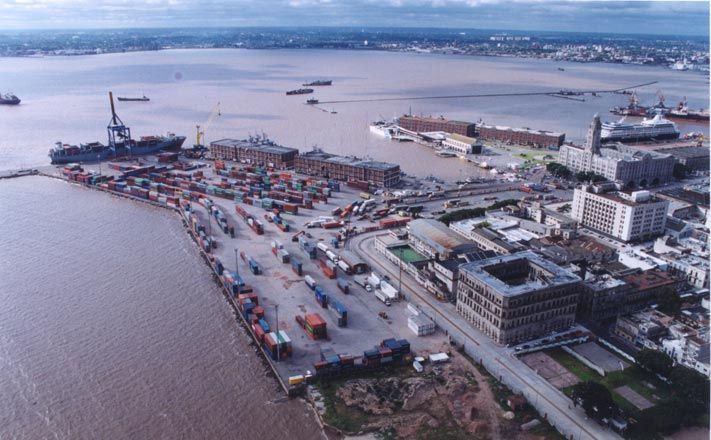 Montevideo port
 In spite of the good relations between the governments of Uruguay and Argentina following the agreement reached on pulp mills, pending and new issues are creeping into the bilateral agenda that could threaten the good chemistry between presidents Jose Mujica and Cristina Kirchner.
According to Montevideo port operators the Argentine government is drafting a bill to interfere with Uruguay’s main sea terminal and support the port of Buenos Aires.
“Argentina is readying measures that are geared against the port of Montevideo, which basically will ban Argentine cargoes from transiting through Montevideo” said Mario Baubeta, president of the Navigation Centre, Cennave.
Buenos Aires port authorities are concerned because cargoes from the south of Argentina are in great volume attracted to Montevideo.
Argentina’s Under Secretary for Ports and Navigable Courses Ricardo Lujan has informed Buenos Aires port operators that “in the coming days a bill will be approved banning Argentine cargoes from passing through ports in countries which do not have a bilateral transport agreement with Argentina”, which automatically leaves Uruguayan terminals out.
“Lujan told Buenos Aires operators that the bill will be implemented in a fortnight at the most; once we heard the news last August 27, we immediately reported it to the Foreign Affairs Ministry”, said Baubeta, who added that the report was left on the desk of Foreign Affairs Minister Luis Almagro 24 hours before he met with his Argentine counterpart Hector Timerman.
So far Cennave is not aware Minister Almagro read the report or if it was considered during the bilateral meeting. Nevertheless Cennave also informed the Uruguayan Ports Administration, ANP, president Alberto Díaz, whom so far has not called back.
Baubeta said that if the bill announced by Lujan is finally implemented by Argentina “activity in the port of Montevideo could suffer since a great percentage of cargoes operating through Uruguay’s main sea terminal come from Argentina”.
At least 75% of cargoes in transit originate in Argentina, mainly from the south.
The situation is not new. The port rivalry between Montevideo and Buenos Aires dates back to colonial times, but the Uruguayan capital has always had the geo-political and geographical edge. No wonder that Buenos Aires has sustainedly tried to downgrade whenever possible Montevideo.
If the announced ruling is implemented Buenos Aires then becomes the hub for all Argentine cargo from the south to the detriment of Montevideo. Private operators in Buenos Aires and along the River Parana, from where most Argentine soy is shipped, have long been on that crusade, according to Uruguayan sources.
According to Baubeta the measure is targeted to press Uruguay to vote favourably the Multilateral Maritime Transport Agreement in the framework of Mercosur which already has the support from Brazil, Paraguay and Argentina.
Uruguay refuses to accompany the initiative precisely because of the port of Montevideo’s activities as a regional hub. The agreement limits Mercosur cargo to vessels flagged in member countries which would limit all cargoes in transit, to and from Mercosur, which make use of Uruguayan ports.
Uruguay apparently would not object if the project excludes coastal trade which is what most influences its transit activities.
“Uruguay does not support the initiative because it includes all feeder cargoes and trans-shipments to third countries. It’s geared in the same direction that the Lujan proposed bill”, underlines Baubeta.
Related to this issue is the dredging of the Martin Garcia canal in the River Plate, which must be done jointly with Argentina. Martin García is crucial for Uruguay since it leads to the port of Nueva Palmira that has become an important trans-shipment terminal with several hundreds of millions of annual turnover, included all the pulp production from the UPM/Botnia mill at the heart of the long dispute with Argentina.
The other main canal, Mitre which opens the way directly to the port of Buenos Aires has a reasonable maintenance with the purpose of keeping the Argentine options open.
Uruguayan president Jose Mujica has repeatedly stated that reaching an agreement with Argentina on dredging the Martin Garcia canal is more important than liberating the Fray Bentos Gualeguaychú bridge that was under pickets’ control since 2006 until a couple of months ago.
“IF we manage to liberate the bridge, great; but if we can’t convince the Argentines to dredge Martin Garcia, the bilateral talks will have been a failure”, President Mujica was quoted at the time of negotiations to end the pulp mills dispute and to environmentally monitor the River Uruguay course.


Top Comments
Disclaimer & comment rules-

-

-

Read all commentsWhy do I feel like we're missing the other side of the story here?
Sep 08th, 2010 - 07:55 am 0Is this article good enough to explain why no one neighbors loves the Argentina's last lefties Gvt.'s (read K's terms)???
Sep 08th, 2010 - 01:27 pm 0They never respect their words, aren´t reliables and ever are pushing through the neighbors...
Exception was the Menem term when it was the contrary.
R.I.P. Argentina, unfortunately...
why would Argentina give access to this illegal pulp mills, I think they should be bared from traveling in the River and sent back to Europe to cut the trees in their own country. say bye bye to the pirats, cry us a river.
Sep 08th, 2010 - 04:39 pm 0Commenting for this story is now closed.
If you have a Facebook account, become a fan and comment on our Facebook Page!