MercoPress. South Atlantic News Agency


Why you can’t find a Big Mac on Argentina’s Mc Donald’s menu?
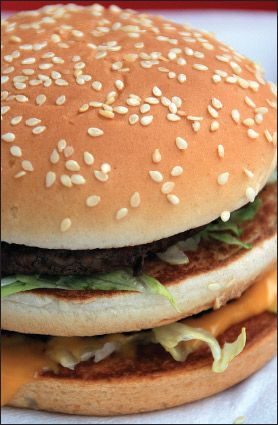 McDonald’s helping combat the Argentine inflation index
 Argentina’s booming economy has been one of the few bright lights in an otherwise gloomy global financial picture the last few years. But inflation of up to 25% threatens that growth. It's one of the world’s highest inflation rates, reports the US public funded Public Radio International.
The Argentine government insists the number is much lower: under 10%. And it’s enlisted the world’s most famous hamburger to help make its case, in a mysterious way, or so it seems. Step in line at any McDonalds. And you’ll find there’s no Big Mac on the menu.
“It’s really hard to find the Big Mac on the board here. Like, there’s no picture,” said economist Miguel Angel Boyano. But if you want to order one? No problem.
And compared to what is on the menu, like a quarter pounder or chicken McNuggets, the Big Mac is cheap. With fries and drink, it’s just 22 pesos, or about 5.50 dollars. The other meals start at 33 pesos.
So why are the Golden Arches hiding those two all-beef patties, special sauce, lettuce, cheese, pickles and onion on a sesame seed bun? And selling them at 30% off? Boyano’s not surprised at all. In fact, he called it, “an obvious thing.”
Boyano said Argentina’s current government, especially commerce secretary Guillermo Moreno, is notorious for telling companies to fix certain prices to keep the official inflation rate down.
“I’m 100 percent sure they told the guys at McDonald's, listen, you won’t sell this meal over this level. So they actually fix it about 30% below the other ones,” Boyano said.
The Economist magazine publishes one of several inflation indicators. Its famous Big Mac index uses the prices of Big Macs worldwide to measure inflation rates. The magazine called out Argentina last year for manipulating the price.
There’s broad consensus among private economists here that inflation is more than double the government’s official rate. Last year, President Cristina Fernandez administration sued 12 economists for publishing their own figures, including those of former Undersecretary of Finance Miguel Kiguel.
Kiguel said the government’s sticking to the lower rate, under 10% instead of 25%, hoping to curb expectations.
“If they can convince people that the inflation is 10%, all of a sudden, wage increases would be 10%, and people would demand only 10% wage increases,” he said.
But that’s not happening. Right now unions are insisting on 25% wage increases, and in the past, they’ve gotten them. Kiguel’s firm, Econviews, consults with foreign companies. He said investors otherwise bullish on Argentina may get spooked by the government’s increasing hand in the domestic economy.
“Lots of controls on imports, controls on exports, also controls on sending dividends abroad,” he said. “But, you know, firms that operate in a country like this, pay attention to this.”
President Fernandez has actively defended the government intervention, saying it’s the only way for her small country to develop mature industries that can compete with the United States and Western Europe.
Fernandez de Kirchner is popular with Argentines, having won a landslide election last October. But that doesn’t mean they buy her government’s inflation figures.
The Argentine government has stayed mum on the Big Mac controversy. When local media asked McDonald's why its most famous product was removed from displays, the company said it’s just marketing new products, like a “Triple Mac”.
But if it’s a fast food deal you’re looking for, the Big Mac may be Argentina’s worst kept secret.


Top Comments
Disclaimer & comment rules-

-

-

Read all commentswhy would they want a big mac,
Feb 08th, 2012 - 10:57 pm 0when they are ordered to have a KFC .
Forget about that McGarbage in Argentina, bife de chorizo anyone?
Feb 08th, 2012 - 11:14 pm 0http://www.youtube.com/watch?v=VzXq7vY9xVo
Marcos, McGarbage aka Mcdonalds is for ugly people. I'm in for the bife de chorizo, rice, fries, salad and a good wine.
Feb 08th, 2012 - 11:37 pm 0Commenting for this story is now closed.
If you have a Facebook account, become a fan and comment on our Facebook Page!