MercoPress. South Atlantic News Agency

Cuba to end Soviet-style economy and will implement market friendly policies
 Eventually every Cuban will have to pay property and income taxes
 Cuba adopted a new tax code this week and said it would loosen regulations on some state companies while turning others into cooperatives, as one of the world's last Soviet-style economies moves in a more market-friendly direction.
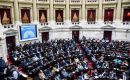
The plans were announced at a session of the National Assembly, which passed the country's first comprehensive tax code since the 1959 revolution on the communist-ruled island.
President Raúl Castro, 81, has liberalized regulations for small businesses and farming, and begun leasing small state retail outlets to employees since taking over for his ailing older brother Fidel in 2008.
Marino Murillo, head of the Communist Party commission responsible for implementing reforms approved at a party Congress last year, characterized the tax law as providing the basis for “bringing up to date the economic model,“ while releasing few details of the code.
The new law takes effect next year and is scheduled for publication next month.
Castro's point man for reform said it would gradually replace an old Soviet-style system and eventually require everyone to pay income and property taxes for the first time since the 1960s.
Murillo, in a two-hour presentation to the National Assembly, announced that an unspecified number of state companies would be partially deregulated by the end of the year.
He said the companies, previously part of various ministries, would be able to make day-to-day business decisions without waiting for government approval, manage their labour relations and set prices. After meeting state contracts, they will also be able to sell excess production on the open market.
The companies will be self-financed, including through bank credits, and expected to cover their losses, versus handing over all profit to the state and receiving financing and subsidies from the treasury.
Instead of being micro-managed by the ministries, Murillo said the companies would be evaluated by ”“four or five indicators“ such as earnings, the relation of productivity to salaries and their ability to meet the terms of state contracts.
Murillo also announced that 222 small to medium-sized state businesses were preparing to become cooperatives, ranging from restaurants and produce markets to shrimp breeding and transportation.
The cooperatives will lease state property and equipment at 10-year renewable intervals, operate on a market basis, pay taxes like other companies and divide profits among members as they see fit, Murillo said.
”“We are not calling for turmoil ... but the reality of life shows we can not maintain (a command economy),“ he said.
The five-year reform plan calls for moving from government administration of just about the entire economy to managing it through “”indirect“ means such as taxes and bank credits.
Most retail services and minor production and farming are scheduled to go over to a “”non-state” sector that will account for more than 40% of the labour force, compared with the current 15%.


Top Comments
Disclaimer & comment rules-

-

-

Read all commentsIs that'market friendly' according to the Venezuelan and Argentinian definition of 'market friendly'?
Jul 27th, 2012 - 11:45 am 0As usual the fist people to benefit from economic reforms will be the communist party officials and their families, they will become the owners of hotels, shops and main businesses, pretty much the way things happen in China. Crony capitalism at its best.
Jul 28th, 2012 - 02:42 am 0@1
Jul 28th, 2012 - 03:27 am 0Probably not the British definition. That would entail the investors ripping off the public.
Commenting for this story is now closed.
If you have a Facebook account, become a fan and comment on our Facebook Page!