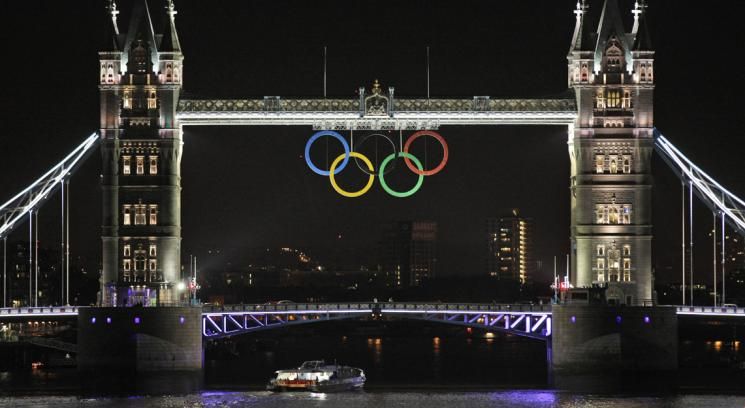
Can the Olympics re-brand Britain?
By Andrew Hammond (*) With London 2012 proving a once-in-a-generation global showcase for Britain, a key uncertainty nonetheless remains over whether a substantial, meaningful legacy can be secured in future years from hosting the games. Given that the official public cost of the Olympics is some 9.3 billion pounds (a figure Parliament believes is nearer 11 billion pounds, and Sky News estimates to be a staggering 24 billion pounds) this is a key question, especially as Britain languishes in a double dip recession.
The two most frequently cited legacies of London 2012 are: firstly, securing long-term success from the regeneration of the Olympic Park and surrounding area; and, secondly, inspiring a new generation of sportsmen and women across England, Scotland, Wales and Northern Ireland.
However, above and beyond this, the Government’s ambition is nothing less than enhancing Britain’s reputation across the globe. The goal of its innovative cross-departmental GREAT campaign, of which the Olympics is the high point to date, is to refresh the brand of the home nations as amongst the top places in the world to visit, live, work, study and do business, with key areas of excellence (as highlighted in the Olympic opening ceremony) including Technology and Innovation, Entrepreneurship, Creativity, Knowledge, Green, Heritage, Sport, Shopping, Music and Countryside.
At a time of continued economic uncertainty, the bottom-line is to increase business investment and growth: “to sell Britain on the back of British success” in the words of the prime minister. The Government estimates that the ‘London 2012 effect’ will stimulate some 13 billion pounds of benefit to the economy over the next 4 years, and is seeking to underpin this by hosting a global investment conference and 17 business summits during the Olympics.
Two major questions arise. Firstly, can a country’s reputation be enhanced in the same way as a corporate (or other organisation) might do? And, secondly, can this have a significant national economic impact?
On the first issue, boosting country reputation is an ever common ambition in what is an overcrowded global information marketplace. Competition for the attention of stakeholders like investors and tourists is intensifying, and national reputation can therefore be a prized asset or a big liability, with a direct effect on future political, economic, and social fortunes.
In general, the most effective country reputation strategies align all key national stakeholders (across the public, private and third sectors) around a single, coherent vision for global positioning. This exercise should not just be the preserve of tourism agencies, let alone government.
A good example here is New Zealand. Since the 1980s and 1990s, the country has transformed itself from earlier perceptions of being a relatively remote economic backwater which, despite its scenic beauty, was not a major global tourist destination.
Especially in the midst of the difficult economic climate of the 1970s and 1980s, partly caused by the country’s loss of preferred trading status with Britain and the Commonwealth (amongst the nation’s then major export markets), New Zealand recognised that a strong country reputation for quality would be hugely beneficial if it was to better compete in global markets.
Here, the untapped potential of the country’s natural environment was recognised (and indeed showcased in films like ‘Lord of the Rings’). And, not just in terms of natural produce exports, but also for building a destination brand for tourism and outdoor sports.
The New Zealand example underlines how even a relatively simple, unified, cross-sectoral vision can be powerful. To be sure, the country is not unique in having an unspoiled environment and quality produce. But it has managed to capture the world’s imagination with its consistent branding that has put natural values firmly at its core as epitomised by the ‘New Zealand 100% Pure’ slogan.
Turning to the second question, top-class country reputation strategies can be one key component of national economic success. In New Zealand, for instance, the tourism sector has enjoyed a boom --visitor numbers from Britain increased by around 60% between 2001 and 2006 alone.
Meanwhile, the success of the country’s agriculture sector, which has become more competitive and efficient, is symbolised by the fact that it now accounts for one third of global dairy exports (that is twice Saudi Arabia’s share of the world oil exports), including significant amounts of milk powder to Chinese consumers wary of safety concerns surrounding local brands. This success helped drive, in 2011, New Zealand’s largest ever trade surplus, with terms of trade at an almost 40 year high.
Whether Britain’s GREAT campaign succeeds in helping secure the 13 billion pounds asserted by the Government will depend, in significant part, on the global economy’s fortunes in coming years. For instance, the Government estimates that the ‘London 2012 effect’ will stimulate an additional 4.5 million overseas tourists over the next four years -- resulting in some 2.3 billion pounds of spending, and the creation of 70,000 jobs.
This is speculative, and, in truth, the medium and long-term economic impact of previous Olympics has frequently been overstated for host nations. To maximise prospects of the GREAT campaign helping to enable Britain’s economic recovery, it will therefore need to be sustained well beyond London 2012, and also increasingly utilise the innovation and expertise of Britain’s private sector.
(*) Andrew Hammond is an Associate Partner at ReputationInc, and formerly a UK Government Special Adviser and Senior Consultant at Oxford Analytica



36 comments Feed
Note: Comments do not reflect MercoPress’ opinions. They are the personal view of our users. We wish to keep this as open and unregulated as possible. However, rude or foul language, discriminative comments (based on ethnicity, religion, gender, nationality, sexual orientation or the sort), spamming or any other offensive or inappropriate behaviour will not be tolerated. Please report any inadequate posts to the editor. Comments must be in English. Thank you.
some countries dont even let their tards have financial freedom
or they promise their tards land thats isnt theirs to passify them and keep its own tards in poverty while they steal their savings, how do you care for that legacy??
You have to be the best,
All the rest is sour grapes .
.
You are mistaken, the Argentine National Anthem and Argentine Athletes have been respected throughout the London Olympics.
You know this is untrue ...
and if you don't know this, take it from me because I know it did not happen.
Neither did the British burn you national flag or hide it from the world's media.
thought not.....to my disappointment nobody has been booed and Argentina have been treated with the same respect as all other nations a respect it does NOT deserve. The UK has something argtards lack.....thats right dignity.
Bloody ‘ell only come to my mind knife stabbing, dirtiness, inefficiency, unsafe busses from 1963 still running, old cabs, flat buildings, bad weather, kebabs, bad food, streets that seem to be the 3er world and economy collapse.
Well I guess that didn’t work the re-brand stuff.
Why don’t you burn the whole thing and try to build something really good and modern?
Ah! I forgot that poor Britons have no money and that they are very lazy.
The Brits booed our national anthem, they have yet again prooved that they are the same as ever...
You are totally wrong guzzy boy, lets get this right, we didn't boo your national anthem. we booed one of your arrogant football players when his picture came on the big screen.
Try not to make up crap.
You have lost me. I simply said, the games were a great success, that is what matters. I care not what their legacy maybe.
whats this..... rapes, murders, kidnaps, robbery.......... well blow me, Fuzz, Argentina is like every other country in the world, who would have guessed that, the only difference is Argentine crime is state sponsored!
@1 being british i do care about the legacy as it was mine and millions of others taxes that paid for the event, i would like to think britain will benefit from the olympics for many years to come.
May be they saw 9.3 billion pounds coming from more debt that you will have to pay?
The legacy is above I guess AKA more debt a little high of sugar and then all would be the same.
Panis et circensis like in Romans times previous to the collapse.
Uruguay hasn't won a gold medal, so how could 'your' national anthem have been booed?
Unless you are now admitting that you are Argentinian? But even then, Argentina has only won a bronze, thus far, so again no national anthem to be booed.
Perhaps you missed the opening ceremony where the crowd gave the Argentinian team a big cheer.
Somehow if the situation were reversed an the Games held in Argentina, I would suspect that the Argentinian crowd would boo.
The British aren't like that. We respect every athlete who made it to the Olympics, because it takes a lot of hard work and determination just to qualify. Winning medals isn't that important in the long run, I mean it's great when your country wins a medal, especially gold, but that's just the icing on the cake for these athletes.
Just so you don't get confused here's the medal count for 'your' two countries.
Argentina = 1 bronze (so far)
Uruguay = 0 (so far)
Now Guzz, just where are you from? Uruguay? Argentina?
sports.yahoo.com/blogs/soccer-dirty-tackle/luis-suarez-thinks-people-jeer-him-because-fear-025531623--sow.html
Guzz is just trying to twist things.
Just to add, when the Argentine stood for his bronze medal for tennis there were cheers of congratulation, no booing, no Falklands remarks, just cheers, I was quite glad when it happened as booing would have reduced us to their level.
They'll have to take your word on that one by the looks of things.
GB - 24 GOLD, 13 Silver, 14 Bronze
Arg - 0 0 1
Uru - Who?
I never said you booed Arg, I said you booed my country. That you have decided where I'm fom is not my fault...
Don't blaim racism, you translate your prejudices into our language and galls us racist. In your multi cultural world there is a place for all colours except black, and we are the racists. Why don't you boo Terry?
Booing anthems is every day practice in Britain even among them.
“God Save the Queen was booed before England played football against Wales at the stadium in March 2011”
www.bbc.co.uk/news/uk-wales-south-east-wales-19062799
So no big deal but a have a dream like MLK to see one day Brits to become civilised because I still believe in miracles. Like this little mouse.
www.youtube.com/watch?v=KlTMQ5FyM-w
Can I be so wrong?
This could be avoided by introducing the individuals when the anthem is NOT being played. That way Guzz will not be confused.
Anybody - in fact all 50,000 people in the stadium - could be invited to express their disgust with racists without offending 'national sensitivities' during ceremonials.
We could do the same with convicted performance-enhancing-drug-takers, where the audiences could again be given the official opportunity to express their disgust.
These two things could go a long way to stamping out these unacceptable habits, and might give the Olympic committee the balls to stand up to 'human rights' arguments.
Excellent idea. It was not Uruguay being booed but a very unpopular player with a reputation for racism and unsportsmanlike behaviour.
As for John Terry, despite being found not guilty of racism in a court of law, I suspect he will endure a lot of negative heckling when the season starts in nine days time. Footie fans are tribal, basic and not known for being forgiving.
I alongside many other people, including Swiss and Mexicans - the previous game, you buy the ticket and it covers both games, some just turned up for GB but I watched both - booed Suarez, he's a disgusting racist who shouldn't have been allowed to participate, I would have booed anyone who was a proven racist. It goes against what the games are about.
Finally, when another nations anthem is being played, you shut up and show respect, anything else is lack of the same. Bloody common sense...
You can bitch about us all you like. At least we don't attack south american embassies in crowds and burn your flags. Boo'ing is nothing compared to physical violence against another nation.
Look and learn, my South American friends ... especially my Brasilian colleagues who will have to learn the same trick in 4 year's time.
A bunch of medals on sports that noone even knew existed is not a great achievement...
With respect *just to* Men's Football at the 2012 London World Olympics, Mexico certainly played well throughout the tournament and, in the final match, the team-play out-played Brasil's flair - which faltered.
My serious message is to Brasil. 'Look and learn' is sensible guidance.
London has done this at all recent Olympics, especially Beijing and Atlanta. The result is:
(i) a safe Games,
(ii) a happy and friendly Games,
(iii) a Games for the 'common man' (unlike Beijing),
(iv) a logistically successful Games,
(v) a Games well planned and with its national and local Games infrastructures built in a timely fashion.
London's 'failures' have been:
(i) in G4S, private security ..... made good by the British armed forces, who showed the human face of the British soldier in peacetime.
(ii) in ticket sales .... where the allocations of tickets to the world's national teams meant blocks of seats unfilled when they failed to turn up. These blocks were filled in part by local, on the day allocations.
(iii) Playing the South Korean anthem for North Korea. Unforgivable!
Yes, there is so much for Brasil to learn ... and I know personally how deficient is the Brasilian transport infrastructure.
There is so much for all countries to learn:
... in communications. This is the first internet Games, where results and messages transmit between the peoples of the world and the participants instantly. Nothing will be the same from now on.
... in security and safety. The subtle ability to protect and defend the world's visitors effectively but with pleasantness.
... in using the talents of the whole world to build the Olympic edifices .. and then to dismantle and scale them down so they can be used 'in perpetuity' for sport and the communities.
... in budget management. Recognising that the cost and benefit balance is not simply a matter of dollars; ensuring that accounts are real, and that the Games are not corrupt money-making.
I've been preparing for my performance during the Great British Symphony at the closing ceremony for the Olympics for quite some time, but was sworn to secrecy and had to keep it under wraps. I'm so proud of the whole production team, who've done the most exceptional job!
The mood here is that everyone has been blown away by the uplift of the last two weeks...
We can all celebrate the breathtaking achievements of all the athletes who took part, and be proud to belong to a democratic country and culture which despite it's faults, is fundamentally inclusive.. open minded ...diverse ...and pretty much is a great place to belong to.
The handover to Brasil gave the world a 'taster' of what it means to be Brasilian or to live in Brasil.
Outstanding, even to those who only viewed it with no understanding of Brasilian culture and had never heard, or heard of, Vila Lobos.
Though I am proud to be British, I have so much love for this crazy country called BRASIL.
Four years time, my Mercopress friends ..... see you all in Rio!!!
Commenting for this story is now closed.
If you have a Facebook account, become a fan and comment on our Facebook Page!