MercoPress. South Atlantic News Agency
Venezuela
-
Friday, March 13th 2026 - 02:57 UTC
Thousands of Venezuelans in Santiago de Chile rally behind María Corina Machado

Venezuelan opposition leader María Corina Machado drew thousands of supporters to central Santiago on Thursday in the largest public demonstration she has led since leaving Venezuela in late 2025. The gathering, held between Paseo Bulnes and Parque Almagro, exceeded initial expectations and became one of the most visible displays of the Venezuelan diaspora in Chile in recent years. According to estimates by Carabineros cited by Chilean and Spanish media, turnout ranged between 16,000 and 17,000 people.
-
Thursday, March 12th 2026 - 02:50 UTC
U.S. formalizes before court its recognition of Delcy Rodríguez as Venezuela’s state authority
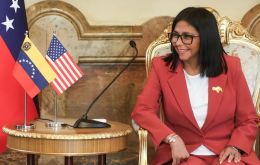
The U.S. government has formally recognized Delcy Rodríguez before a federal court in New York as the Venezuelan authority empowered to act on behalf of the state, giving legal effect to the diplomatic shift toward Caracas announced last week. The move appears in a “statement of interest” filed on March 10 in response to a court order on who legally represents Venezuela in ongoing litigation in U.S. courts.
-
Wednesday, March 11th 2026 - 14:23 UTC
Venezuela opens mining sector to foreign capital as US authorizes Minerven gold dealings
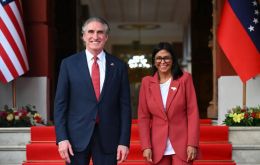
Venezuela this week took another step toward opening its extractive sector to foreign capital, while the United States authorized limited transactions involving Venezuelan gold. The National Assembly approved on first reading a mining reform pushed by Delcy Rodríguez’s interim government, as Washington issued a license allowing dealings with Minerven, Venezuela’s state gold company, just days after the two countries restored diplomatic and consular relations.
-
Wednesday, March 11th 2026 - 03:49 UTC
María Corina Machado arrives in Chile for Kast’s inauguration and meeting with Venezuelan migrants
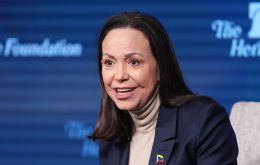
Venezuelan opposition leader María Corina Machado has arrived in Chile to attend Wednesday’s ceremony in which Gabriel Boric will hand over the presidency to José Antonio Kast, in a visit that also includes an event with Venezuelan residents in Santiago and several public appearances in the capital. She is among the international guests invited to the transfer of power, where Kast will formally take office at Congress in Valparaíso.
-
Monday, March 9th 2026 - 17:55 UTC
U.S. kept deporting migrants to Venezuela and Iran despite plans for military action

The United States continued deporting migrants to Iran and Venezuela while increasing military and diplomatic pressure on both countries, according to official records, agency reports and data from organizations tracking removal flights. In Iran’s case, Washington resumed deportation flights to Tehran in September 2025 after decades without carrying out such transfers, in a shift that coincided with a sharp deterioration in bilateral relations.
-
Friday, March 6th 2026 - 04:24 UTC
US and Venezuela restore diplomatic and consular ties after seven-year rupture
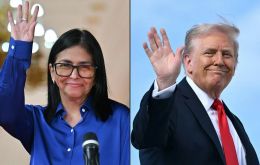
The United States and Venezuela’s interim authorities have agreed to restore diplomatic and consular relations, in a formal shift that ends a rupture dating back to 2019 and deepens the bilateral thaw that began after Nicolás Maduro was captured by U.S. forces in January. The announcement was made on Thursday by the State Department.
-
Thursday, March 5th 2026 - 21:36 UTC
Bullrich meets freed gendarme Nahuel Gallo at Senate, questions AFA role in his release

Senator Patricia Bullrich met at her Senate office with Argentine gendarme Nahuel Gallo, who was freed after 448 days in detention in Venezuela, in talks that lasted nearly two hours and focused on his captivity and the process that led to his return. Speaking afterwards, Bullrich said Gallo had “barely told 10% of what he lived through” and indicated the two would meet again.
-
Wednesday, March 4th 2026 - 22:47 UTC
US interior secretary highlights Venezuela’s mineral wealth, says cooperation has “no limits”
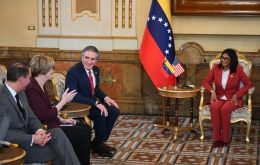
US Interior Secretary Doug Burgum said in Caracas on Wednesday that opportunities for cooperation between Washington and Venezuela “have no limits,” highlighting the South American country’s mineral potential during a visit focused on mining and access to critical minerals.
-
Wednesday, March 4th 2026 - 22:04 UTC
Released Argentine gendarme alleges “psychological torture” at Venezuela’s Rodeo I prison
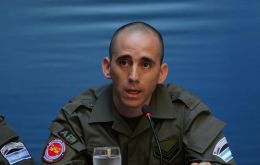
Nahuel Gallo, the Argentine gendarme freed after 448 days in detention in Venezuela, urged the release of “24 foreign nationals” he said remain imprisoned at the Rodeo I facility and asked for time before detailing what he endured during captivity. “Until they release those 24 foreign nationals, I’m not free,” he said in a short statement to reporters, without taking questions.
-
Thursday, February 26th 2026 - 08:43 UTC
Venezuela attorney general Tarek William Saab resigns, takes interim ombudsman role

Venezuela’s National Assembly, dominated by the ruling bloc, on Wednesday 25 February accepted the resignation of Attorney General Tarek William Saab and Ombudsman Alfredo Ruiz, and immediately named temporary replacements: Saab will serve as acting ombudsman and lawyer Larry Devoe was appointed acting attorney general.
