MercoPress. South Atlantic News Agency
Health & Science
-
Wednesday, May 6th 2026 - 16:10 UTC
WHO confirms Andes strain in MV Hondius outbreak and traces 23 passengers who disembarked at Saint Helena
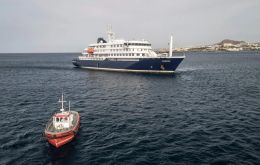
The World Health Organization (WHO) confirmed on Wednesday that the variant responsible for the hantavirus outbreak aboard polar cruise ship MV Hondius is the Andes virus, the only documented strain capable of human-to-human transmission, raised the total number of linked cases to eight, and launched the international tracing of 23 passengers who left the ship two weeks ago during a stop at the island of Saint Helena. The confirmation of the strain represents a significant epidemiological development and substantially widens the scope of the health investigation.
-
Tuesday, May 5th 2026 - 22:18 UTC
Falklands monitor MV Hondius hantavirus outbreak and clarify the route did not include the islands
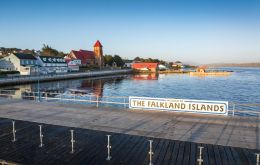
The Falkland Islands Government issued an official statement on Tuesday confirming that it is closely monitoring the hantavirus outbreak aboard the polar cruise ship MV Hondius — a vessel that frequently operates in the archipelago's waters — and took the opportunity to correct information reported by some international media outlets suggesting that the ship had stopped at the islands on its current voyage from Ushuaia. The Falkland Islands Maritime Authority clarified that this information is incorrect and that the Hondius's most recent visit to the archipelago was in mid-February, weeks before the journey that triggered the current health crisis.
-
Tuesday, May 5th 2026 - 21:58 UTC
Spain agrees to receive hantavirus-hit cruise ship in Canary Islands following WHO request
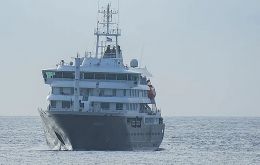
The Spanish government on Tuesday night authorised the docking in the Canary Islands of the polar cruise ship MV Hondius, on which a hantavirus outbreak has already left three people dead, after Cape Verdean authorities denied it entry to their ports and following a formal request from the World Health Organization (WHO) that invoked Spain's “moral and legal obligation” to assist the 147 passengers and crew on board, including 14 Spanish citizens.
-
Tuesday, May 5th 2026 - 03:23 UTC
Cape Verde denies docking to hantavirus-hit cruise ship as WHO confirms seven cases
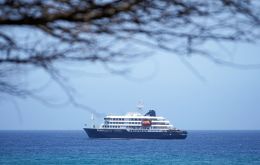
Cape Verde's health authorities on Monday denied permission to dock at the port of Praia to polar cruise ship MV Hondius, on board which the World Health Organization (WHO) has confirmed seven cases of hantavirus — two of them laboratory-verified — and three deaths linked to the voyage. The decision leaves the nearly 150 people remaining on board in prolonged isolation in Atlantic waters, while medical evacuations are coordinated for patients in the most serious condition and authorities evaluate the possibility of continuing the journey toward the Canary Islands, on Spanish territory.
-
Monday, May 4th 2026 - 01:45 UTC
Three dead in hantavirus outbreak aboard polar cruise ship from Ushuaia bound for Cape Verde
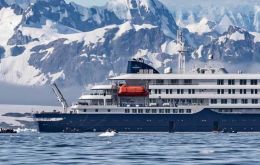
The World Health Organization (WHO) confirmed three deaths on Sunday aboard the polar cruise ship MV Hondius from a hantavirus outbreak, a disease typically transmitted through rodents. The vessel, operated by the Dutch company Oceanwide Expeditions, had set sail from the port of Ushuaia, in Argentina's Tierra del Fuego province, on March 20, bound for the port of Praia in Cape Verde, where its journey was scheduled to conclude on May 4.
-
Monday, April 20th 2026 - 21:44 UTC
Falklands: Uruguay Sciences Faculty researching sandy beaches of the Islands

A group of Uruguayan scientists have spent the last two weeks gathering samples from beaches around the Falkland Islands. Their research is aimed at discovering how humans and wildlife affect ecosystems within the sandy coastline.
-
Wednesday, April 15th 2026 - 10:00 UTC
Bukele bets on Google to build “world's best health system” as medical sector decries layoffs

El Salvador's President Nayib Bukele announced on Tuesday in a national broadcast the launch of the second phase of Dr. SV, a public health application developed with Google Cloud that incorporates artificial intelligence based on the Gemini model to detect, diagnose and monitor patients with chronic diseases such as diabetes, hypertension and kidney conditions.
-
Saturday, April 11th 2026 - 04:44 UTC
Orion capsule splashes down in Pacific, completing Artemis II, first crewed Moon flight in over 50 years

NASA's Orion capsule splashed down at 8:07 p.m. ET on Friday (00:07 GMT Saturday) in the Pacific Ocean off the coast of San Diego, California, completing the Artemis II mission, the first crewed flight to the Moon since Apollo 17 in December 1972.
-
Friday, April 10th 2026 - 17:54 UTC
Argentina permanently revokes licenses of laboratories implicated in contaminated fentanyl case

Argentina's National Administration of Drugs, Foods and Medical Devices (Anmat) permanently revoked the operating licenses of laboratories HLB Pharma and Laboratorios Ramallo, linked to the production of contaminated fentanyl that caused the deaths of at least 111 people between late 2024 and the first half of 2025, in one of the worst health tragedies in the country's recent history.
-
Thursday, April 9th 2026 - 21:53 UTC
Scottish cameraman Doug Allan dies in Nepal during trek to Annapurna base camp

Wildlife cameraman and photographer Doug Allan died on Wednesday at a hospital in Pokhara, Nepal, after suffering a brain hemorrhage during a trek to Annapurna base camp, the world's tenth highest mountain. He was 74.
