MercoPress. South Atlantic News Agency

Lula da Silva hosts virtual BRICS Summit
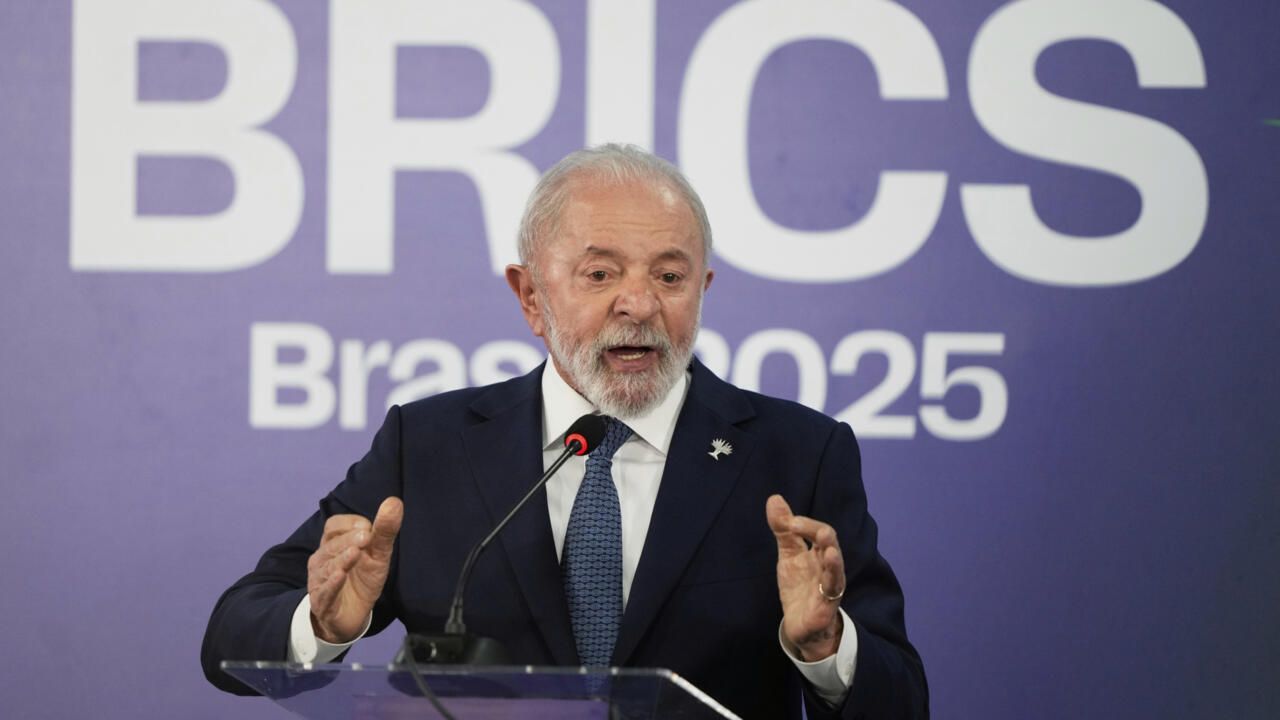 Lula hosted the conference, seeking alternatives to Trump's tariffs
 High-ranking leaders of BRICS countries discussed on Monday morning how to expand trade mechanisms between the bloc's nations during a multiple conference hosted by Brazilian President Luiz Inácio Lula da Silva in a move to counter Washington's tariff increase.
“Trade and financial integration between our countries offer a safe option to mitigate the effects of protectionism,” Lula said in his message. For Lula, the group of powers in the Global South has “the legitimacy necessary to lead the refounding of the multilateral trading system on modern, flexible bases geared to our development needs.”
Lula also cited the role of the New Development Bank (BRICS bank) in diversifying economic bases and complementarities between countries. “Together, we represent 40% of global GDP, 26% of international trade, and almost 50% of the world's population. Among us are major energy exporters and consumers. We have the necessary conditions to promote green industrialization, which generates jobs and income in our countries, especially in high-tech sectors. We account for 33% of arable land and 42% of global agricultural production,” he also pointed out.
For the Brazilian president, the governance crisis “is not a temporary issue,” and it is up to BRICS to show that cooperation “overcomes any form of rivalry.”
”The World Trade Organization (WTO) has been paralyzed for years. In a matter of weeks, unilateral measures have rendered basic principles of free trade, such as the Most-Favored-Nation and National Treatment clauses, meaningless. We are now witnessing the formal burial of these principles. Our countries have become victims of unjustified and illegal trade practices,” he said.
“Tariff blackmail is being normalized as a tool to conquer markets and interfere in domestic issues. The imposition of extraterritorial measures threatens our institutions. Secondary sanctions restrict our freedom to strengthen trade with friendly countries. Divide and conquer is the strategy of unilateralism,” he added.
This year, Brazil holds the presidency of BRICS. In the context of changes in global geopolitics, in various international forums since the beginning of his third term, Lula has been advocating for the reform of multilateral global governance institutions, such as the United Nations (UN) Security Council and the WTO.
“We need to arrive united at the 14th WTO Ministerial Conference next year in Cameroon,” Lula also argued, according to a release from the Planalto Palace.
“The meeting was also an opportunity to share views on how to address the risks associated with the resurgence of unilateral measures, including in international trade, and on how to expand mechanisms for solidarity, coordination, and trade among BRICS countries,” the Brazilian Presidency further noted.
The White House's tariffs are an attempt to reverse the relative loss of competitiveness of the US economy to China in recent decades. Experts consulted by Agência Brasil believe that President Donald Trump's measure is also political blackmail aimed at the BRICS countries, since Washington views this group of Southern Hemisphere powers as a threat to US hegemony in the world, particularly due to their proposal to replace the dollar in trade.
Monday's extraordinary meeting comes two months after the BRICS Summit in Rio de Janeiro, when Trump again threatened countries aligning with the bloc's policies.
Meanwhile, Chinese President Xi Jinping also spoke about the creation of the Global Governance Initiative (GGI), a possible embryo for a new world order.
The proposal was announced during a meeting earlier this month attended by 20 leaders from non-Western countries, including Russia's Vladimir Putin and India's Narendra Modi, also members of BRICS.
Created in 2009, BRICS is made up of Brazil, Russia, India, and China—the founding countries—South Africa, which joined the bloc shortly after its creation in 2011, and Saudi Arabia, Egypt, the United Arab Emirates, Ethiopia, Indonesia, and Iran, which were admitted in 2024.
In addition, Lula addressed the global “failure” to resolve conflicts between countries, such as the war in Ukraine and genocide in the Gaza Strip. “When the principle of sovereign equality of states is no longer observed, interference in internal affairs becomes common practice. The peaceful resolution of disputes gives way to belligerent behavior,” he said.
In the same vein, Lula referred to the presence of US submarines and military ships in the Caribbean, off the coast of Venezuela, under the pretext of combating drug trafficking.
The US government accuses Nicolás Maduro's Venezuelan government of leading a drug trafficking cartel. Maduro rejects the accusations and says that Washington is using this argument to promote a “regime change” in the oil-rich South American country.
For Lula, both terrorism and the public security challenges that many countries face are distinct phenomena and “should not serve as an excuse for interventions outside the law.”
“Since 1968, Latin America and the Caribbean have chosen to become free of nuclear weapons. For almost 40 years, we have been a Zone of Peace and Cooperation. The presence of the armed forces of the world's greatest power in the Caribbean Sea is a source of tension incompatible with the peaceful vocation of the region,” he mentioned.
The Brazilian president also reiterated his invitation to leaders to participate in the 30th United Nations Climate Change Conference (COP30) in Belém next November.
Lula also suggested the creation of a UN Climate Change Council to coordinate different actors, processes, and mechanisms that are currently “fragmented.”
“The impact of unilateralism is also serious in the environmental sphere. Developing countries are the most affected by climate change. COP30 in Belém will be a moment of truth and science. In addition to working toward the planned decarbonization of the global economy, we can use fossil fuels to finance the ecological transition. We need stronger climate governance, capable of exercising effective oversight,” he said.
The BRICS leaders also exchanged views in preparation for the 80th United Nations General Assembly in New York later this month. For Lula, it will be an opportunity to defend “a reinvigorated multilateralism” and address the multilateral architecture in the digital sphere.
“Without democratic governance, projects of domination centered on a few companies in a few countries will perpetuate themselves. Without digital sovereignty, we will be vulnerable to foreign manipulation. This does not mean fostering an environment of technological isolationism, but rather fostering cooperation based on nationally based, independent, and regulated ecosystems,” he said.
The leaders of China, Egypt, Indonesia, Iran, Russia, South Africa, as well as the Crown Prince of the United Arab Emirates, the Indian Foreign Minister, and Ethiopia's Deputy Foreign Minister participated in Monday's virtual summit. (Source: Agencia Brasil)


Top Comments
Disclaimer & comment rulesCommenting for this story is now closed.
If you have a Facebook account, become a fan and comment on our Facebook Page!