MercoPress. South Atlantic News Agency
Mercosur
-
Monday, September 7th 2026 - 19:20 UTC
A port dispute in Montevideo blocks a second ferry operator on the Buenos Aires route
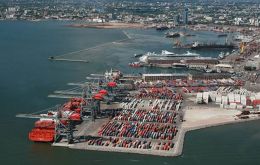
Uruguayan ferry company Colonia Express obtained authorisation from the Ministry of Transport and Public Works at the end of July to operate the passenger and vehicle route between Montevideo and Buenos Aires, but cannot begin the service because the only ramp at the Montevideo port suitable for unloading cars belongs to Buquebus, the company that currently runs the crossing alone.
-
Tuesday, September 1st 2026 - 10:32 UTC
Uruguay and Argentina seek to stop the green hydrogen plant repeating the pulp mill conflict

The governments of Uruguay and Argentina are trying to contain tensions surrounding the green hydrogen and synthetic fuels plant that HIF Global plans to build in the Uruguayan department of Paysandú, on the Uruguay river, after a statement by President Yamandú Orsi drew three consecutive denials from the Argentine side.
-
Friday, August 28th 2026 - 19:35 UTC
The US waives beef tariffs for Brazil and Paraguay, but not for Argentina and Uruguay
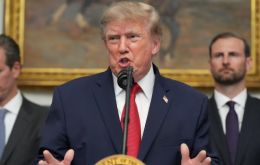
US President Donald Trump signed a proclamation on August 26 temporarily waiving tariffs on imports of up to 300,000 tonnes of lean beef trimmings, a measure that excludes countries already holding their own quotas in the US market, among them Argentina and Uruguay. The main beneficiaries will be Brazil and Paraguay.
-
Thursday, August 27th 2026 - 08:09 UTC
Argentine lawmakers travel to Brasília to repair relations with Brazil
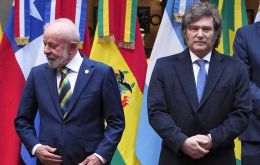
A delegation of Argentine deputies and senators from opposition parties will travel to Brasília next Wednesday with the aim of repairing bilateral relations, strained since President Javier Milei referred to his Brazilian counterpart, Luiz Inácio Lula da Silva, in offensive terms. The group is due to meet the Brazilian Senate's foreign relations committee, the foreign ministry and representatives of the presidency.
-
Wednesday, August 26th 2026 - 08:00 UTC
Bolivia deploys troops against blockades over a decree its own government wants repealed
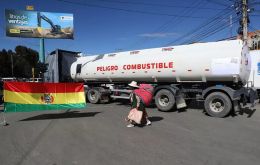
Bolivia's government deployed military and police units on Tuesday in the municipality of Yapacaní, in Santa Cruz department, ahead of announced road blockades called by farming organisations against the decree that raised the price of diesel for large consumers. Hours later, the deputy interior minister acknowledged that the same measure must be annulled.
-
Tuesday, August 25th 2026 - 21:39 UTC
Argentine trips abroad fall 21.2% as Brazil and Uruguay lead arrivals
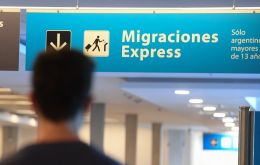
The number of Argentine residents leaving the country in July fell 21.2% year on year, to 1.22 million people, according to the international tourism statistics report released on Tuesday by the National Institute of Statistics and Censuses. In the opposite direction, 830,200 foreign visitors entered the country, 17.9% more than a year earlier.
-
Sunday, August 23rd 2026 - 22:32 UTC
The Mercosur-Singapore trade agreement reaches Argentina's Congress
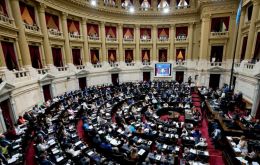
Argentina's Chamber of Deputies will on Wednesday take up ratification of the free trade agreement between Mercosur and Singapore, signed in December 2023 and still awaiting parliamentary approval. It is the first trade treaty the bloc has concluded with a Southeast Asian country.
-
Friday, August 14th 2026 - 22:20 UTC
Peña says the Milei-Lula crisis has not affected how Mercosur functions
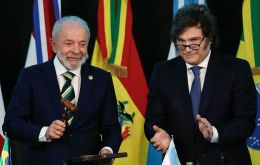
Paraguayan President Santiago Peña said on Friday that the differences between his Argentine and Brazilian counterparts, Javier Milei and Luiz Inácio Lula da Silva, have had no consequences for Mercosur, despite the diplomatic crisis between the two countries.
-
Thursday, August 13th 2026 - 06:55 UTC
The main land crossing between Argentina and Chile passes its winter closure record
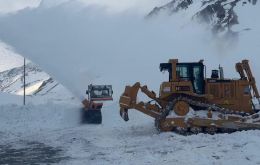
The Cristo Redentor international crossing, which links the Argentine province of Mendoza with Chile's Valparaíso Region through the Andes, has now been closed for close to a month because of a snow and wind storm, surpassing the winter closure record set in 2023. Authorities on both sides estimate it could reopen next week, depending on weather conditions.
-
Wednesday, August 5th 2026 - 21:55 UTC
Brazil ties its ambassador's return to an end to Milei's insults
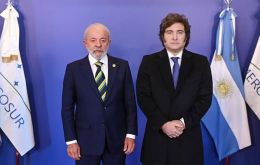
Brazilian Foreign Minister Mauro Vieira said on Wednesday that the downgrading of diplomatic relations with Argentina to chargé d'affaires level will remain in place until Argentine President Javier Milei stops what he called repeated insults and attacks against Luiz Inácio Lula da Silva.