MercoPress. South Atlantic News Agency
Energy & Oil
-
Monday, September 21st 2026 - 12:54 UTC
Falklands government extends all offshore oil licences for five years

The Falkland Islands Government announced on Monday the extension of all existing offshore hydrocarbons production licences, for an initial period of five years with a further two optional years at its discretion, and said the decision has “the full support of the UK Government”.
2 comments -
Sunday, September 20th 2026 - 00:25 UTC
British columnist proposes London take half of Falklands oil revenues
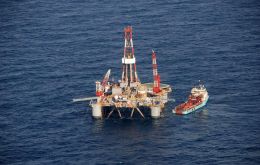
A column published on Saturday in the British newspaper The Telegraph proposed that the UK Treasury take half of the tax revenues generated by the Falklands oil industry, in exchange for increased defense spending in the South Atlantic and a diplomatic push against Argentina.
4 comments -
Thursday, September 17th 2026 - 17:23 UTC
Falklands, Rockhopper raises US$ 20 million in fresh funds to fund Sea Lion project

Rockhopper Exploration has completed a plan to raise fresh funds from shareholders, expecting to bring in around US$200 million to fund its investment in the Sea Lion prospect in the Falklands. The AIM-listed firm announced the results of its open offer to shareholders on Wednesday, which raised total gross proceeds of around US$ 20m.
Add your comment! -
Thursday, September 10th 2026 - 08:25 UTC
Argentina claims Chile is committed to no logistic support for Falklands’ oil industry

The Argentine government has insisted, following the recent presidential Summit between Javie Milei and Chilean leaded Jose Antonio Kast, that their Andean neighbor will continue to strongly support Argentina’s claim over the Falkland Islands and will render no logistic support related to any hydrocarbons extraction in the Islands”.
-
Wednesday, September 9th 2026 - 08:51 UTC
Brent climbs back above US$100 to its highest level since late July
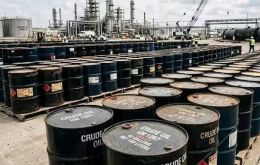
Brent crude for November delivery rose above US$100 a barrel on Wednesday for the first time since late July, in a session shaped by escalating attacks between the United States and Iran and by fears of further supply disruptions in the Middle East.
-
Wednesday, September 9th 2026 - 08:06 UTC
Argentina files criminal complaint against Navitas over Falklands; firm silent, shares slide
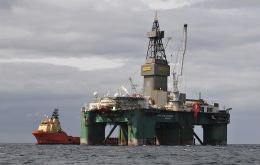
Argentina's government formally filed a criminal complaint on Tuesday against Israeli oil company Navitas Petroleum and four other firms over hydrocarbon exploration in waters near the Falklands, with the company yet to respond to the accusation and amid a slide in the share prices of those involved.
-
Friday, September 4th 2026 - 23:30 UTC
Rockhopper and Navitas shares fall as operators defend Sea Lion timetable
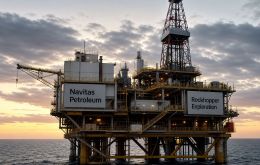
Shares in the two companies developing the Sea Lion field off the Falklands fell on Friday after Argentine President Javier Milei announced he would tighten sanctions on firms operating around the archipelago without authorization from Buenos Aires. Both companies responded with a joint statement saying they do not anticipate any impact on the project's development.
-
Friday, September 4th 2026 - 07:21 UTC
Milei announces sanctions against oil firms operating off the Falklands without Argentine approval

Argentine President Javier Milei announced on Thursday, in a televised national address, sanctions against companies taking part in hydrocarbon development off the Falklands without Argentine authorization, along with the construction of a naval base in Tierra del Fuego, at the country's southern tip. The message, recorded at the Casa Rosada alongside his full cabinet, raised tensions with the United Kingdom at a moment when Washington has cast doubt on its traditional neutrality in the dispute.
-
Thursday, September 3rd 2026 - 08:41 UTC
Investment banks warn the Venezuela deal will not bring down fuel prices
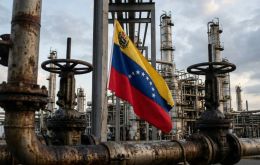
Leading financial analysis firms have tempered the White House's forecasts on the Venezuelan oil agreement announced by Donald Trump on Friday, which grants a company part-owned by the US government control of seventeen fields holding some 65 billion barrels of reserves for a hundred years.
-
Tuesday, September 1st 2026 - 09:23 UTC
The Venezuelan oil concession goes to Alejandro Betancourt's firm, under investigation in Europe

The White House on Monday identified the company that will operate seventeen Venezuelan oil fields for a century in partnership with the US government: North American Blue Energy Partners, owned by Venezuelan businessman Alejandro Betancourt, who is under investigation in Switzerland and Spain over his alleged involvement in a scheme to launder funds from the state oil company PDVSA. There is no conviction against him.

