MercoPress. South Atlantic News Agency
Energy & Oil
-
Tuesday, August 18th 2026 - 06:56 UTC
Petrobras confirms oil off the Amapá coast but cannot yet estimate the volume

Brazil's state-controlled Petrobras confirmed on Monday the presence of oil in the Morpho exploratory well, located in ultra-deep waters off the northern state of Amapá, in the Foz do Amazonas basin. The company cautioned that it cannot yet estimate the volume found or the viability of commercial production.
-
Thursday, August 13th 2026 - 22:46 UTC
Argentina's largest investment project aims to export Vaca Muerta gas
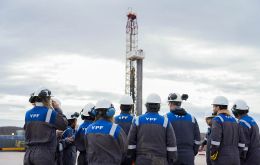
Argentina's majority state-owned oil company YPF confirmed on Thursday that it has filed an application for the Argentina LNG project to join the Large Investment Incentive Regime (RIGI). The venture, developed alongside Italy's Eni and the Emirati company XRG, contemplates an estimated outlay of 51 billion dollars over its full life, the largest figure submitted so far under the scheme.
-
Wednesday, August 12th 2026 - 06:28 UTC
YPF divests its stake in gas distribution for 780 million dollars

Argentine oil company YPF, 51% state-controlled, has accepted Edenor's offer to buy its stake in Metrogas and Metroenergía for 780 million dollars, according to a filing submitted on Monday to the securities regulator. The deal takes the company out of the natural gas distribution business.
-
Saturday, August 8th 2026 - 07:26 UTC
Falklands: rise in the CPI, caused by the conflict in the Middle East

The Consumer Price Index (CPI), according to official Falkland Islands figures, recorded a quarterly increase of 3.4% as a result of the impact of higher fuel prices.
-
Thursday, August 6th 2026 - 08:18 UTC
Navitas broadens its US Gulf portfolio with stakes in two oil discoveries, oil industry media
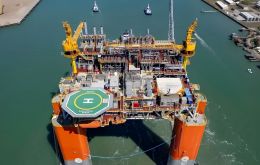
Navitas Petroleum has signed agreements to obtain a 33.33% interest in the Tiberius and Logan oil discoveries in the Gulf of America (Gulf of Mexico) from Occidental and Kosmos Energy, expanding its Gulf of America hydrocarbon portfolio.
-
Thursday, August 6th 2026 - 07:13 UTC
Royal Navy nuclear deterrence program receives £8bn for the Dreadnought program
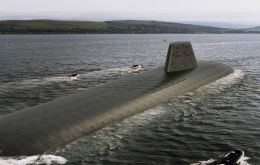
More than £8bn is being pumped into the Royal Navy’s next-generation nuclear deterrent submarines in the latest investment in the Dreadnought program. The cash – the fourth phase of production of the biggest submarine construction project in a generation – will carry the program through to key milestones early next decade:
-
Wednesday, August 5th 2026 - 08:00 UTC
Six million UK household will access the £150 Warm Home Discount; register names in energy bills

Six million of British households are set to save £150 on energy bills this winter, as government urges eligible households to check they are named on their bill to get the Warm Home Discount automatically. Every household where the bill payer is on means-tested benefits is in line for the rebate, following the expansion of the scheme last year.
-
Tuesday, July 14th 2026 - 22:31 UTC
Argentina's YPF Luz seeks dual listing in New York and Buenos Aires
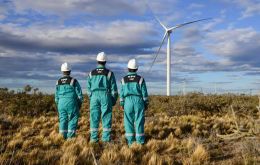
Argentine power generator YPF Luz has filed a preliminary prospectus with the US Securities and Exchange Commission (SEC) for a potential initial public offering of shares, which would list simultaneously on the New York Stock Exchange and on Bolsas y Mercados Argentinos (BYMA) in Buenos Aires.
-
Thursday, July 9th 2026 - 16:52 UTC
YPF plans to drill off Uruguay in 2027, says potential could top Vaca Muerta
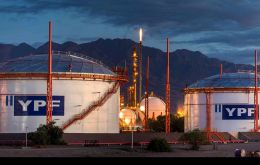
Argentina's state oil company YPF plans to begin exploratory drilling of an offshore block off the coast of Uruguay between late 2027 and early 2028, its chairman and chief executive, Horacio Marín, confirmed, saying the area holds potential that, if confirmed, could surpass the Vaca Muerta unconventional field.
-
Saturday, June 27th 2026 - 09:43 UTC
Repsol, Ecopetrol and 17 other oil firms cleared for Brazil's next pre-salt auction
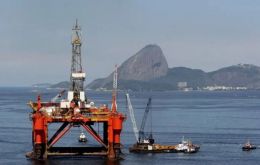
Nineteen oil companies, among them Spain's Repsol and Colombia's Ecopetrol, have been cleared to bid in the upcoming auction of licenses to partner with the Brazilian State in the exploitation of hydrocarbons in the pre-salt, the country's main crude reserve. The list was released on Friday by the National Agency for Petroleum, Natural Gas and Biofuels (ANP), following its publication in the Official Gazette.

