MercoPress. South Atlantic News Agency
Latin America
-
Friday, October 23rd 2026 - 18:19 UTC
The Pope cancels a visit to Assisi as a medical precaution, two weeks before his South American tour
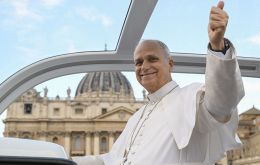
Pope Leo XIV has cancelled a visit planned for Tuesday, October 27, to Assisi, in central Italy, after his doctors advised against helicopter travel so soon after the lung surgery he underwent on October 13. It is the first engagement on his schedule to be called off since the operation, two weeks before the start of his tour of Uruguay, Argentina and Peru.
Add your comment! -
Friday, October 16th 2026 - 21:50 UTC
Kast and Paz open the way in La Paz to normalising Chile-Bolivia relations
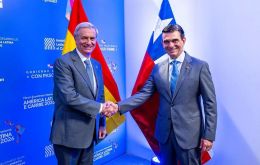
Chilean President José Antonio Kast and his Bolivian counterpart Rodrigo Paz pledged on Friday in La Paz to move towards normalising diplomatic relations “at the highest level”, broken off since 1978, during a visit the Chilean government described as historic as the first official bilateral visit by a Chilean president to Bolivia in more than seven decades. The two governments signed economic integration and border security agreements, although they did not announce the restoration of embassies.
Add your comment! -
Tuesday, October 13th 2026 - 14:52 UTC
Lubetkin warns Flávio Bolsonaro that “it is not easy to leave Mercosur”
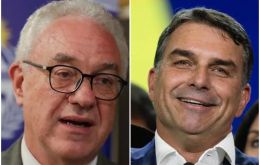
Uruguay’s Foreign Minister Mario Lubetkin has warned Brazilian presidential candidate Flávio Bolsonaro that “it is not easy to leave Mercosur”, in response to his criticism of the bloc during the campaign for the October 25 runoff. In the same interview, with the newspaper Folha de S.Paulo, he said Uruguay would not restore diplomatic relations with Venezuela while Delcy Rodríguez governs.
-
Tuesday, October 13th 2026 - 06:19 UTC
IMF trims Latin America’s outlook to 2.3% and sharply cuts Argentina’s
The International Monetary Fund has lowered its 2026 growth forecast for Latin America and the Caribbean to 2.3%, a tenth of a point less than in July, and sharply cut Argentina’s, from 3.5% to 2.1%. Chile and Uruguay are also among the region’s largest downward revisions, according to the World Economic Outlook presented on Monday in Bangkok, during the annual meetings of the Fund and the World Bank.
-
Friday, October 9th 2026 - 22:38 UTC
A magnitude 7.7 earthquake shakes Panama
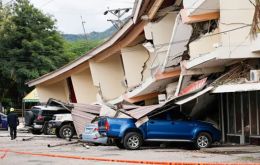
A magnitude 7.7 earthquake shook Panama on Friday at 12:56 local time, centred on the Azuero peninsula in Herrera province, according to the US Geological Survey. Panamanian authorities have not so far confirmed any casualties, though inspections are continuing and they have not ruled out injuries or people trapped. Damage to buildings was reported in several provinces.
-
Sunday, October 4th 2026 - 08:57 UTC
Trump declines to back Lula or Flávio Bolsonaro as Brazil votes

US President Donald Trump has not endorsed either of the two leading candidates in Brazil's presidential election on Sunday, unlike in recent elections in Honduras, Colombia, Chile, Argentina and Costa Rica.
-
Saturday, October 3rd 2026 - 09:40 UTC
Uruguay ranks third in Latin America for international air passengers per capita

Uruguay ranked third in Latin America and the Caribbean in 2025 for international air passengers per inhabitant, according to Airports Council International figures presented in Lima this week, despite its small share of the region's total traffic.
-
Tuesday, September 29th 2026 - 07:30 UTC
Latin American airports will need US$178 billion to nearly double their traffic
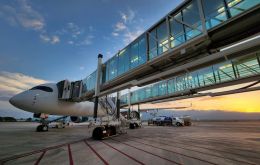
Airports in Latin America and the Caribbean will require investment of around US$178 billion over the next thirty years to handle demand that would rise from 809 million passengers this year to around 1.5 billion in 2045, according to projections presented in Lima at the annual assembly of Airports Council International.
-
Saturday, September 26th 2026 - 11:06 UTC
De la Espriella announces the reopening of oil exploration in Colombia, including fracking

Colombian President Abelardo de la Espriella announced on Friday that his government will “fully” reopen hydrocarbon exploration and the signing of new contracts, including hydraulic fracturing, during the swearing-in of businessman Joaquín Gutiérrez as president of Ecopetrol, the country's largest company.
-
Friday, September 25th 2026 - 10:41 UTC
“The UN has more reason to exist every day”, Uruguay's president said two days after Milei
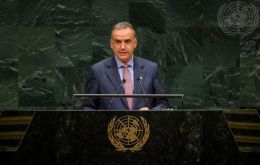
Uruguayan President Yamandú Orsi defended the United Nations' relevance and condemned the economic embargo on Cuba before the General Assembly on Thursday, in an address of just under twenty minutes that contrasted with that of his Argentine counterpart, Javier Milei, two days earlier from the same podium.