MercoPress. South Atlantic News Agency
Environment
-
Tuesday, September 15th 2026 - 05:44 UTC
Falklands’ stamps and the story of the only reindeer world population unaffected by the Chernobyl radioactive fallout

One of the latest Falkland Islands Post Philatelic office is dedicated to the South Georgia reindeer, introduced by the Norwegian whalers and how they adapated to Southern Atlantic climate, living conditions and were later transferred to the Falklands.
Add your comment! -
Monday, September 14th 2026 - 04:53 UTC
Argentine Patagonia national park will twin with a Welsh similar of Snowdonia
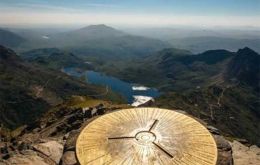
A popular national park in Wales will be twinning with one in Argentine Patagonia this months in the midst of the international controversy eruption between Argentina, Falkland Islands and garrulous president Donald Trump.
Add your comment! -
Thursday, September 3rd 2026 - 22:24 UTC
WMO forecasts a very strong El Niño peaking at year's end and lasting into February 2027
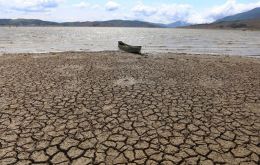
El Niño is firmly established in the tropical Pacific and will intensify over the coming months into a very strong event, peaking towards the end of 2026 and with climate effects extending well into 2027, according to an update released on Thursday by the World Meteorological Organization (WMO) in Geneva.
-
Thursday, September 3rd 2026 - 00:48 UTC
Norway prepares to open The Whale Museum, 190 miles north of the Arctic Circle
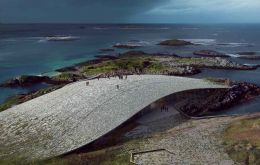
By Sarah Kula for the Smithsonian Magazine
Called The Whale, the new venue is under construction in Andenes, a village on the northern tip of the island of Andøya, roughly 190 miles above the Arctic Circle. It’s scheduled to begin welcoming visitors on June 4, 2027, inviting guests to explore the majestic marine mammals through science, art, storytelling, sound and architecture. -
Wednesday, September 2nd 2026 - 21:22 UTC
China's embassy accuses a senior Argentine official of spreading “rumours” about the Nepal flood

China's embassy in Buenos Aires has accused an official in Javier Milei's government of spreading “malicious rumours” and seeking to “stain the international image” of the Asian country, after he attributed to a Chinese state company responsibility for the flood that devastated the border corridor between Nepal and Tibet on August 26.
-
Monday, August 31st 2026 - 08:46 UTC
The Panama Canal will cut daily transits from Wednesday because of drought
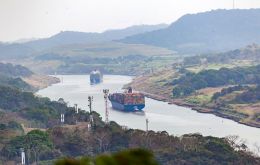
The Panama Canal will reduce the number of vessels allowed to cross from 38 to 34 a day from September 3, and to 32 from the 15th, as well as imposing new draught restrictions, because of falling water levels linked to El Niño. According to the waterway's authorities, rainfall since May has been 34% below the historical average and inflows to the basin have dropped 44%. Around 5% of world maritime traffic passes through the canal.
-
Monday, August 31st 2026 - 08:31 UTC
Falklands’ 3-year Green Program injected £892,000 to the Islands economy

After 3 years of the Green Business Programme, the Falkland Islands Development Corporation, FIDC, have injected a total of £892,000 in financing through a variety of environmentally focused loans and grants into the Falklands economy.
-
Thursday, August 27th 2026 - 23:55 UTC
The Falklands close the second Loligo squid season three days after reopening it
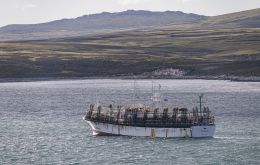
The Falkland Islands Fisheries Department announced on Thursday the closure of the second Loligo squid season due to low biomass levels, just three days after fishing had resumed following a two-week pause.
-
Thursday, August 27th 2026 - 21:00 UTC
More than 390 bodies recovered and nearly 1,500 unaccounted for after the Nepal Himalaya flood
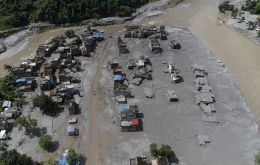
Rescue teams have recovered at least 389 bodies in Nepali territory and three more in China's Tibet region, while close to 1,500 people remain unaccounted for after the flood that swept down Himalayan valleys on Wednesday along the border between the two countries. A Nepali police spokesman told the Reuters news agency the death toll would continue to rise as relief work advances.
-
Wednesday, August 26th 2026 - 16:46 UTC
Twelve Britons are among travellers unaccounted for after the flood on Nepal's border

Twelve British citizens appear on a provisional list of travellers Nepali authorities have been unable to contact following the flash flood and landslides that struck the border corridor between Nepal and Tibet on Wednesday. The country's tourism board included hundreds of people on that register, among them 105 Indian nationals, three Americans, one Australian and one Dutch citizen, as well as Nepalis.

