MercoPress. South Atlantic News Agency
Health & Science
-
Tuesday, September 29th 2026 - 21:37 UTC
Lula remark on medical exams sparks controversy five days before the vote
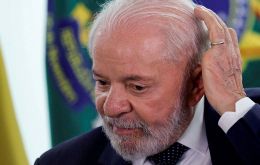
A remark by Brazilian President and re-election candidate Luiz Inácio Lula da Silva about men's reluctance to undergo prostate examinations has sparked a controversy in the final stretch of the campaign, after opposition figures linked it to child sexual abuse. Lula's campaign has taken the matter to the Superior Electoral Court.
-
Thursday, September 3rd 2026 - 00:48 UTC
Norway prepares to open The Whale Museum, 190 miles north of the Arctic Circle
By Sarah Kula for the Smithsonian Magazine
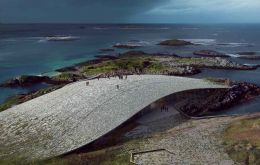
Called The Whale, the new venue is under construction in Andenes, a village on the northern tip of the island of Andøya, roughly 190 miles above the Arctic Circle. It’s scheduled to begin welcoming visitors on June 4, 2027, inviting guests to explore the majestic marine mammals through science, art, storytelling, sound and architecture. -
Wednesday, August 19th 2026 - 21:47 UTC
A personalized mRNA therapy passes a phase 3 melanoma trial for the first time
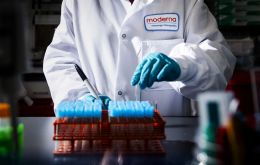
Pharmaceutical companies Merck, known as MSD outside the United States and Canada, and Moderna announced on Wednesday that their individualized neoantigen therapy, intismeran autogene, met its endpoints in a phase 3 trial in melanoma patients. It is the first positive result at that stage for an mRNA-based cancer treatment.
-
Wednesday, August 19th 2026 - 08:45 UTC
Australia launches program to vaccinate colonies of little penguins against avian influenza
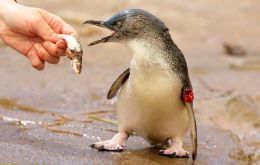
According to ABC News Australia wildlife conservation agencies in the state of Victoria have launched a program to vaccinate little penguins against the H5 strain of avian influenza. Over the next few weeks, experts plan to capture and vaccinate more than 5,000 birds in colonies on Philip Island and St. Kilda.
-
Wednesday, August 12th 2026 - 00:05 UTC
Colombia asks for supplies but not foreign rescue personnel after the earthquake
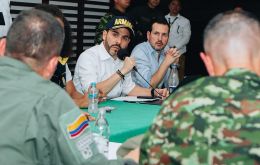
Colombia's government has requested international aid in the form of supplies for those affected by Monday's magnitude 7.4 earthquake, but has not called for foreign rescue teams, despite offers from at least six countries and multilateral bodies.
-
Wednesday, August 5th 2026 - 21:44 UTC
SpaceX rocket stage crashes into the Moon after 18 months adrift
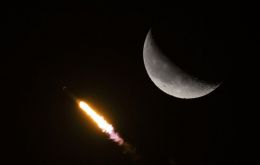
The upper stage of a SpaceX Falcon 9 rocket struck the lunar surface on Wednesday near the Einstein crater, in an unplanned impact that NASA described as safe and posing no risk to Earth or to missions operating on the Moon.
-
Monday, July 20th 2026 - 19:01 UTC
Scientists begin first study of whisky matured in Antarctica
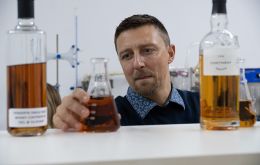
A team of scientists has begun the first analysis of a whisky matured in Antarctica, aiming to determine what three years at temperatures as low as -35°C did to the spirit's maturation, chemistry and taste.
-
Friday, July 17th 2026 - 22:25 UTC
Venezuela raises official death toll from June double earthquake above 5,000
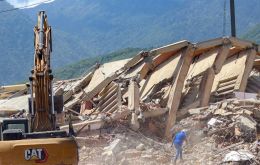
The official death toll from the double earthquake that struck northern Venezuela on June 24 rose on Friday to 5,069, after 139 new fatalities were added, according to the president of Parliament, Jorge Rodríguez. The tally, released via Telegram, keeps the number of injured at 16,740 and of people left homeless at 17,907. Authorities present these figures as provisional, more than three weeks after the disaster.
-
Friday, July 10th 2026 - 18:51 UTC
British Antarctic Survey confirms Antarctica's first dinosaur fossil, 40 years on
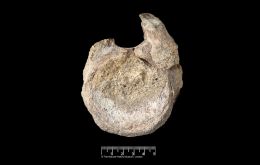
A bone collected in Antarctica four decades ago has been identified as the first dinosaur fossil found on the continent, according to a study published in the journal Acta Palaeontologica Polonica. It is a tail vertebra from a titanosaur, the group of long-necked sauropods that includes the largest land animals that ever lived.
-
Friday, July 10th 2026 - 08:55 UTC
PAHO warns Venezuela quake health emergency has entered critical phase
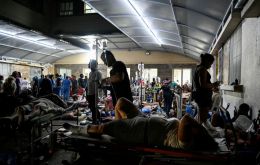
The Pan American Health Organization (PAHO) warned on Thursday that the health emergency stemming from the earthquakes that struck north-central Venezuela on June 24 has entered a critical stage and is “far from over,” with the focus on preventing disease outbreaks among the displaced population. According to the official toll cited by the organization, as of July 8 the quakes had left 3,811 people dead and 16,740 injured.
