MercoPress. South Atlantic News Agency
Health & Science
-
Thursday, February 5th 2026 - 15:14 UTC
Argentine scientists film rare “giant phantom jelly” measuring about 11 meters in the South Atlantic
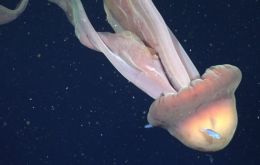
An Argentine-led deep-sea expedition has recorded rare footage of Stygiomedusa gigantea—the so-called giant phantom jellyfish—in waters off Argentina, offering an unusual look at a species seldom observed alive in its natural environment. The animal was filmed at around 250 meters depth by the remotely operated vehicle SuBastian during the “Vida en los extremos” campaign aboard the research vessel R/V Falkor (too), involving scientists from CONICET and the University of Buenos Aires (UBA).
-
Monday, February 2nd 2026 - 17:58 UTC
UK loses measles elimination status, WHO reports
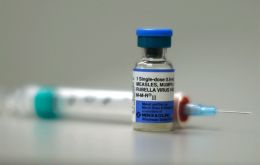
The United Kingdom has lost its measles elimination status, the World Health Organization has announced. The move was based on the spread of cases in 2024 when there were 3,600 suspected cases. However elimination status means there is no sustained transmission so this decision was largely expected, given the scale of the outbreaks in 2024.
-
Monday, February 2nd 2026 - 02:48 UTC
Over 60% of Brazilians are overweight as obesity doubles in 18 years, survey shows

More than six in ten Brazilians are now overweight and obesity affects roughly one in four adults, according to official health data released this week and carried by Agência Brasil. The survey estimates that 62.6% of the population had excess weight in 2024, up from 42.6% in 2006, while obesity (BMI ≥ 30) doubled from 11.8% to 25.7% over the same period.
-
Friday, January 30th 2026 - 14:16 UTC
Falklands, Tussac restoration project to protect peatlands
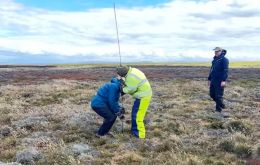
Dr. Nicholas Midgley, a senior lecturer and his team from Nottingham Trent University have been in the Falkland Islands for the last three weeks investigating coastal peatland and tussac’s significance for agriculture and wildlife.
-
Friday, January 30th 2026 - 03:43 UTC
Brazil’s Lula to undergo cataract surgery on left eye after Panama trip

Brazilian President Luiz Inácio Lula da Silva will undergo cataract surgery on his left eye on Friday, the presidential palace said after preoperative tests were conducted on Thursday in Brasília. The 80-year-old leader returned overnight from Panama, where he attended the International Economic Forum for Latin America and the Caribbean, and spent Thursday at the official Granja do Torto residence.
-
Saturday, January 24th 2026 - 15:38 UTC
Uruguay preparing for ‘super flu’ H3N2; reports first two cases from overseas contagion
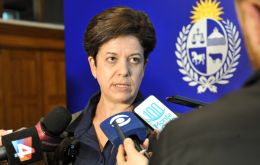
Uruguay’s Public Health Ministry confirmed this week it had detected for the first time two cases of the so called ‘super flu K’ H3N2, both from people returning to the country, a boy who recently arrived from Finland, and a woman who visited next of kin in United States.
-
Thursday, January 15th 2026 - 09:04 UTC
Falklands, Legislative Assembly portfolio assignments

The Falkland Islands elected Legislative Assembly has agreed a revised portfolio system for the 2025-2029 term. Following the December 2025 General Election, Members reviewed the structure to improve focus, and align related policy areas.
-
Tuesday, January 13th 2026 - 10:22 UTC
Brazil's health watchdog gives nod to HIV vaccine

Brazil's Health Regulatory Agency (Anvisa) approved on Monday the use of the drug Sunlenca (lenacapavir) for HIV-1 prevention as pre-exposure prophylaxis (PrEP), Agencia Brasil reported.
-
Wednesday, January 7th 2026 - 15:06 UTC
Elisha Kent Kane Society awards Gold Medal to Falklands Maritime Heritage Trust trustee Mensun Bound
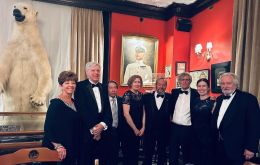
At a recent black-tie dinner in Manhattan, the Elisha Kent Kane Historical Society, presented its Gold Medal to Mensun Bound, Trustee of the Falklands Maritime Heritage Trust (FMHT). The prestigious award was in recognition of his role in discovering Sir Ernest Shackleton’s ship Endurance that sank beneath the ice of the Weddell Sea on 21 November 1915. The search, which was directed by the FMHT, working in close collaboration with the deep-water robotics company Ocean Infinity, found the wreck at a depth of 3008 m on 5 March 2022.
-
Wednesday, January 7th 2026 - 08:42 UTC
Argentine health authorities concerned over growing number of superflu cases

Argentina's Health Ministry and the ANLIS-Malbrán Institute have confirmed a rise in cases of Influenza A (H3N2) subclade K —popularly dubbed the “superflu”—, with 18 confirmed detections in the Autonomous City of Buenos Aires (CABA), and the provinces of Buenos Aires, Santa Cruz, Neuquén, and Mendoza. So far, no deaths have been reported.
