MercoPress. South Atlantic News Agency
Mercosur
-
Tuesday, August 25th 2026 - 21:39 UTC
Argentine trips abroad fall 21.2% as Brazil and Uruguay lead arrivals
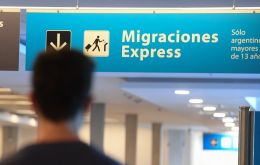
The number of Argentine residents leaving the country in July fell 21.2% year on year, to 1.22 million people, according to the international tourism statistics report released on Tuesday by the National Institute of Statistics and Censuses. In the opposite direction, 830,200 foreign visitors entered the country, 17.9% more than a year earlier.
-
Sunday, August 23rd 2026 - 22:32 UTC
The Mercosur-Singapore trade agreement reaches Argentina's Congress
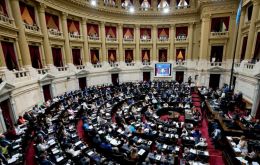
Argentina's Chamber of Deputies will on Wednesday take up ratification of the free trade agreement between Mercosur and Singapore, signed in December 2023 and still awaiting parliamentary approval. It is the first trade treaty the bloc has concluded with a Southeast Asian country.
-
Friday, August 14th 2026 - 22:20 UTC
Peña says the Milei-Lula crisis has not affected how Mercosur functions
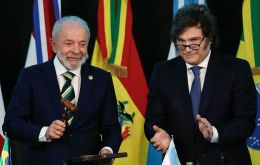
Paraguayan President Santiago Peña said on Friday that the differences between his Argentine and Brazilian counterparts, Javier Milei and Luiz Inácio Lula da Silva, have had no consequences for Mercosur, despite the diplomatic crisis between the two countries.
-
Thursday, August 13th 2026 - 06:55 UTC
The main land crossing between Argentina and Chile passes its winter closure record
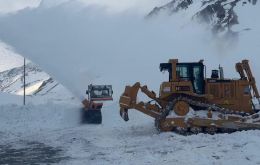
The Cristo Redentor international crossing, which links the Argentine province of Mendoza with Chile's Valparaíso Region through the Andes, has now been closed for close to a month because of a snow and wind storm, surpassing the winter closure record set in 2023. Authorities on both sides estimate it could reopen next week, depending on weather conditions.
-
Wednesday, August 5th 2026 - 21:55 UTC
Brazil ties its ambassador's return to an end to Milei's insults
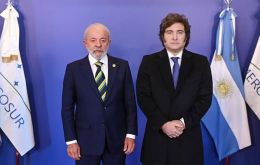
Brazilian Foreign Minister Mauro Vieira said on Wednesday that the downgrading of diplomatic relations with Argentina to chargé d'affaires level will remain in place until Argentine President Javier Milei stops what he called repeated insults and attacks against Luiz Inácio Lula da Silva.
-
Monday, August 3rd 2026 - 16:08 UTC
Milei on Lula: released over a procedural flaw, not for being innocent
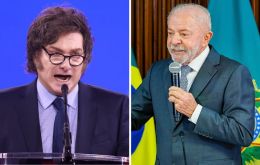
Argentine President Javier Milei repeated his accusations against Brazilian President Luiz Inácio Lula da Silva on Sunday, arguing that the corruption convictions once against him were annulled on formal grounds, in remarks that came just as Brazil's ambassador to Buenos Aires was preparing to return after being recalled for consultations.
-
Thursday, July 30th 2026 - 16:26 UTC
Brazil confirms its ambassador will return to Buenos Aires but sets no date

The Brazilian government confirmed that its ambassador to Argentina, Julio Glinternick Bitelli, will return to Buenos Aires after being recalled for consultations, without specifying when, in the first sign of de-escalation in the most serious diplomatic crisis between the two countries in decades.
-
Thursday, July 30th 2026 - 01:40 UTC
Lula says Paraguay chose to invade Brazil; Paraguayan Congress accuses him of distorting history
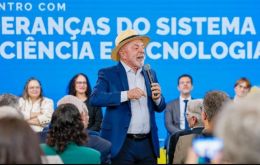
Brazilian President Luiz Inácio Lula da Silva invoked the War of the Triple Alliance (1864-1870) to defend increased defense spending, in remarks that drew formal rejection this week from both chambers of Paraguay's Congress.
-
Tuesday, July 28th 2026 - 10:55 UTC
“Who is that guy?”: Lula's response to Milei's remarks in São Paulo
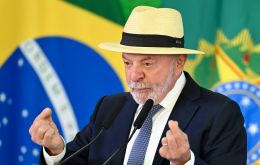
Brazilian President Luiz Inácio Lula da Silva addressed for the first time the remarks made against him by Argentine President Javier Milei, with a brief and ironic response that avoided escalating the controversy. Asked by reporters while preparing to receive South Korean President Lee Jae-myung, he replied: “Who is that guy?”
-
Monday, July 27th 2026 - 09:14 UTC
Mercosur's two largest partners in their worst diplomatic crisis as Brazil recalls its envoy
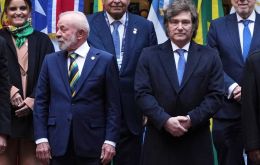
Brazil on Sunday recalled its ambassador in Buenos Aires, Julio Bitelli, for consultations and summoned Argentina's ambassador in Brasília, Daniel Raimondi, to provide explanations at the Foreign Ministry, in the sharpest diplomatic response between the two countries in years. The measures, taken by Foreign Minister Mauro Vieira, follow the speech Argentine President Javier Milei delivered on Saturday in São Paulo at the convention that formalized Flávio Bolsonaro's presidential candidacy.