MercoPress. South Atlantic News Agency

Peru grants US troops access next year
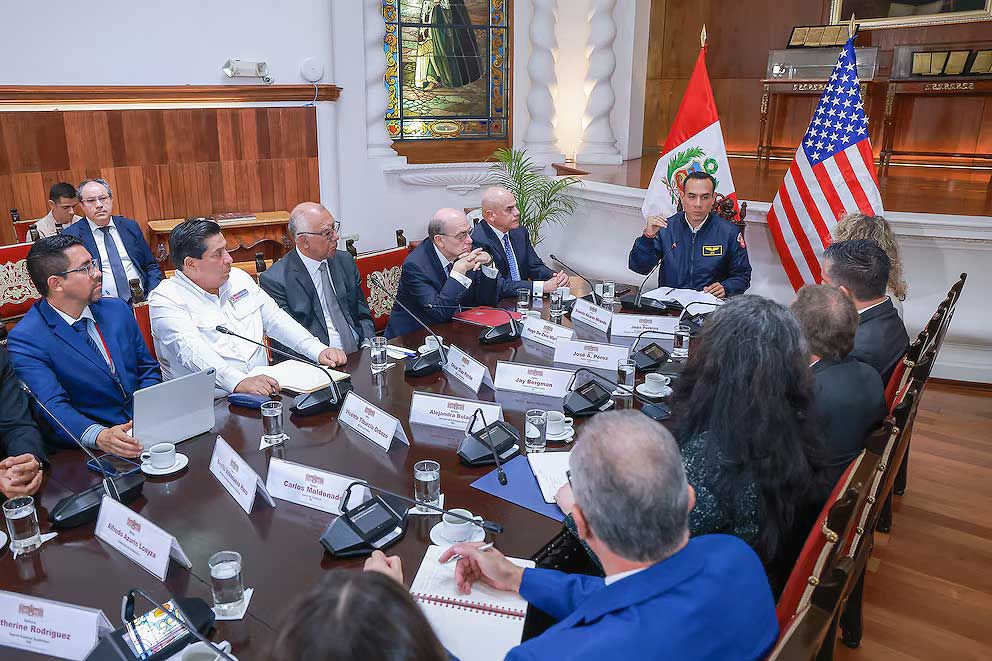 Jerí met with a delegation from the FBI and US security experts in Lima
 Peruvian authorities have officially greenlighted the entry of United States military personnel for the entirety of 2026 to conduct joint training, support, and security assistance exercises with local armed and police forces, it was announced this weekend in Lima.
The resolution, approved by the Peruvian Congress, allows US military personnel to be in the South American country from Jan. 1 to Dec. 31, 2026, and to carry combat weapons during their stay.
The US contingent will be composed of rotating groups, with different units cycling through Peruvian territory every three to six months to maintain a constant presence.
The US units involved will include special forces, Navy SEAL teams, Civil affairs specialists, and Military intelligence support staff.
Peruvian institutions participating in the joint exercises will include specialized units from the Army, the Joint Command of Intelligence and Special Operations (Cioec), Naval Special Operations Forces (FOES), Air Force Special Forces Group (Grufe), and specialized units of the National Police, such as the Directorate of Special Operations (Diroes) and the Anti-Drug Directorate (Dirandro).
The authorization was published after Peruvian Foreign Minister Hugo de Zela confirmed that the US government of President Donald Trump had notified the US Congress of its intention to designate Peru as a “Major Non-NATO Ally” (MNNA).
De Zela stated that this designation was a political gesture recognizing Peru as a trustworthy partner in security and defense. The measure is expected to grant the Peruvian Armed Forces a “privileged” position regarding cooperation and access to military facilities and benefits within the US military relationship.
The decision to allow a sustained US military presence reflects a clear alignment by the Peruvian government with US security interests.
In this scenario, Peruvian President José Jerí met with a delegation from the FBI and US security experts in Lima as part of the process to develop a new national citizen security plan.
While Peruvian authorities justify the action on the grounds of specialized training and logistical support, some critics have raised concerns that national sovereignty could be compromised by this type of foreign military presence.


Top Comments
Disclaimer & comment rulesCommenting for this story is now closed.
If you have a Facebook account, become a fan and comment on our Facebook Page!