MercoPress. South Atlantic News Agency
Paraguay handed over Mercosur pro-tempore presidency
 There was no joint communiqué, but a 41-point declaration was agreed upon
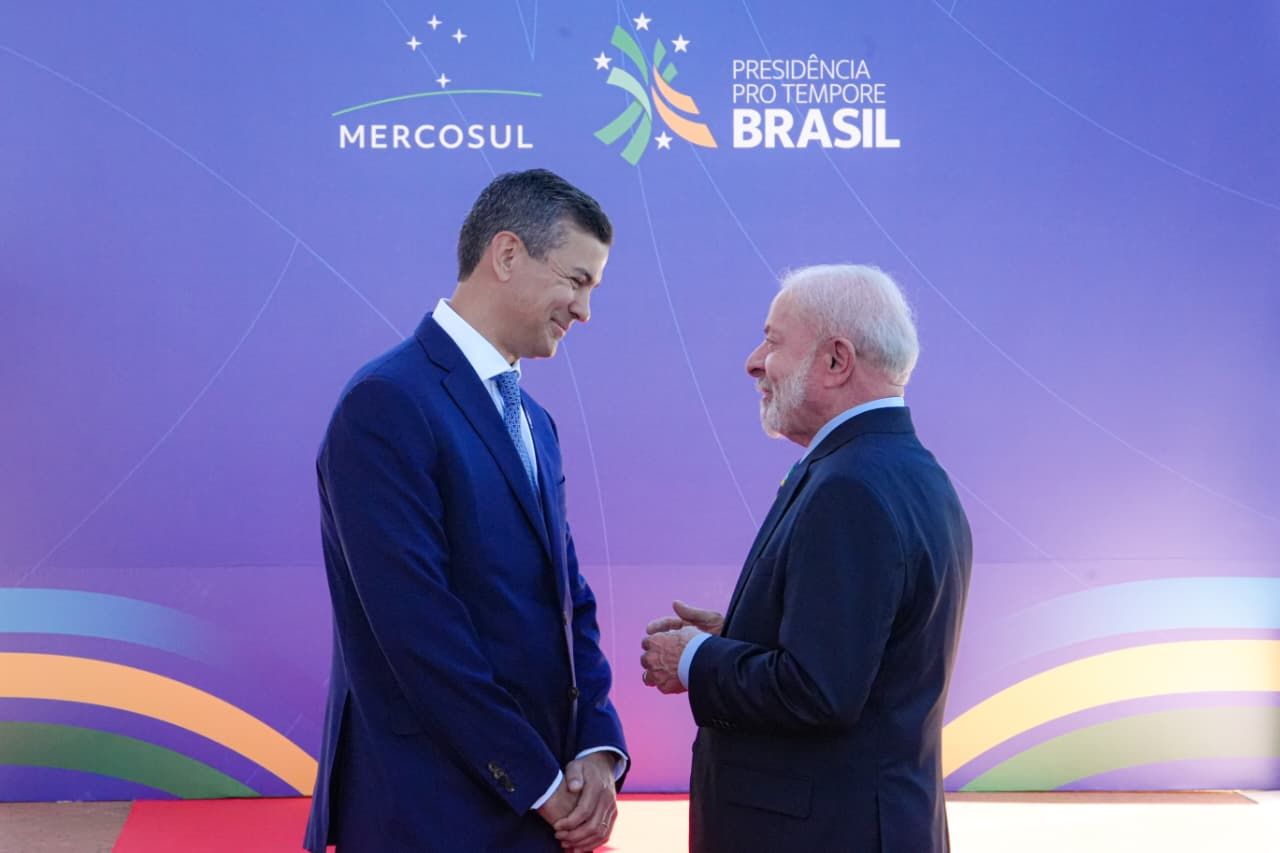
 The 67th Southern Common Market (Mercosur) Summit concluded on Saturday in Foz do Iguaçu, with Paraguay officially assuming the bloc's pro-tempore presidency from host Brazil. Amid a backdrop of geopolitical friction and trade delays, Paraguayan President Santiago Peña outlined a pragmatic six-month agenda focused on economic openness and regional connectivity.
The summit was initially intended to be the stage for the signing of the historic Free Trade Agreement (FTA) with the European Union (EU). However, internal resistance within the EU—led by France and Italy—forced a last-minute postponement to January 2026.
In his inaugural address as bloc president, Peña signaled that while the EU remains a priority, Mercosur will no longer wait indefinitely. His administration plans to prioritize deals with Singapore and the United Arab Emirates (UAE), which Peña described as being in the “final stretch.”
Additionally, Mercosur intends to open new negotiation fronts with India, South Korea, and nations in Central Asia. Under Peña, the bloc will also support a “multi-speed” approach, allowing individual member states to activate the trade components of agreements once their respective parliaments have ratified them.
Beyond commerce, the Paraguayan presidency will focus on two massive “integration corridors” designed to turn the landlocked nation into a regional logistics hub: The Bioceanic Corridor connecting Brazilian Atlantic ports to Chilean Pacific ports via the Paraguayan Chaco, and the Paraná-Paraguay Waterway, which requires modernizing to better handle agricultural exports through the River Plate.
The meeting in Foz do Iguaçu exposed deep rifts between the bloc’s leaders. Brazilian President Luiz Inácio Lula da Silva used his outgoing speech to urge European leaders to show “courage” and finalize the EU deal, while warning against external military influence in Venezuela.
Argentina's Javier Milei adopted a more confrontational stance, praising US pressure on the Venezuelan “dictatorship” and calling for a “less bureaucratic” Mercosur that prioritizes free-market competition over political alignment.
Absent a joint communiqué, the member states reached a consensus on the 41-point declaration regarding regional security and the modernization of the Common External Tariff (CET).
In addition, the Presidents of Argentina, Paraguay, and Panama, together with senior authorities from Bolivia, Ecuador, and Peru, issued a joint declaration reaffirming their commitment to democracy and human rights in the region.
The leaders underscored the continued validity of the Ushuaia Protocol on Democratic Commitment within Mercosur, and pledged to defend democratic institutions, the rule of law, multilateral cooperation, as well as the unrestricted protection of fundamental freedoms.
Expressing deep concern over Venezuela’s worsening migration, humanitarian, and social crisis, they noted that the country remains suspended from Mercosur under the Ushuaia Protocol. The statement urged Venezuelan authorities to comply with international standards, immediately release all arbitrarily detained citizens, guarantee due legal process, and safeguard their physical integrity.
The signatories also reaffirmed their determination to pursue, through peaceful means, the full restoration of democratic order and respect for human rights in Venezuela.
Neither Lula nor Uruguay's President Yamandú Orsi endorsed the document. According to assessments within the Palácio do Planalto, a document of this nature, signed by Mercosur, could be interpreted by Washington as support for a potential US military intervention in Venezuela, which would not align with Brazil's interests.


Top Comments
Disclaimer & comment rulesCommenting for this story is now closed.
If you have a Facebook account, become a fan and comment on our Facebook Page!