MercoPress. South Atlantic News Agency

EU-Mercosur trade deal could turn South America into a critical minerals powerhouse
 The emphasis on critical minerals comes amid a broader geopolitical scramble for resources essential to green and digital economies
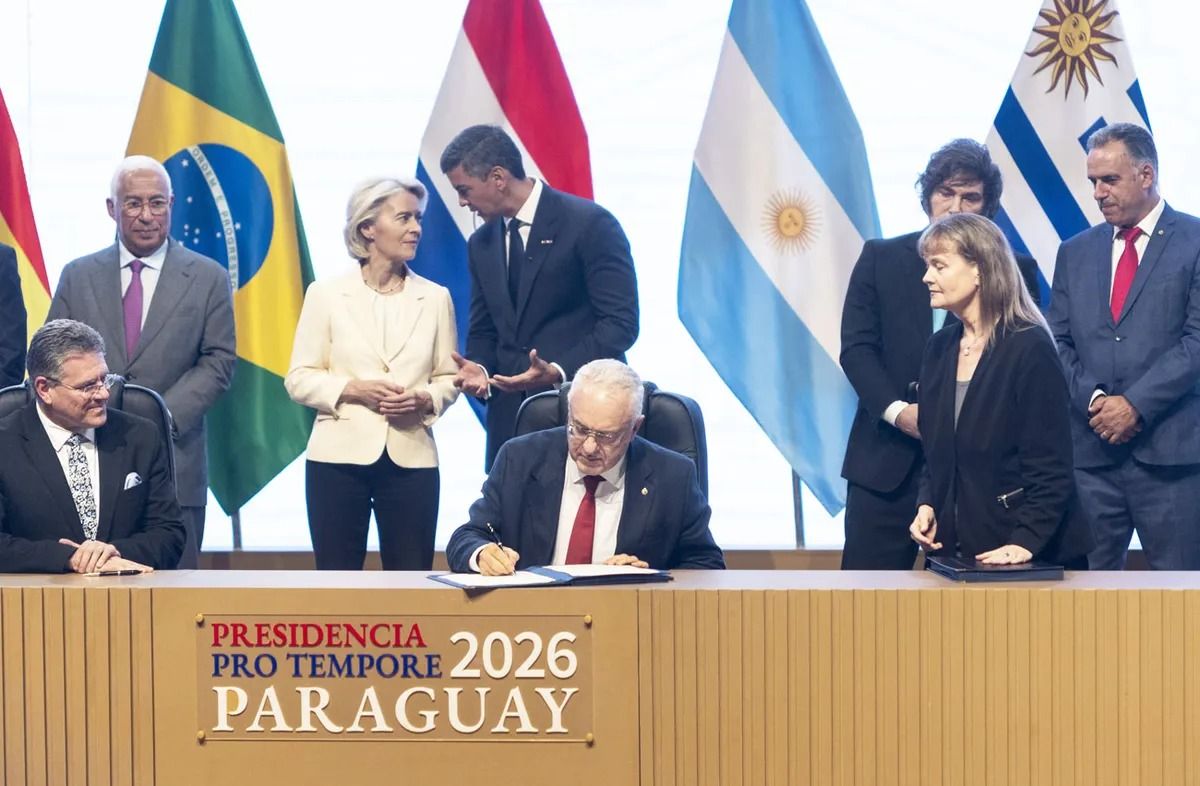
 The free trade agreement between the European Union (EU) and the Mercosur bloc (Argentina, Brazil, Paraguay and Uruguay) could help turn South America into a major player in the global market for critical minerals and rare earths, EU Trade Commissioner Maroš Šefčovič said in an interview with EFE from Asunción.
Šefčovič, who signed the historic deal on behalf of the 27 EU member states, insisted that the pact will not harm European farmers and stressed that lower tariffs and increased market access will benefit consumers and support job creation. “We want to live in a world where tariffs are low so that consumers — our citizens — can access a greater variety of products at better prices,” he said.
Strategic minerals and geopolitical opportunity
The Trade Commissioner underscored that one of the sectors with the greatest growth potential under the agreement is that of critical minerals and rare earth elements — key components in clean energy technologies, digitalization and defense systems.
Currently, China dominates the processing and production of critical minerals, a dependency that the EU’s Critical Raw Materials Act seeks to reduce by 2030 through diversified sourcing, increased recycling and domestic extraction targets. The EU-Mercosur pact is seen as a tool to secure stable supplies of essential raw materials, given that Mercosur countries are significant producers of materials such as graphite, niobium and manganese, which are used in batteries, advanced electronics and strategic industrial applications.
Brazil and Argentina in the minerals race
South America’s reserves of rare earths and other critical minerals are substantial, though largely underdeveloped due to investment and infrastructure gaps, Šefčovič acknowledged. “Brazil has the second-largest reserve, but it needs investment, procurement agreements and long-term contracts — and that is exactly what we want and need,” he said. Argentina also has notable deposits that could attract investment under the new trade framework.
The EU-Mercosur agreement — which will progressively eliminate more than 90% of bilateral tariffs and create one of the world’s largest free trade areas with around 780 million consumers — is expected to stimulate investment in mining and supply chain development.
Addressing European concerns
European farmers have protested the deal, fearing competition from South American agricultural imports. Šefčovič defended the pact’s safeguard mechanisms, saying they are “unprecedented in depth, breadth and scope” to prevent price and volume shocks that could disadvantage local producers.
He also addressed concerns about the use of pesticides in South America that are not allowed in the EU, noting that impact assessments on animal welfare and food safety are underway but are not expected to be problematic. The deal includes significant increases in inspections and audits on both sides of the Atlantic to ensure compliance.
Global context of critical resources
The emphasis on critical minerals comes amid a broader geopolitical scramble for resources essential to green and digital economies. Europe has lagged behind competitors such as the United States and China in securing supply chains for critical materials, prompting initiatives like the Critical Raw Materials Act and strategic deals such as the EU-Mercosur agreement.
The pact, signed after more than 25 years of negotiation, reinforces economic ties and reflects strategic efforts by both blocs to diversify supply sources, build investment partnerships and reduce reliance on dominant global suppliers, particularly China.


Top Comments
Disclaimer & comment rulesCommenting for this story is now closed.
If you have a Facebook account, become a fan and comment on our Facebook Page!