MercoPress. South Atlantic News Agency



Brazil remains world leader in killings of trans people despite drop in 2025, rights groups say
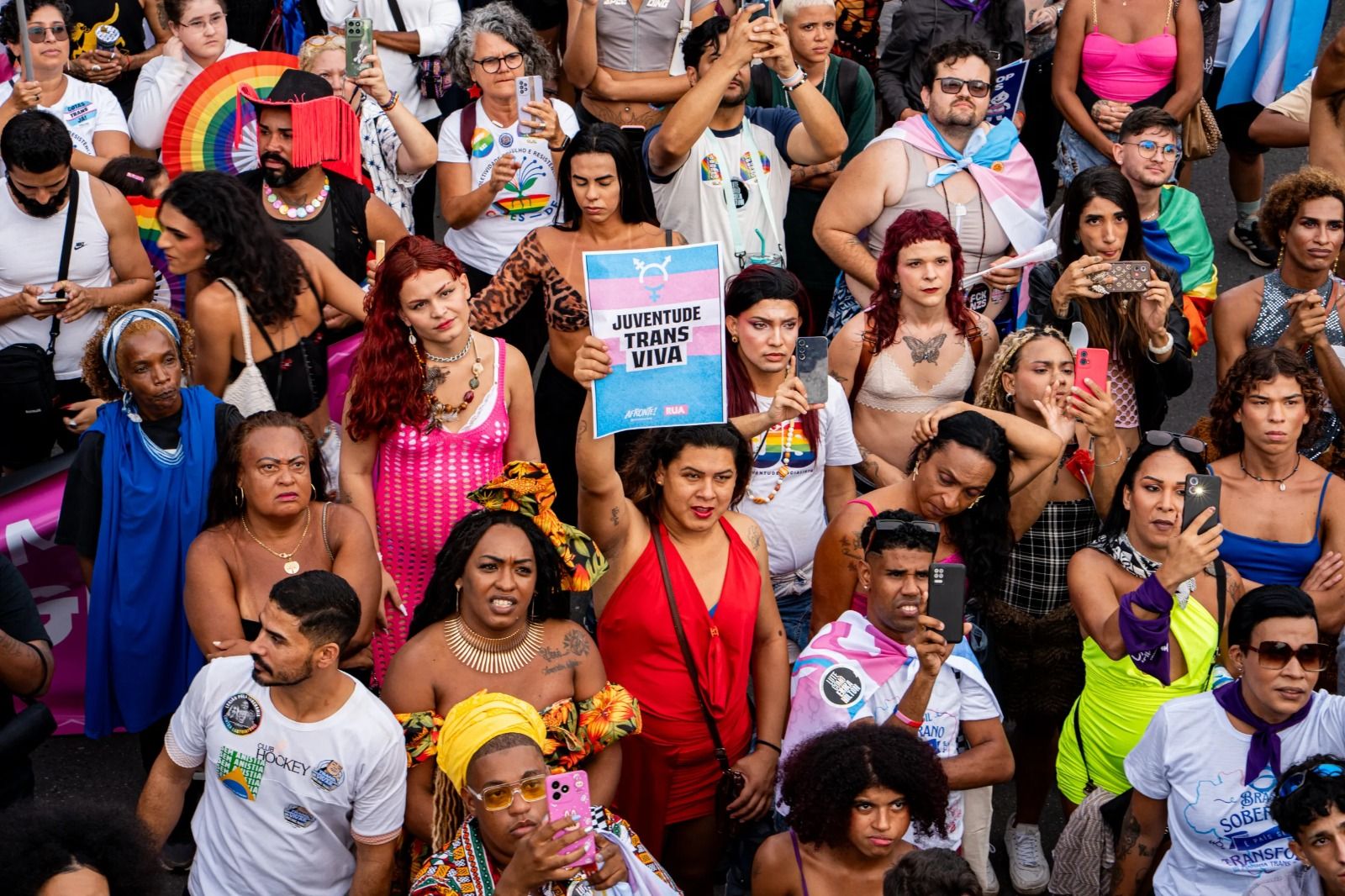 On geographic distribution, the report identified Ceará and Minas Gerais as the states with the highest number of killings in 2025, with eight each
 Brazil again topped the global ranking for killings of trans and travesti people despite a year-on-year decline in recorded murders, according to a new annual dossier released on Monday by the National Association of Travestis and Transsexuals (Antra). The report counted 80 killings in 2025, down from 122 in 2024 — a drop of about 34% that still leaves Brazil in first place for nearly 18 years, the group said.
Antra president Bruna Benevides framed the figures as the outcome of entrenched, systemic drivers rather than isolated incidents. “These are not isolated deaths,” she said at the dossier’s launch, describing a community exposed “from a very early age” to extreme violence shaped by social exclusion, racism, institutional abandonment and ongoing psychological suffering.
According to Antra, the dossier is built through daily monitoring of news reports, direct complaints submitted to trans organizations and public records. Benevides argued the methodology highlights a gap in state capacity: if civil society does not do the tracking, “the deaths simply do not exist for the state,” she said.
On geographic distribution, the report identified Ceará and Minas Gerais as the states with the highest number of killings in 2025, with eight each. By region, the violence was most concentrated in Brazil’s Northeast (38), followed by the Southeast (17), Center-West (12), North (7) and South (6). For the 2017–2025 period, Antra said São Paulo was the deadliest state in cumulative terms, with 155 deaths recorded.
While the murder count fell, the dossier reports an increase in attempted killings, warning that the decline does not necessarily indicate meaningful improvements in safety. Antra lists several factors that can obscure the true scale of violence: underreporting, low trust in law-enforcement and justice institutions, reduced media coverage and the lack of specific public policies to tackle transphobia. The organization also points to Brazil’s legal framework, noting — as referenced in a United Nations Brazil release — that the Supreme Federal Court has treated homophobic and transphobic conduct under the scope of the country’s Racism Law.
The Brazilian findings also align with broader regional patterns captured by international monitoring. TGEU’s Trans Murder Monitoring project, which compiles reported cases worldwide, recorded 281 murders of trans and gender-diverse people between October 1, 2024 and September 30, 2025. TGEU said 68% of reported murders occurred in Latin America and the Caribbean, and that Brazil led the list for the 18th consecutive year, accounting for 30% of the reported cases in that period. The organization cautions that its figures depend on reporting and may undercount the real number due to data limitations and misreporting.
Antra’s ninth dossier will be presented at a ceremony hosted at Brazil’s Ministry of Human Rights, with an official handover to federal government representatives, according to Agência Brasil.


Top Comments
Disclaimer & comment rules-

Read all commentsBrasso's been busy?
Jan 27th, 2026 - 02:50 pm 0Commenting for this story is now closed.
If you have a Facebook account, become a fan and comment on our Facebook Page!