MercoPress. South Atlantic News Agency



EU and India seal historic trade deal after 18 years of talks
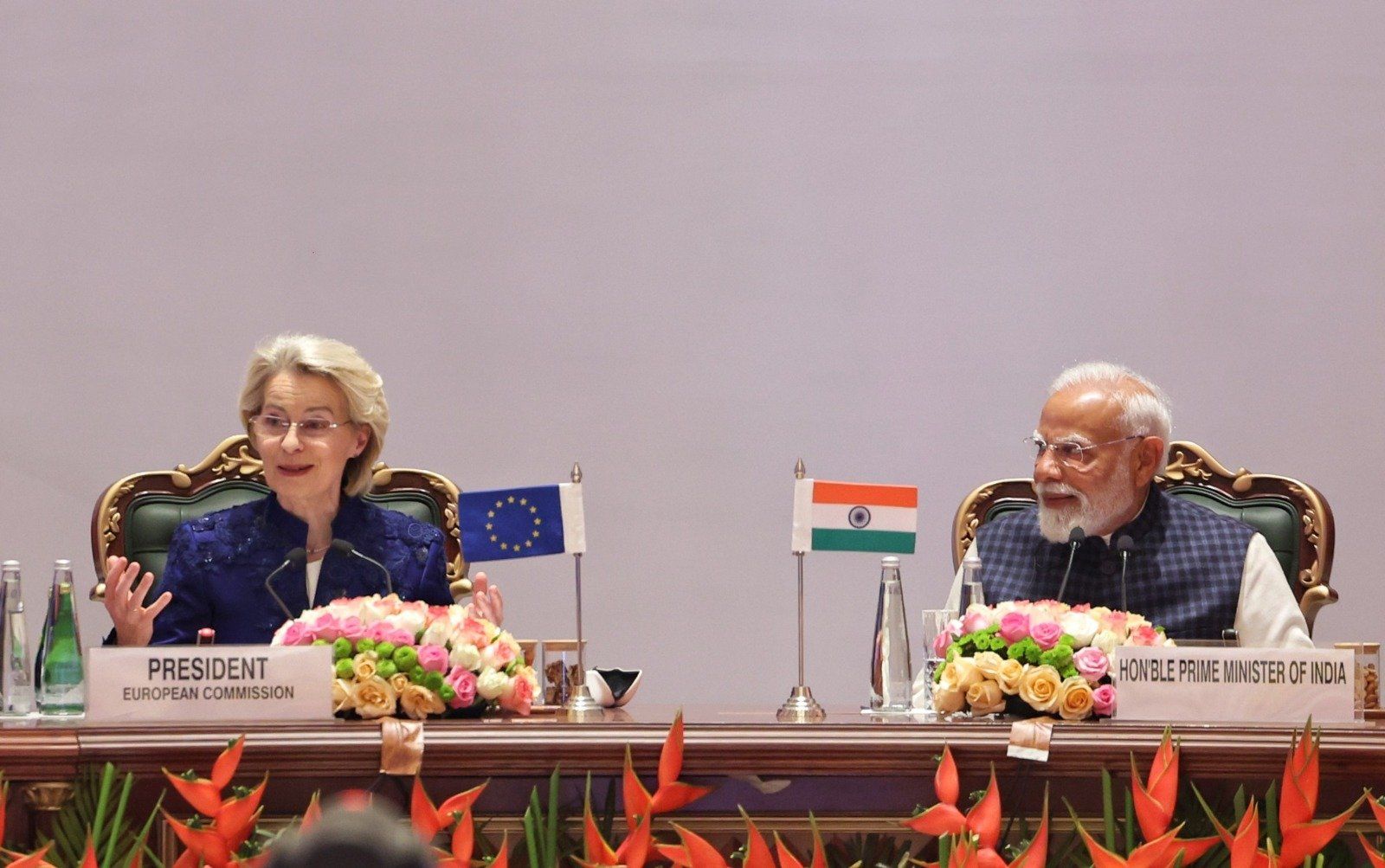 Indian Prime Minister Narendra Modi, who called the pact “the mother of all agreements,” said the EU and India constitute a “double engine of growth” for the world economy
 New Delhi and Brussels announced on Tuesday that they had concluded the largest bilateral trade deal in their histories after almost two decades of negotiations. The pact links India’s 1.4 billion-person economy with the 27-nation European Union and, according to both sides, will create a free-trade zone for around 2 billion consumers and sharply lower tariffs and other barriers that have long hindered commerce between the two regions.
In a statement, the European Commission said the agreement will abolish or cut duties on 96.6% of EU exports to India by value and, in return, Brussels will remove tariffs on 99.5% of Indian goods over a seven-year period. EU estimates suggest the deal could double its goods exports to India by 2032 and save European companies about €4 billion a year in customs duties.
Under the accord, India’s import levy on cars will fall from a current maximum of 110% to 10% over five years. Duties on wine and spirits will drop initially from 150% to 75% and eventually to 20% for wine and 40% for spirits.
European Commission President Ursula von der Leyen hailed the announcement as “historic,” saying it creates “a free-trade zone for two billion people.” She described it as the most ambitious agreement the Union has ever signed and said it reflects a “geopolitical shift” as Europe seeks to diversify its commercial partners amid tensions with the United States and uncertainty in global supply chains.
Indian Prime Minister Narendra Modi, who called the pact “the mother of all agreements,” said the EU and India constitute a “double engine of growth” for the world economy.
Although negotiators have settled the key commercial chapters, the legal text must undergo a technical review and be translated into the EU’s 24 official languages before it can be formally signed. EU officials estimate that process will take five to six months and that ratification by the European Parliament, national legislatures and India’s parliament could allow the deal to take effect in about a year.
Trade Commissioner Valdis Dombrovskis said the treaty offers “reciprocal and balanced access” and that sensitive sectors such as agriculture and dairy have been shielded through transition periods and exclusions.
The deal comes against the backdrop of trade tensions with Washington, after U.S. President Donald Trump recently threatened to raise tariffs on Korean and European cars, prompting Brussels to accelerate talks with other partners.
Both Brussels and New Delhi have highlighted that the pact will boost trade not only in goods such as machinery, chemicals, seafood and textiles, but also in services, opening opportunities for European firms in telecommunications, education and information technology, while facilitating the movement of Indian professionals.
Farm organisations and environmental groups in Europe have warned of increased competition in sectors such as automotive and agri-business, as well as the ecological impact of greater trade flows. In India, opposition parties are demanding assurances that farmers and small businesses will be protected from the effects of market opening.
Even so, analysts say the treaty represents a decisive step in bringing the EU closer to one of the world’s fastest-growing economies and reducing its reliance on both the United States and China. As Modi put it, “In these uncertain times, this agreement shows that democracies on the Atlantic and Indian Oceans can build bridges for sustainable growth.”


Top Comments
Disclaimer & comment rulesCommenting for this story is now closed.
If you have a Facebook account, become a fan and comment on our Facebook Page!