MercoPress. South Atlantic News Agency


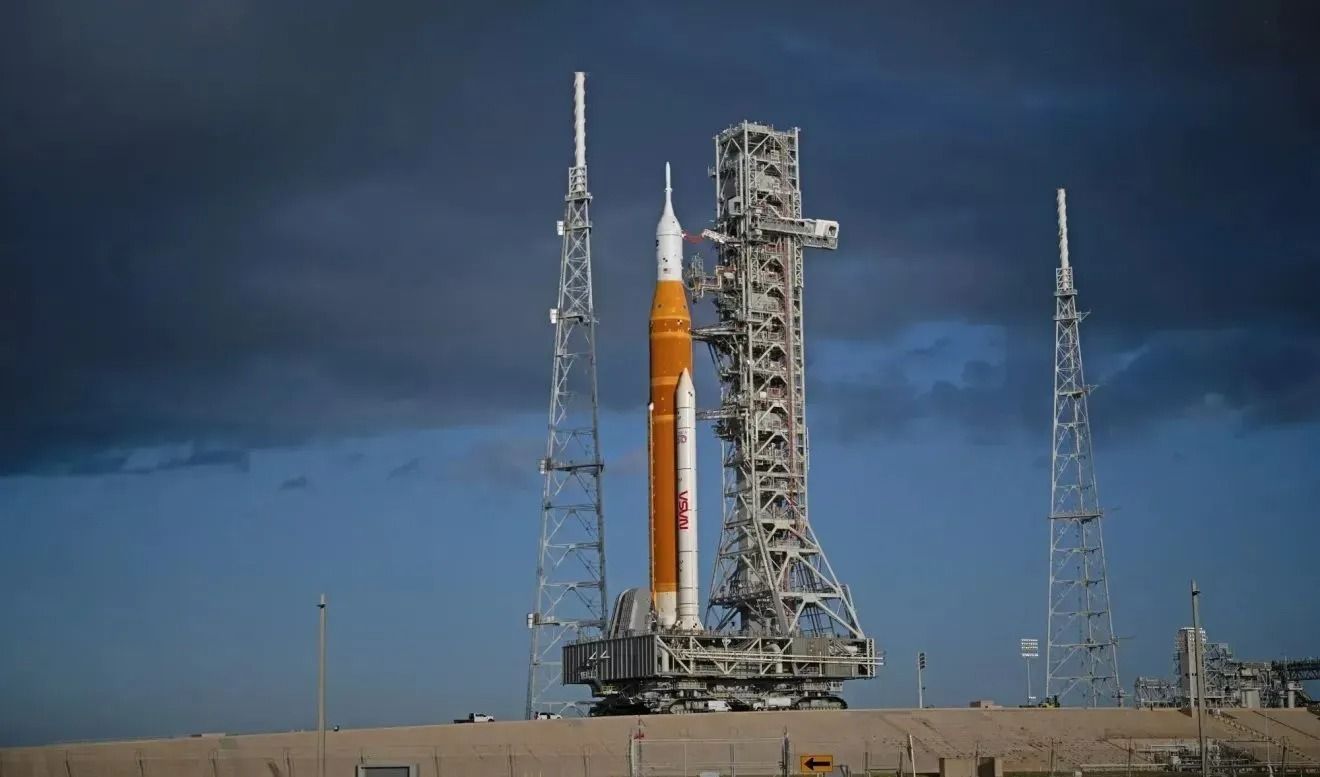
NASA begins countdown for first crewed Moon mission in over 50 years
 The flight will serve as a test of critical systems ahead of future lunar landings, including oxygen supply, temperature control, air purification, and the engines needed to leave Earth orbit
 The countdown for the Artemis 2 mission began Monday at 4:44 p.m. local time at the Kennedy Space Center in Florida, with liftoff targeted for 6:24 p.m. on Wednesday, April 1. It will be the first time astronauts have traveled toward the Moon since the Apollo 17 mission in 1972.
“It is an exciting time for our team, for this country, and for the entire world,” launch director Charlie Blackwell-Thompson said at a press conference. NASA officials confirmed that the SLS rocket, the Orion spacecraft, the launch platform, and all other components are in optimal condition. The main uncertainty is weather, though forecasters give an 80% chance of favorable conditions, with cloud cover and surface winds as the only concerns.
The 10-day mission will carry four crew members on a round trip around the Moon without landing: Commander Reid Wiseman, Pilot Victor Glover, Mission Specialist Christina Koch, and Mission Specialist Jeremy Hansen of the Canadian Space Agency. Koch will become the first woman to travel to the Moon, Glover the first Black man, and Hansen the first non-American astronaut to do so.
The flight will serve as a test of critical systems ahead of future lunar landings, including oxygen supply, temperature control, air purification, and the engines needed to leave Earth orbit. For the first time, NASA has turned to Europe for key components through the European Service Module, built by Airbus under the coordination of the European Space Agency.
NASA Associate Administrator Amit Kshatriya emphasized the program's international dimension. “The free countries of the world are doing something that no country can do alone,” he said. During his remarks, the launch of a SpaceX Falcon 9 rocket briefly shook the press room. “This is one of the wonderful things about this country,” Kshatriya joked.
If the launch takes place between Wednesday and Saturday, the four astronauts will surpass the distance record set by Apollo 13 and become the humans who have traveled farthest from Earth, beyond 400,000 kilometers, according to AP. During the flyby, the crew will be able to observe areas of the far side of the Moon never before seen by human eyes, with communications to Earth interrupted for roughly 40 minutes. The launch window extends through April 6, with one opportunity per day. If the mission does not launch within that period, the next window opens on April 30.


Top Comments
Disclaimer & comment rulesCommenting for this story is now closed.
If you have a Facebook account, become a fan and comment on our Facebook Page!