MercoPress. South Atlantic News Agency


Falklands: Uruguay Sciences Faculty researching sandy beaches of the Islands
 The project is in collaboration with the Falklands South Atlantic Environmental Research Institute, SAERI, and is funded by the UK Government
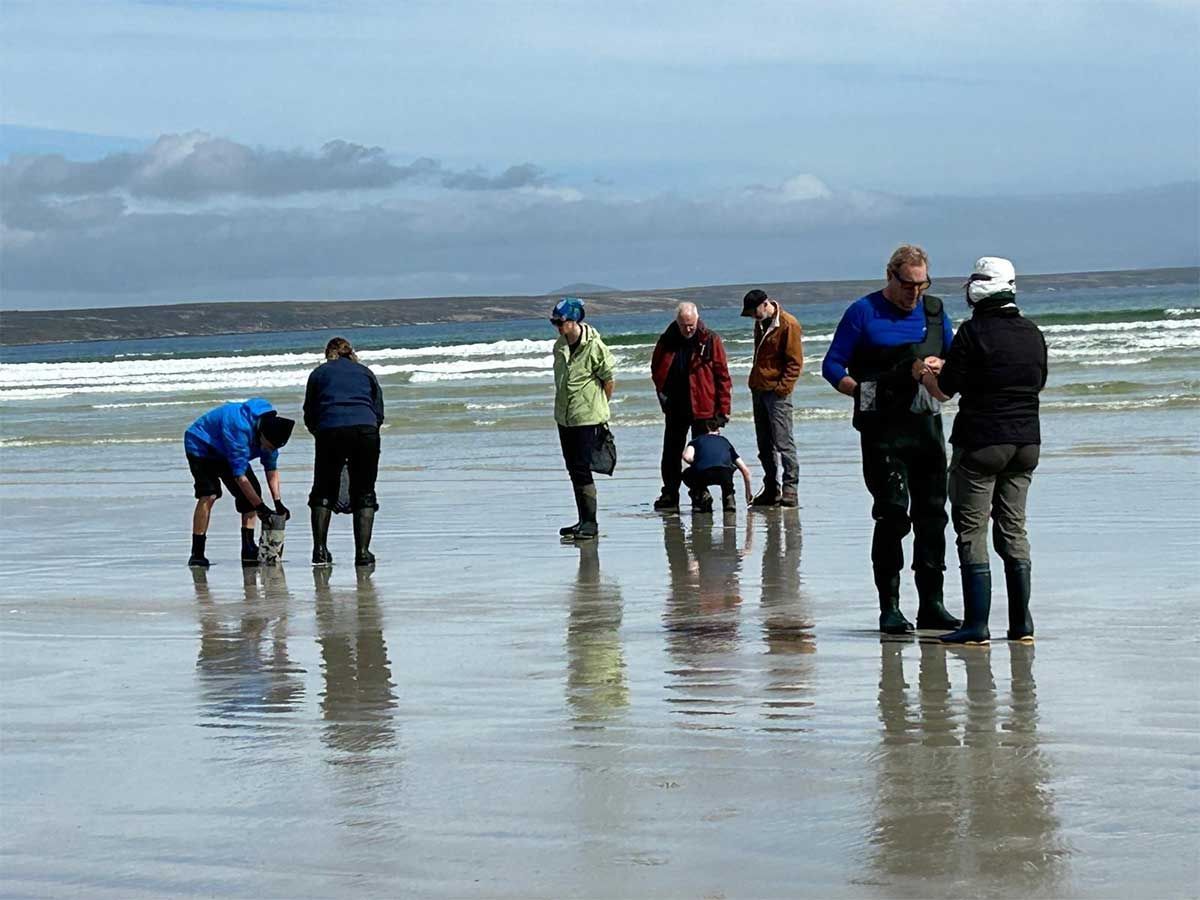
 A group of Uruguayan scientists have spent the last two weeks gathering samples from beaches around the Falkland Islands. Their research is aimed at discovering how humans and wildlife affect ecosystems within the sandy coastline.
The project is in collaboration with the Falklands South Atlantic Environmental Research Institute, SAERI, and is funded by the UK Government. Professor Omar Defeo is head of the team from the Uruguayan Sciences University, with several researchers, assistant professors and PhD students.
“The aim of our project is to assess the conditions and biodiversity of sandy beaches all along the Islands’ coastline and to establish a scientific baseline just to protect sandy beaches in the future,” indicated Professor Defeo.
PHD student, Sofia Bausero-Jorcin said the project involves some fifteen beaches in the Islands, particularly in the north and northwest. “We did a sample model which includes taking samples of the fauna including micro-organisms from the sand, physical measurements and from slopes surrounding, as well as collecting organic material from the sand”
“This is very important for us and for the Islands because we are talking about living ecosystems, and all sandy beaches are threatened by human activities and climate change. At first sight we were able to unravel the relative importance of some sediment characteristics and the diversity of fauna inhabiting them. We are going to provide more information dealing with the role of humans, their impact and the role of the penguins on the environment”, indicated Professor Defeo.
Julieta Olade said the purpose to study penguins was because they move along the beaches, on land and ocean, so they can make nutrient cycle changes that can affect the ecological processes.
“They can be really important for the nutrient input for the ecological processes for organisms in the Islands. We believe this will help support future conservation and coastland planning”.
Finally assistant professor Anita de Ayala, underlined that all around the world beaches are being lost to erosion or/and human pressure, so this project will supply us with valuable info, and outline a very important concept for future works and prevention.
This initiative, “Biodiversity Assessment of Sandy Beaches in the Falkland Islands”, is part of a larger, long-term effort to enhance the conservation of Falklands’ coastal areas and is supported by the Darwin Plus Local initiative.
The project is a significant international effort between SAERI, the Uruguay Universidad de la República (Udelar), and the Shallow Marine Surveys Group.


Top Comments
Disclaimer & comment rulesCommenting for this story is now closed.
If you have a Facebook account, become a fan and comment on our Facebook Page!