MercoPress. South Atlantic News Agency

Falklands, financial advance for FIMCO and calcified kelp license to improve soil for cattle forage
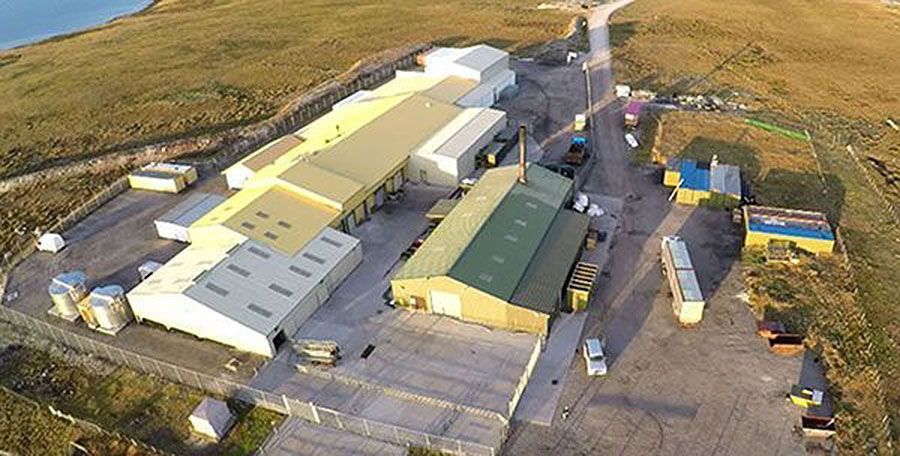 Falklands Sand Bay abattoir, the processing plant for cattle and sheep, certified by the European Union and UK
 On 20th April the Falkland Islands’ Executive Council considered a closed paper from FIMCO, Falkland Islands Meat Company, requesting a cash advance, to be repaid by June 2027. The request is to support cash-flow challenges resulting from the recent shipping delays.
Executive Council approved the recommendations. In related news to agriculture issues it was also announced that the Beef Supply Working Group have been progressing with several priorities to strengthen supplier engagement and improve operational conditions.
A comprehensive review and update of the beef supply contract has taken place, along with refinements to the beef pricing grid categories. Discussions have also taken place regarding arrangements for inter-farm livestock movements.
Enhanced communication tools such as the Beef Suppliers Portal, which creates a forward-looking planning tool, have also been implemented.
Processing capacity is said to be a significant constraint, as well as adequate feed quality and availability during the colder months.
Prices paid to suppliers have been said to be insufficient to ensure the viability of production which in turn limits their ability to invest or plan for the future.
Confidence in the long-term sustainability of the industry, given historical challenges, was also quoted as a key issue.
However, the Department of Agriculture is developing a modelling tool to assess the growth trajectory of the national beef herd, to provide a clearer picture of how the industry is progressing, particularly concerning herd management practices and identify opportunities to improve.
It has been noted that growth in the industry is bound to be gradual as a calf born today may take between 18 - 42 months to reach processing weight. For this a more strategic approach with a coordinated pacification is considered fundamental to growing the national beef herd to a sustainable level and establishing a viable, resilient industry for the long term”
Likewise and in that line of thinking FLH General Manager, Paul Phillips has submitted the following applications at the Planning Office Secretariat, “proposal to extract approximately 600 tons of dead calcified seaweed from Ruggles Bay, Lafonia. Extraction is to take place over 10 years, as three extractions of 200 tons. The extracted material will be transported to FLH farms, North Arm, Walker Creek and Goose Green. Calcified seaweed will be used as a soil conditioner to neutralize soil acidity. This will directly contribute to improved forage quality for red meat (beef) production, enhancing local food security on the Falkland Islands”.

Top Comments
Disclaimer & comment rulesCommenting for this story is now closed.
If you have a Facebook account, become a fan and comment on our Facebook Page!