MercoPress. South Atlantic News Agency


Lula arrives at the White House to mend fences with Trump after a year of tariffs and disputes
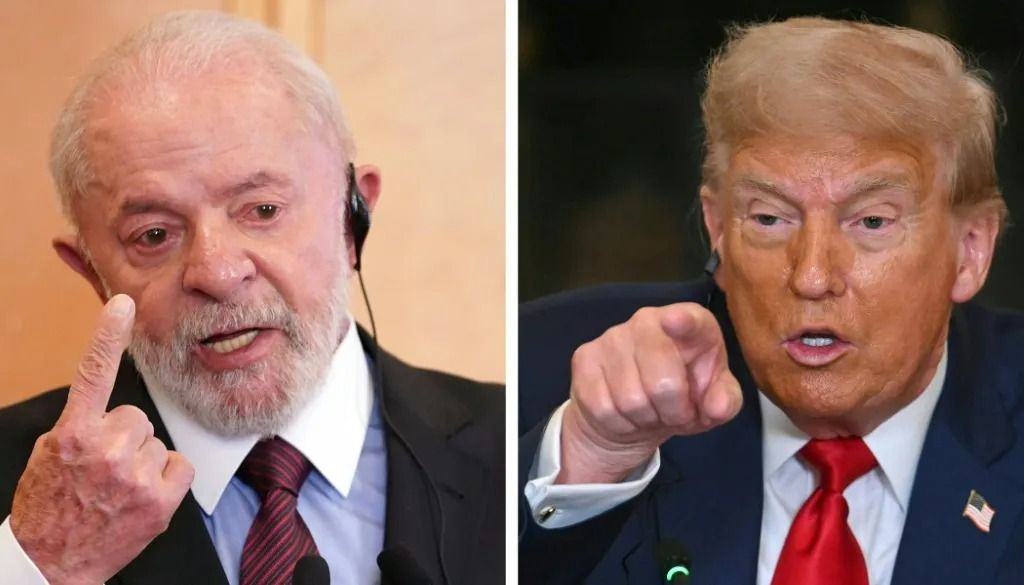 The Trump administration imposed in August 2025 a 50% tariff on Brazilian products that it explicitly linked to the Bolsonaro trial, a chapter that Lula handled with diplomatic firmness
 Brazilian President Luiz Inácio Lula da Silva was received on Thursday by his American counterpart Donald Trump at the White House, in his first official visit to Washington since his return to power in 2023 and the second face-to-face meeting between the two leaders, following a brief 45-minute encounter on the sidelines of the ASEAN summit in Kuala Lumpur last October. The meeting, formalized as a working session rather than a state visit, seeks to consolidate the fragile bilateral truce reached after one of the most severe diplomatic crises in two centuries of relations between the two most populous democracies in the Americas.
The Brazilian delegation, led by Lula, includes five ministers, among them Finance Minister Dario Durigan and the Federal Police's director general, in a composition oriented toward a concrete agenda of deliverables. Vice President Geraldo Alckmin assumed the role of interim president during the trip, scheduled to conclude with Lula's return to Brasilia on Friday, May 8.
The working agenda focuses on four particularly sensitive areas. The first is the Section 301 investigation that the US government is conducting on alleged unfair trade practices by Brazil, particularly the Brazilian instant payments system Pix, ethanol, and illegal deforestation, whose final report is due in July and could lay the groundwork for a new tariff package. The second is US interest in Brazil's rare earth reserves, the second largest in the world after China, at a time when Washington seeks to diversify its supply of strategic minerals. A US company backed by the White House has just acquired the only Brazilian producer of these materials, and Brazil will demand guarantees to preserve domestic processing capacity.
The third area, the most politically sensitive, is the possibility that Trump will designate the Primeiro Comando da Capital (PCC) and the Comando Vermelho as foreign terrorist organizations, in line with the criterion applied to Mexican cartels. Brasilia fears that such a measure would expose its banks, fintechs, and businesses to US secondary sanctions, complicate police cooperation, and have sovereignty implications for national security policy. Lula favors proposing a reinforced framework for sharing information and intelligence to combat the finances and arms trafficking of criminal organizations without the need for the designation. The fourth topic is the war against Iran, which Lula has described as “madness” and on which he has repeatedly defended multilateralism and negotiation.
The meeting comes at a delicate domestic moment for Lula. Last week his government suffered two significant parliamentary defeats: the lower house overrode his veto on a law that reduces former President Jair Bolsonaro's sentence — Bolsonaro is serving a 27-year prison sentence for an attempted coup — and the Senate rejected the nomination of Jorge Messias to the Supreme Federal Tribunal, an unprecedented setback in more than a century. Polls suggest a statistical tie for the October presidential elections between Lula and right-wing senator Flávio Bolsonaro, the former president's son. The Trump administration imposed in August 2025 a 50% tariff on Brazilian products that it explicitly linked to the Bolsonaro trial, a chapter that Lula handled with diplomatic firmness and which was scaled back in November. Oliver Stuenkel, a professor of international relations at the Getulio Vargas Foundation, told AFP that Lula will seek to “strengthen the personal rapport with Trump” to reduce the risk of US interference in the October elections.


Top Comments
Disclaimer & comment rules-

-

-

Read all commentsI'll bet Brasso is seething...
May 07th, 2026 - 04:21 pm 0For the first time in your entire life, you're right.
May 07th, 2026 - 07:24 pm 0https://www.youtube.com/watch?v=Thy_JsQQKNY&list=RDMMThy_JsQQKNY&start_radio=1
Braz
May 07th, 2026 - 11:44 pm 0Yeah, we had to send the King for that job, no point in sending that blithering idiot Starmer.
HM earned his pay that trip.
Commenting for this story is now closed.
If you have a Facebook account, become a fan and comment on our Facebook Page!