MercoPress. South Atlantic News Agency



Top naval medical service containerized module successfully tested in HMS Protector
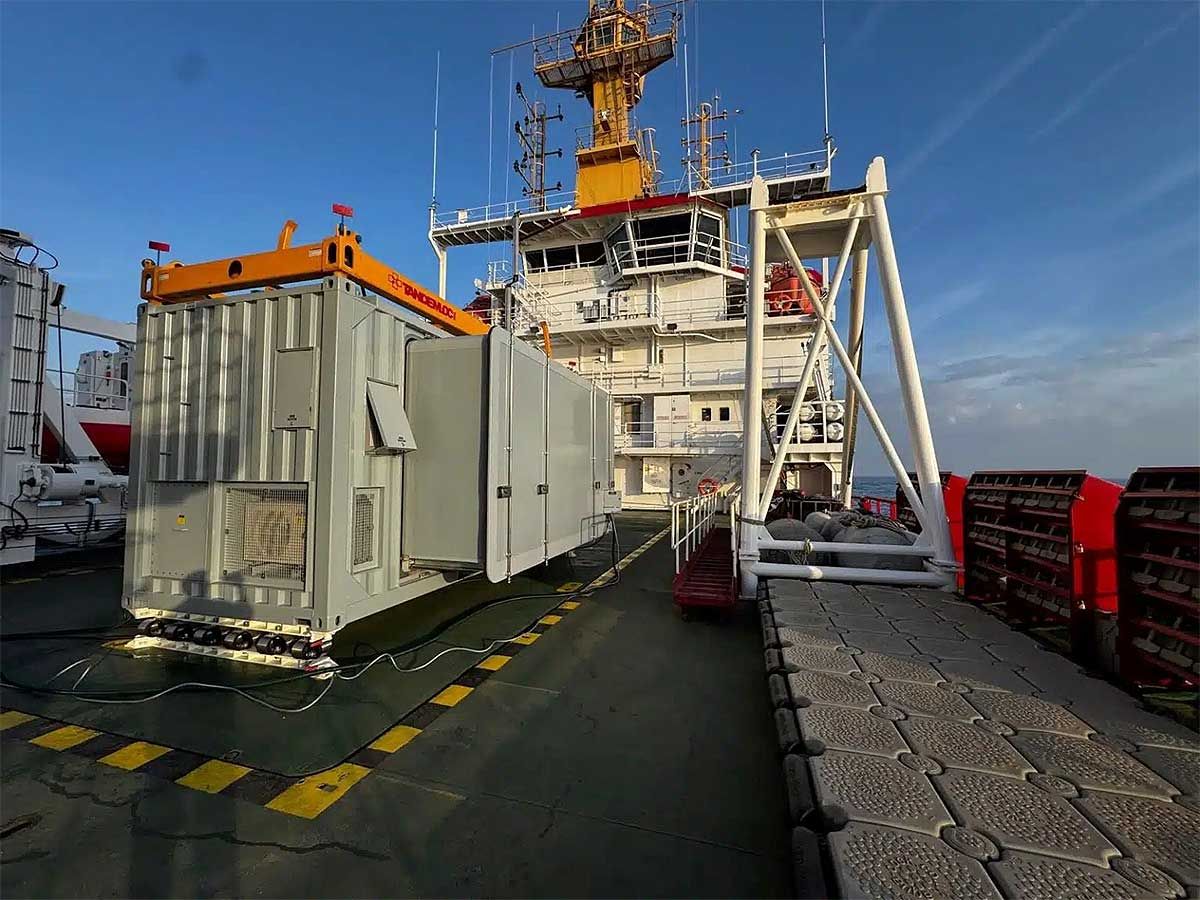 The Medical NavyPODS being embarked onboard the Royal Navy’s ice patrol ship HMS Protector. The NavyPODS are installed on a shock raft system designed in-house by FDS. (Credit: FDS/Simon Bradley)
 UK engineering SME Force Development Services (FDS) has successfully tested its containerized medical mission module at sea for the first time, marking a significant milestone for the UK Royal Navy’s (RN’s) NavyPODS – Navy Persistent Operational Deployment System – program.
A report from Naval News indicates that the two-week medical trial, which was carried out by the Royal Naval Medical Service (RNMS) on board the RN’s ice patrol ship HMS Protector off the east coast of England in late April, places the Medical NavyPODS at technology readiness level (TRL) 8.
FDS Business Development Director Paul Keating-Brown said the sea trial proved the Medical NavyPODS’ ability to integrate into the ship and operate agnostic of the ship, demonstrating how the RNMS can deliver healthcare onboard naval ships that do not have a Role 2 capability. It follows the successful completion of a 100-day capability sprint directed by the First Sea Lord that concluded in March.
Led by the RN’s Disruptive Capability Technology Office (DCTO), the 100-day sprint aimed to accelerate high-maturity NavyPODS prototypes developed by FDS – which include the company’s medical capability and a secure RF communications module – towards operational readiness.
Launched in late 2021, the RN-s NavyPODS program envisages the creation of a ‘plug and play’ fleet using standardized 20 ft ISO containers to rapidly deploy specialized capabilities across a range of surface ships. Since 2023 FDS has produced 12 of the 20 NavyPODS prototypes that have so far been built for the program.
The Medical NavyPODS is centered on a 20 ft ISO hard sided, double expanding clinical container, supported by a separate life support unit that provides power backup and distribution, water storage and waste management, medical grade oxygen generation and sterilization services.
The current version has been re-engineered from the original minimum viable product that was delivered under a 103-day contract in early 2023, Keating-Brown said. While the footprint and basic architecture remain unchanged, the latest standard incorporates several substantial changes based on user feedback and early operating experience.
The most visible change is a completely redesigned side pod deployment system. The current mechanism enables a single operator to wind out each side pod using a simple mechanical drive – enabling clinical teams to achieve initial operating capability in just 17 to 20 minutes. Once deployed, the NavyPODS are fully self supporting, so there is no need for additional contact with the ship’s deck, Keating-Brown noted. This makes the system easier to integrate on board and also means the Medical NavyPODS is pan-domain deployable.
Another systems level change is the new HVAC unit, which was designed and built in house. The unit has been sized to deliver the air changes per hour needed for a theatre grade environment at positive pressure and tuned to run quietly and efficiently, using heat recovery to keep energy consumption within the limits of the 20 ft module’s power budget.
According to Keating-Brown, there was no existing off the shelf HVAC package that could provide the required blend of airflow, footprint, noise and maintainability in the available space, which is why the company opted to create its own design for maritime and land medical use.
The trial also marked the first time a NavyPOD has been installed on a shock raft system designed to mitigate major shock events transmitted through the ship’s hull. Developed in-house by FDS, the new raft will enable containerized capabilities to be considered for platforms and operating areas where shock threats are a key design driver, Keating-Brown said. The first of type integration provides an important reference point for future modular capability designs that must meet demanding naval shock standards, he added.
Prior to the sea phase, the enhancements were tested and proven by RNMS during a three-day land-based trial at HMS Sultan in early March, which was conducted in collaboration with the DCTO as part of the 100-day sprint. During the land-based test, around a dozen clinical stakeholders, including a deployed clinical director, doctors and nurses, reconfigured the Medical NavyPODS for a variety of scenarios, including intensive care and resuscitation in theatre. “That was hugely successful with positive feedback from the clinicians,” Keating-Brown said.


Top Comments
Disclaimer & comment rulesCommenting for this story is now closed.
If you have a Facebook account, become a fan and comment on our Facebook Page!