MercoPress. South Atlantic News Agency



Paraguayan Prosecutor's Office maps Marset drug route from Bolivia to European ports
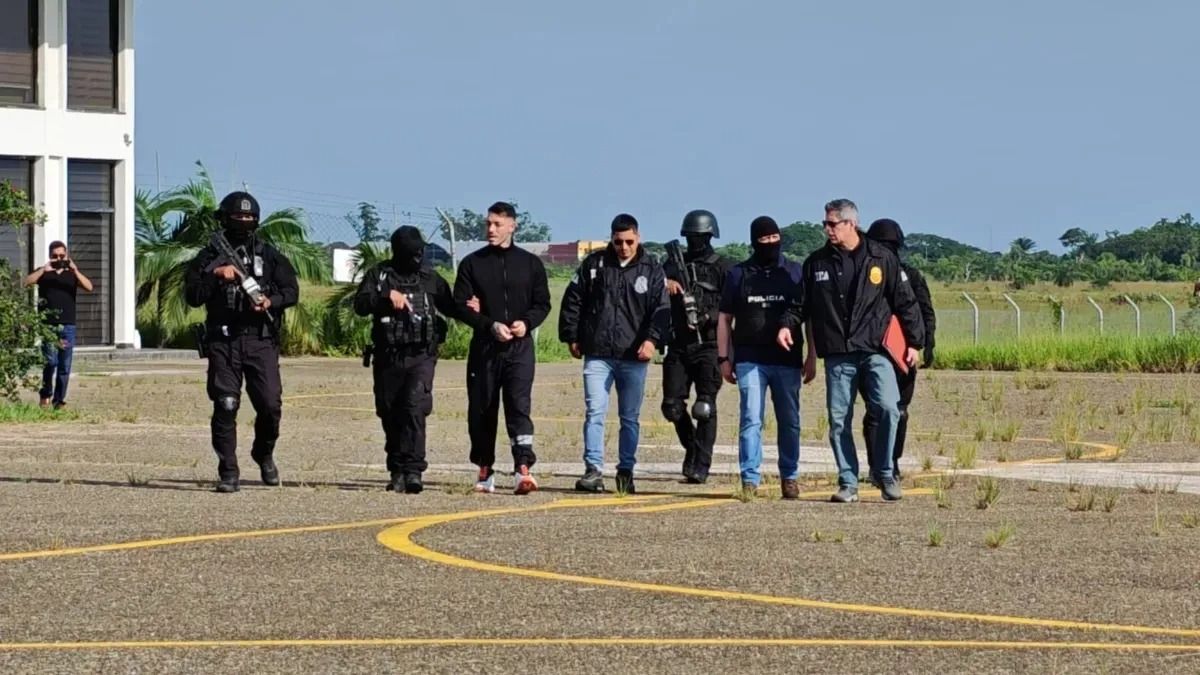 Marset was captured in March 2026 in Santa Cruz de la Sierra, Bolivia
 The Paraguayan Prosecutor's Office has filed an indictment against Gianina García Troche, the former partner of Uruguayan drug trafficker Sebastián Marset, that reconstructs in detail the criminal structure operating from Paraguay that for years moved cocaine from Bolivia to major European ports. The document, cited by the Uruguayan newspaper El País, lays out a three-pronged organization, nearly a thousand clandestine flights inside the Paraguayan Chaco, and a verified export volume amounting to 17,340 kilos of cocaine seized in Belgium and the Netherlands, valued at up to USD 434 million on the European market.
According to the reconstruction, the organization was articulated around three legs: Marset coordinated contacts with international suppliers and buyers; Paraguayan national Miguel Insfrán Galeano, known as “Tío Rico,” managed logistics inside Paraguay; and a Bolivian faction supplied the cocaine. The Uruguayan trafficker had arrived in Paraguay in 2018 carrying false Brazilian and Bolivian documents under the identity of Gabriel de Souza Beumer, and presented himself as an entertainment entrepreneur through the firm Mastian Productions, a front that allowed him to justify his wealth and public activity.
The drug route began in Bolivia. Cocaine was moved in aircraft bearing Bolivian registrations to a clandestine airstrip and airfield located on a rural estate within the Cabrera-Timane Natural Reserve, in the department of Alto Paraguay, close to the Bolivian border. From there an internal airlift was activated that the indictment puts at close to one thousand flights. The San Agustín estancia operated as the central node of the operation, equipped with hangars, housing for group members, ground-to-air radios, reflectors to guide night landings, fuel reserves, and aircraft parts. The Nuevo Horizonte estancia, linked to Tío Rico, fulfilled similar functions.
Overland transport connected both estancias with warehouses in the Central Department, where cocaine was concealed within legitimate goods, mainly soy flour, before being loaded into containers bound for European and African ports. The scheme required a parallel export apparatus: companies that processed operations before Customs, generated invoices with supposed foreign importers —in many cases cloned companies— and built financial records through international transfers. Coordination flowed through encrypted messaging systems, and shipments were identified by internal markings; bricks bearing the stamp of the “First Uruguayan Cartel,” attributed to Marset, were seized in Uruguay.
In parallel, in the United States, the federal Prosecutor's Office accumulated twenty-two gigabytes of evidence against Marset, captured last March in Santa Cruz de la Sierra and transferred immediately to the North American country. The material includes intercepted communications in foreign languages, evidence obtained through mutual legal assistance treaties with Uruguay, Colombia, Belgium, and France, and tens of thousands of pages of financial records. The hearing initially scheduled for 20 May was postponed to 1 July to allow the defense to review the evidence and the proposals for a possible plea agreement.


Top Comments
Disclaimer & comment rulesCommenting for this story is now closed.
If you have a Facebook account, become a fan and comment on our Facebook Page!