MercoPress. South Atlantic News Agency



Bolivia's blockade crisis reopens a deep racial divide
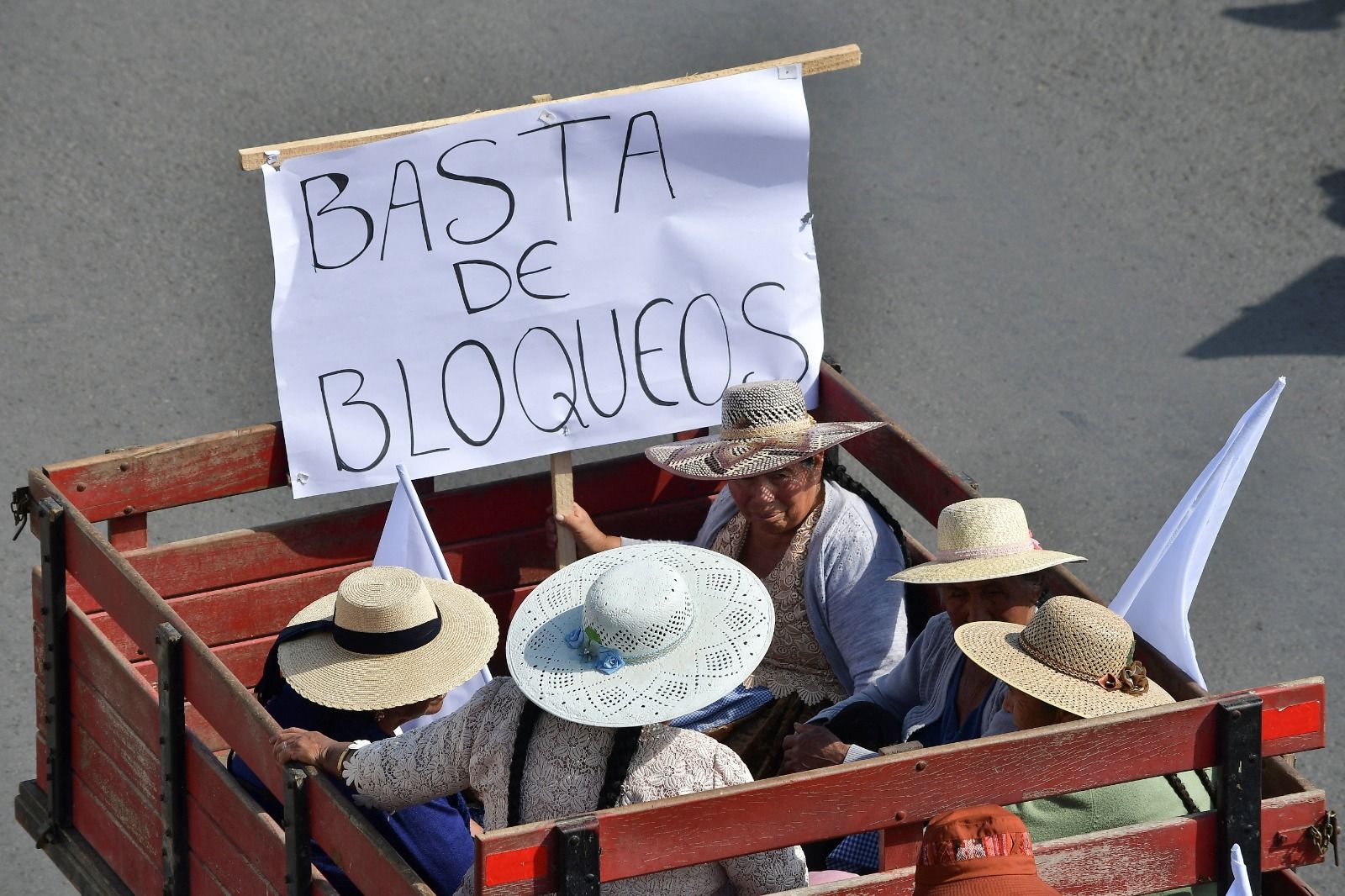 In a wealthy La Paz neighborhood, graffiti appeared inciting violence against Indigenous people —“be patriotic, kill an Indian”
 The social conflict in Bolivia has split the country once again. The road blockade led by Indigenous peasants, which has besieged La Paz for more than a month, has brought expressions of racism to the surface in the capital. Worn down by the lack of gasoline and food and by soaring prices, some residents lash out at the protesters —and the hostility runs in both directions.
In a wealthy La Paz neighborhood, graffiti appeared inciting violence against Indigenous people —“be patriotic, kill an Indian”— while social media carries messages blaming the peasants for paralyzing the city. In the opposite direction, protesters demanding the resignation of President Rodrigo Paz heckle lighter-skinned people who approach their gatherings, shouting “get out, we don't want q'aras!” (“whites,” in Aymara). The divide is also economic and geographic: Indigenous people are the majority on the high slopes, at nearly 4,000 meters, while the residential neighborhoods of white-skinned residents are concentrated in the southern zone, 500 meters lower.
For Carlos Macusaya, of the Indianist collective Jichha, “in Bolivia it is normal for non-Indigenous people to run the country, but the reverse causes revulsion.” The economic and political rise of Aymara, Quechua and small farmers during nearly 20 years of Movement for Socialism governments (2006-2025), led until 2019 by the first Indigenous president, Evo Morales, reshaped social classes and generated tension. According to Macusaya, the rejection by part of the elites turned into resentment and, today, into a desire for “disciplining” expressed in calls to send the army into the streets.
Many of those mobilized, who voted for Paz, feel betrayed: they say they were not consulted on the economic-adjustment decrees, that the cabinet included figures from the neoliberal era and agribusiness owners, and that an agrarian reform moved ahead. “Since the founding, in 1825, whites have governed us,” says artisan Mauro Castillo from a bridge in El Alto, a majority-Indigenous city.
The tension is as old as the country. “The identity that unifies Bolivia is not 'we are Bolivians,' it is 'we are not Indians,'” argues teacher Juan Pablo Vargas, referring to a nation founded by criollos who made up less than 10% of the population. Until the arrival of the MAS, in 2006, there had been only one Indigenous member of parliament. Sociologist and former vice president Álvaro García Linera recalls the role of the leaderships of Felipe Quispe and Morales; others, such as La Paz merchants hit by falling sales, instead accuse Morales of having stoked racial differences for electoral gain.
Paz has threatened to order the armed forces to clear the roads but has not done so. He calls for “unity and dialogue” and warns that the country's future cannot be built “with confrontation, division, racism or classism.” For now, his words find little echo.


Top Comments
Disclaimer & comment rules-

Read all commentsThe deep-rooted racism in Bolivia is coming to the surface with centuries of resentment on the point of exploding into a civil war. What we see in Bolivia is the strongest expression of something found throughout Latin America but covered up by elites for ages and ages - that these are ethnically deeply divided societies where the darker-skin and more indigenous and afro populations are discriminated against on a daily basis. It is time that the world's media get real about this before it is too late. Hardly surprising that Latin America, like South Africa, is the most unequal region of the world by income and wealth - it is simply the surface manifestation of the consequences of this ethnic divide.
Jun 06th, 2026 - 11:52 am 0Commenting for this story is now closed.
If you have a Facebook account, become a fan and comment on our Facebook Page!