MercoPress. South Atlantic News Agency


US Navy recues pilots from downed helicopter in the sea with an un-crewed surface vessel and AI
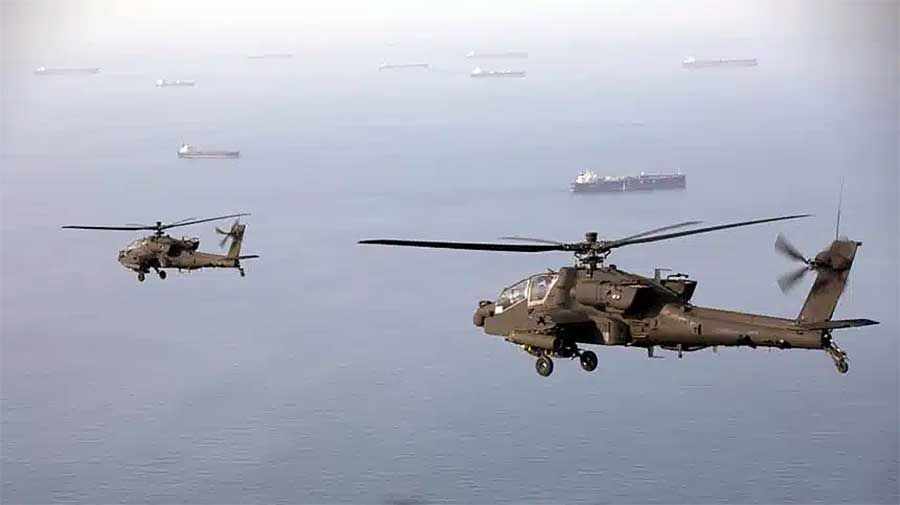 US Apaches fly over the Strait of Hormuz (Picture: Centcom)
 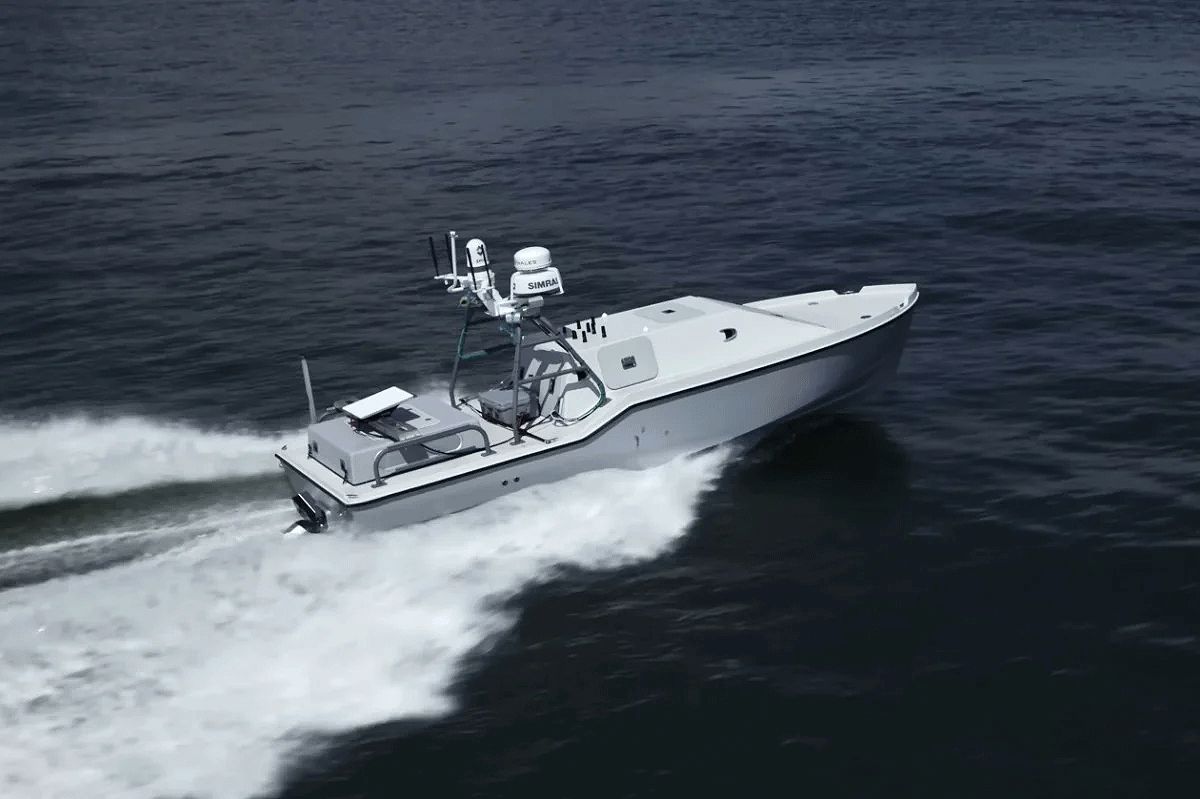 The rescue is believed to be the first known US use of an un-crewed military vessel to recover personnel at sea.
 A US Army Apache crew has been rescued by a Navy sea drone after Iran downed their helicopter near the Strait of Hormuz. The two soldiers were picked up from the water by an un-crewed surface vessel operated by Task Force 59, the US Navy's Bahrain-based unit for un-crewed systems and artificial intelligence.
The rescue is believed to be the first known US use of an un-crewed military vessel to recover personnel at sea. In a post on Truth Social, President Donald Trump said Iran had shot down the AH-64 Apache and that both crew members were safe and uninjured.
US Central Command later said American forces had carried out strikes against Iran in response to the downing of the helicopter.
CENTCOM said Iranian air defense, ground control stations and surveillance radar sites near the Strait of Hormuz were hit by precision munitions from US Air Force and Navy fighter jets.
The rescue itself took place after the Apache went down near the coast of Oman on 8 June.
The rescue was led by US Naval Forces Central Command and the 82nd Airborne Division, with support from US Air Force and Navy units, including Task Force 59.
The un-crewed vessel involved was a Saronic Corsair, a 24ft autonomous surface vessel.
The drone picked up the Apache crew and moved them to another position on the water, where they were hoisted into a helicopter.
The Corsair is designed to carry up to 453.5kg over more than 1,000 nautical miles. It looks like a speedboat and can go as fast as 35 knots (40 miles per hour).
Task Force 59 is the US Navy's unmanned-systems unit in Bahrain.
It was stood up in 2021 inside US Fifth Fleet, whose area covers the waters around the Arabian Gulf, Gulf of Oman, Red Sea and parts of the Indian Ocean.
That area includes the Strait of Hormuz, the Suez Canal and the Strait of Bab al Mandeb, three important shipping routes and potential maritime chokepoints.
Since its launch, Task Force 59 has tested and operated more than 23 different un-crewed systems.
“For pennies on the dollar we can put unmanned platforms out there, we can couple it with artificial intelligence... and then, I think critically important, we can use our manned ships much more efficiently, much more effectively,” then-5th Fleet Commander Vice Admiral Brad Cooper told reporters in 2022, a year after the unit was stood up.

Top Comments
Disclaimer & comment rulesCommenting for this story is now closed.
If you have a Facebook account, become a fan and comment on our Facebook Page!