MercoPress. South Atlantic News Agency


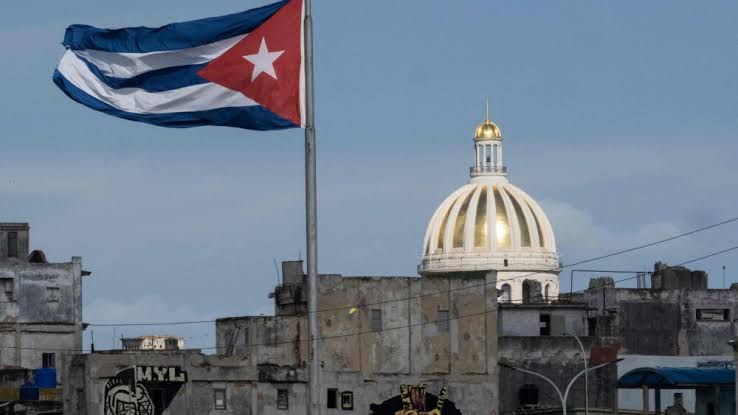
Cuba approves its deepest market reforms in over a decade amid public skepticism
 President Miguel Díaz-Canel justified the package before the Communist Party's Central Committee with the premise of “changing whatever needs to be changed”
 Cuba's National Assembly approved on Friday a package of 176 measures that introduces market dynamics into the island's economy, in the deepest shift since the reforms promoted by Raúl Castro in 2011. The government presented the plan as a response to the worst economic crisis in decades, though much of the population receives it with skepticism.
The document, structured in 23 areas, legalizes measures that until recently were considered off-limits: it authorizes the creation of private banking under the supervision of the Central Bank, allows foreign direct investment in the private sector and in tourism, ends the state monopoly on foreign trade and enables the conversion of state companies into joint-stock corporations. It also removes the 100-employee cap for private businesses, creates bankruptcy procedures, provides for successive devaluations of the currency and replaces the universal subsidies of the ration card with aid targeted at sectors deemed vulnerable.
President Miguel Díaz-Canel justified the package before the Communist Party's Central Committee with the premise of “changing whatever needs to be changed,” and admitted that not having done so earlier was “a mistake.” He held that the transformations “do not mean a renunciation of socialism,” but rather the result of economists' proposals and the study of other socialist experiences. Prime Minister Manuel Marrero defined them as an “indispensable condition” for preserving the model. The process was unusually fast for Cuba: in a single week came the announcement, the Central Committee's endorsement and parliamentary approval.
The doubts center on implementation, in a country where previous attempts at opening dissolved into bureaucracy. “We all agree that, had they been done 10 years ago, Cuba would already be another country,” said entrepreneur Marta Deus, co-founder of the delivery app Mandao, who warned that success will depend in part on US sanctions. Economist Tamarys Bahamonde noted that the changes arrive “when the country lacks the social conditions to absorb them,” while economist Carmelo Mesa-Lago and opposition figure Manuel Cuesta Morúa coincided in describing them as a market reform “in the Chinese or Vietnamese style,” but at an adverse moment.
The context is critical: chronic fuel shortages, the energy crisis and inflation have eroded businesses, compounded by pressure from Washington, which has maintained a de facto oil blockade since the start of the year and threatened to freeze the assets of those who partner with the island. The elimination of universal subsidies and the risk of greater inequality are among the most sensitive points of the plan, whose effective application remains to be seen.


Top Comments
Disclaimer & comment rulesCommenting for this story is now closed.
If you have a Facebook account, become a fan and comment on our Facebook Page!