MercoPress. South Atlantic News Agency

Alan Greenspan, Fed chairman who served with four presidents and faced several recessions has died at 100
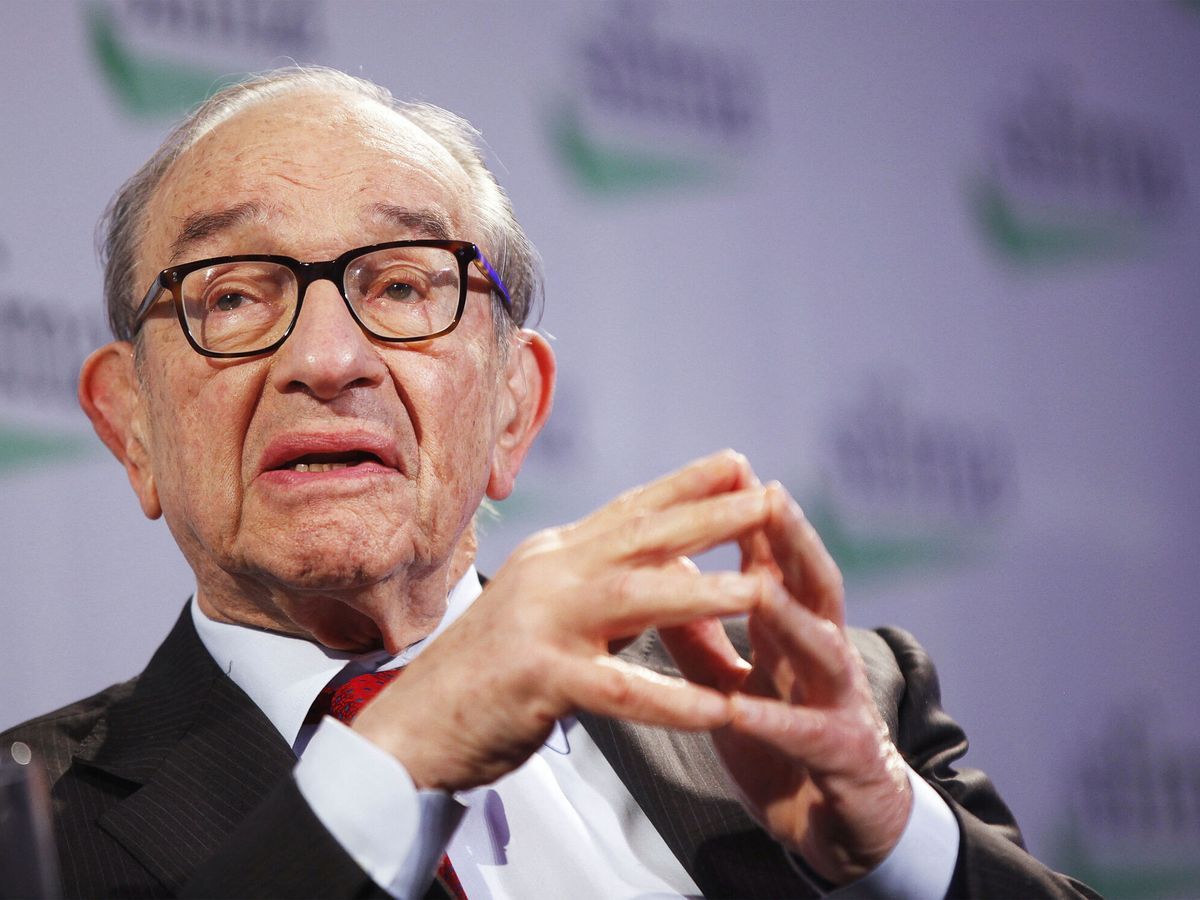 Alan Greenspan, El Maestro and author of “The Age of Turbulence”, was Fed chair under Reagan, Bush Sr., Bill Clinton and George Bush Jr.
 One of the most influential economic policymakers in the last four decades and chairman of the Federal Reserve for almost twenty years, under four different United States presidents from different parties, Alan Greenspan died this week at the age of 100.
Greenspan was appointed (thirteenth) chairman of the Fed in 1987 by president Ronald Reagan and held the job until 2006, making him the second longest in that position. During Greenspan’s time at the Fed, stock markets prospered but not without periods of extreme volatility. His loose hand at the central bank is sometimes cited as a cause of the 2008 financial crisis.
The Fed in a statement on Monday noted Greenspan’s passing “with deep sadness” and said his “contributions to monetary policy and economic thought left a lasting mark on this institution, on the broader field of economics, and on the country.”
Ben Bernanke, who was Greenspan’s successor and guided the US (and world) economy through the crisis, pointed to noted Greenspan’s importance.
“He was a great central banker who helped lead his country through almost two decades of prosperity,” Bernanke said. “I always found him generous with his time and insights. We are still learning from him, even if he is no longer with us.”
El Maestro as he was also referred to in financial markets was famous for the use of coded language, for example when he warned of what he described as “irrational exuberance,” because he thought the US stock market was overvalued.
“How do we know when irrational exuberance has unduly escalated asset values, which then become subject to unexpected and prolonged contractions as they have in Japan over the past decade? ... We should not underestimate or become complacent about the complexity of the interactions of asset markets and the economy.”
The phrase “irrational exuberance” was interpreted as a signal that Greenspan thought the market was overvalued. The Tokyo stock market, which was open at the time, sank 3% on the comment, and other markets subsequently tumbled. However, the markets quickly recovered and continued to climb until the dot-com bust in 2001.
Greenspan was born to Jewish parents on March 6, 1926, in New York’s Washington Heights. His father was a stockbroker and financial analyst. As a boy growing up in the 1930s during the Great Depression, the future Fed chairman received an allowance of a quarter a week.
Greenspan played the clarinet and saxophone and briefly attended the Juilliard School. He played in Woody Herman’s jazz band before he enrolled in New York University, earning bachelors and master’s degrees in economics by 1950. He eventually received his Ph.D. in 1977, age 51.
He served as chairman of President Gerald Ford’s Council of Economic Advisers from 1974 to 1977. From 1981 to 1983, he was chairman of the National Commission on Social Security reform. The first of his five terms at the Fed began just before the 1987 financial crisis. That was only 69 days before “Black Monday” crushed Wall Street on Oct. 19. The Dow Jones Industrial Average sank 508 points — 22.6% — in the session, the biggest one-day sell-off in history.
The next day, Greenspan affirmed the Fed’s readiness “to serve as a source of liquidity to support the economic and financial system.” His central bank lowered short-term interest rates to encourage banks to lend on their usual terms.
The strategy helped calm markets and avoid a recession and banking crisis. Within two days, the Dow regained more than 50% of its Black Monday losses. However years later, critics blamed the easy money policy he used to help calm market panics — for conditions that brought on the Great Recession.
After that he led the Fed through two recessions, the 1997 Asian financial crisis, the 1998 Russian financial default, the 1998 bailout of the hedge fund Long-Term Capital Management, the Sept. 11, 2001, terrorist attacks, and the dot-com boom and bust of the late ’90s through 2001.
Throughout, he focused on fighting inflation over promoting full employment. His supporters say he presided over the longest economic expansion in U.S. history, but critics said Greenspan’s low interest rate policies set the stage for the housing bubble that burst into the Great Recession a year after his successor, Ben Bernanke, took the Fed helm.
In his best-selling memoir “The Age of Turbulence,” he defended the low-rate policy, which encouraged people to buy homes: “I believed then, as now, that the benefits of broadened homeownership are worth the risk. Protection of property rights, so critical to a market economy, requires a critical mass of owners to sustain political support.”
Greenspan wrote the book in longhand, mostly while soaking in a bathtub because of a back injury. In fact, most of his speeches were penned that way after he injured his back in 1971.
In his 2007 memoir, he praised presidents Ford and Clinton, but harshly criticized President George W. Bush for not reining in spending.
“Little value was placed on rigorous economic policy debate or the weighing of long-term consequences,” the self-described libertarian Republican wrote. “They swapped principle for power. They ended up with neither. They deserved to lose.”
He also was critical of President Donald Trump’s first-term bashing of the Fed in an effort to get interest rates lower. Appearing on a CNBC’s program shortly after a December 2019 Trump tweet aimed at the central bank, Greenspan said: “He’s wrong in even discussing the issue. The Federal Reserve is a very professional outfit. They know more about the economy’s functioning, how it affects the money markets and the interest rate structure, far more than he does. ... The best thing to do is to just disregard it. I didn’t hear this morning that the president made a statement. “I’m sure it was ill-advised”.”
During Trump’s second term, in January 2026, Greenspan signed a joint statement with a handful of other former Fed and Treasury officials to denounce a criminal probe of Fed chair Jerome Powell.


Top Comments
Disclaimer & comment rulesCommenting for this story is now closed.
If you have a Facebook account, become a fan and comment on our Facebook Page!