MercoPress. South Atlantic News Agency

Mexican rescuers in Venezuela call it one of the largest tragedies they have faced
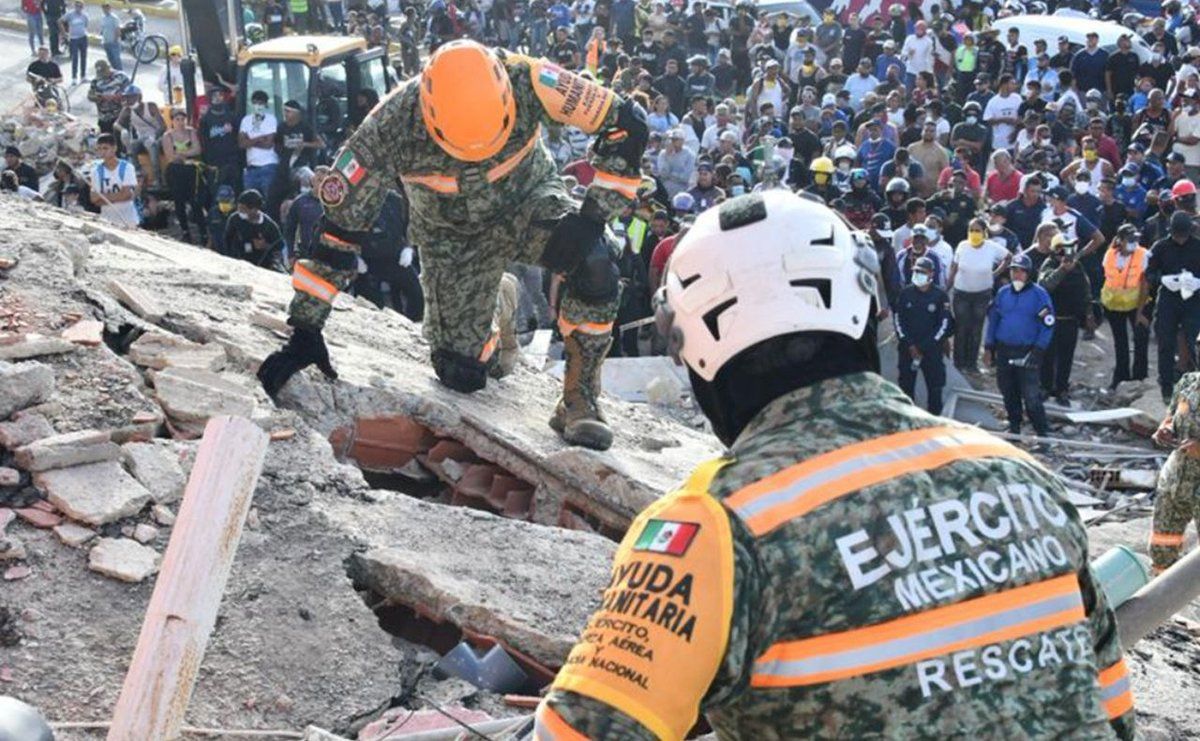 The Mexican detachment numbers some 280 soldiers, plus close to 300 members of the Red Cross, firefighters and civil protection, deployed as part of the DN-III civilian-assistance plan
 Rescuers from the Mexican Army's Emergency Response Battalion (BAE), considered among the most experienced in the world in natural disasters, say the earthquake that devastated north-central Venezuela is “one of the largest tragedies” they have attended, above all because of the scale of the damage. The team is working in the coastal state of La Guaira, the hardest-hit area, where the official toll exceeded 1,700 dead on Monday.
The Mexican detachment numbers some 280 soldiers, plus close to 300 members of the Red Cross, firefighters and civil protection, deployed as part of the DN-III civilian-assistance plan. They are concentrated in La Guaira, where most of the casualties are recorded, and have one of their base camps at a former golf course in the tourist city of Caraballeda, converted into an operations center for international and Venezuelan teams and, at the same time, into a shelter for residents left homeless. From there, the rescuers travel in shifts of more than eight hours to the most critical points, which, they say, are “practically on every corner of every neighborhood.”
One of the battalion's lieutenants explained that a key to understanding the scale of the damage is the type of construction: “There were residential complexes with towers of up to 12 floors. High population density and very heavy structures that make rescue work difficult.” The officer said that working with trained dogs allows victims to be located quickly, though the solidity of the buildings complicates extraction. “Here we are finding good-quality materials. The concrete slabs are up to 20 centimeters thick, when in Mexico they tend to be thinner,” he said, to explain why some operations stretch on for hours.
The protocol they follow begins with an assessment of the level of damage and the identification of possible spaces where people might remain alive. It is followed by a phase of calling and listening —“We are the Mexican Army; if there is anyone alive, shout or make some noise”— and, if a signal is confirmed, the marking of the spot and the cutting through the rubble with saws, drills and mallets. The Mexican rescuers have managed to pull three people out alive, in addition to recovering several hundred bodies, a task in which, they said, they try to preserve the dignity of the victims as much as possible.
Despite the passing of the 72-hour window considered critical, teams were still recording rescues. Among them, that of an 18-day-old baby who spent more than 30 hours under the rubble and a 21-year-old man freed after 106 hours, in an operation coordinated among brigades from Venezuela, Mexico and El Salvador. Venezuela received aid from 24 countries, with some 2,700 foreign rescuers joining about 30,000 local personnel. Mexico's president announced the dispatch of additional assistance, including water-purification plants and generators. The number of missing remains the subject of conflicting accounts: unofficial databases report tens of thousands, while the UN estimates that up to 6.8 million people could be affected by the disaster.


Top Comments
Disclaimer & comment rulesCommenting for this story is now closed.
If you have a Facebook account, become a fan and comment on our Facebook Page!