MercoPress. South Atlantic News Agency

Argentina sends fresh rescue brigades to Venezuela as most foreign teams begin to withdraw
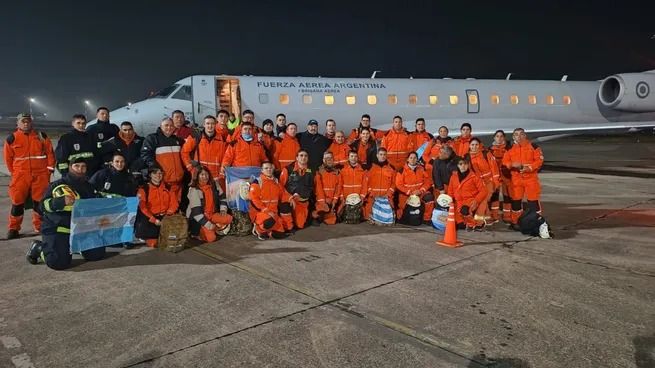 The Argentine contingent's departure comes as most foreign teams begin to leave Venezuela
 A new contingent of Argentine rescue workers left for Venezuela on Sunday to relieve the search-and-rescue teams deployed after the June 24 twin earthquake, which according to the official toll has left 2,954 dead and more than 16,500 injured. The dispatch coincides with the start of the withdrawal of most international missions, at the point when operations are shifting away from rescuing survivors toward the recovery phase.
Argentine Minister of National Security Alejandra Monteoliva said a second group of rescuers from the USAR teams of Córdoba and Santa Fe had traveled to complete the rotation of the Argentine units, after a first group departed on Saturday night. The mission, coordinated by the Federal Emergency Agency, seeks to sustain assistance while the brigades that have finished their tasks are repatriated.
In parallel, Argentina's Defense Ministry reported sending 16 tons of aid aboard a C-130 Hercules aircraft, with medical supplies, medicines, food and equipment. Another aircraft carried health and mental-health specialists from the Navy, veterinary personnel from the Army and a team specialized in chemical, biological and nuclear response, along with four canine units. The Argentine authorities planned a third flight for early Monday and said the aircraft would repatriate on the return leg the brigades that had completed their work.
The Argentine contingent's departure comes as most foreign teams begin to leave Venezuela. According to the United Nations, 25 of the 77 international teams that arrived from 31 countries remain operational, while coordination of the work has already been transferred to Venezuela's Civil Protection, a sign of the shift from the search-and-rescue stage to one of assistance and reconstruction. According to the official toll, 6,462 people have been rescued alive and 16,309 lost their homes.
More than a week after the two quakes, of magnitude 7.2 and 7.5, the casualty figures remain provisional and could rise as rubble is cleared. The number of missing remains the subject of conflicting estimates: international bodies calculate that tens of thousands of people may still be unaccounted for, while the authorities use lower figures. Independent verification on the ground has been hampered by infrastructure damage and restrictions on access to the worst-hit areas.


Top Comments
Disclaimer & comment rulesCommenting for this story is now closed.
If you have a Facebook account, become a fan and comment on our Facebook Page!