MercoPress. South Atlantic News Agency


UK/Netherlands navies partnership with eight next-generation amphibious transport ships
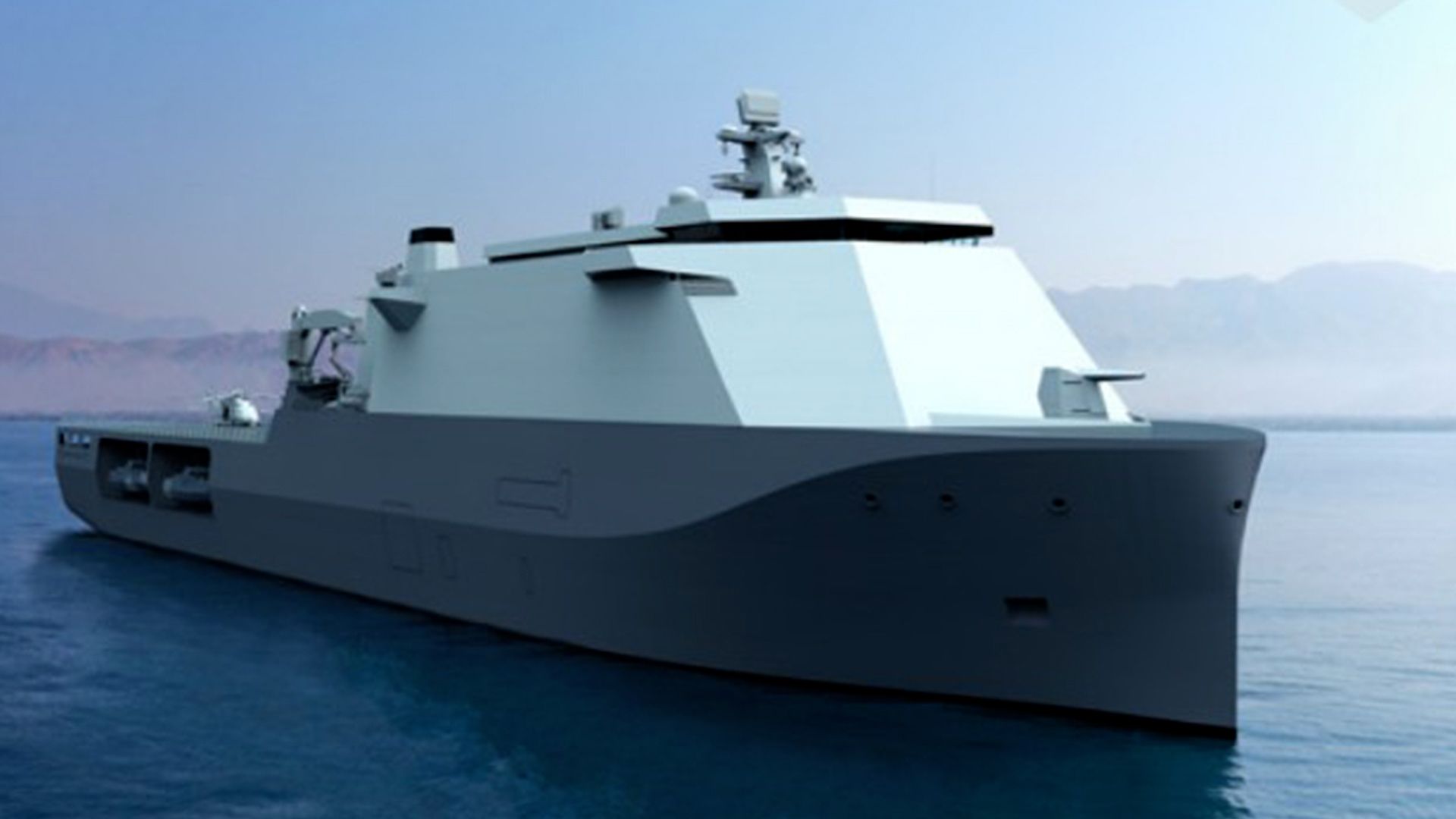 The Damen Naval Enforcer 15628 LPD concept is believed to be a strong candidate for the amphibious transport design (Picture: Damen)
 The UK and the Netherlands have agreed a £2.4bn joint procurement program to acquire eight next-generation amphibious transport ships. Under the new maritime partnership the vessels will be built in the UK to a Dutch design, with four ships entering service with each nation.
Officially known as the Amphibious Transport Ship (ATS), in line with Dutch naming conventions, the vessels will transport troops, vehicles and equipment, including drones.
They will also have flight decks designed to operate current and future long-range drones and autonomous systems.
Posting on X, the First Sea Lord, General Sir Gwyn Jenkins, said the new ships will enable the Royal Marines to “rapidly deploy and strike from the sea”.
The chosen design has yet to be announced, but the vessels will be 160 meters in length and 15,000 tons.
These are similar dimension to the Damen Naval Enforcer 15628 LPD concept which Navy Lookout reported had been mooted as a potential candidate in recent years.
This baseline design offers a highly flexible platform making the ships suitable for disaster response, evacuation missions, maritime security and humanitarian operations.
The new ships are set to form the backbone of a strengthened UK-Netherlands amphibious force, with the agreement signed by both nations' prime ministers during a meeting of Nato leaders in Turkey.
Sir Keir Starmer said: “This partnership is not just about building ships, it is also about delivering long term security for both the UK and The Netherlands, ensuring we are able to stay ahead of the threats of tomorrow.
”Combining the UK’s industrial expertise with The Netherlands’ design and sea-faring experience to deliver first-rate platforms for our elite amphibious forces, this partnership will strengthen Nato.
“I am incredibly proud that British shipyards will help deliver these ships, creating and sustaining good jobs here at home in the UK.” The agreement builds on more than 50 years of maritime cooperation through the UK-Netherlands Amphibious Force, Europe's longest-running integrated military force.
Operating the same class of amphibious transport ship will enable the Royal Navy and Royal Netherlands Navy to train, deploy and operate more closely together, strengthening Nato's ability to respond rapidly to crises.
The partnership follows the UK's recent agreement with Norway to build five Type 26 frigates for the Royal Norwegian Navy in UK shipyards, supporting 4,000 British jobs.
RFA Mounts Bay
RFA Mounts Bay is finally back at sea after more than a year in regeneration at Falmouth Docks. The Bay-class landing ship dock will now undergo sea trials to check systems are functioning as expected before doing Flag Officer Sea Training (FOST) to prepare for operational duties.
Named after Mount's Bay in Cornwall, the ship provides the Royal Marines with heavy lift amphibious capability and can support operations and exercises all over the world.
This is a much-needed functionality as RFA Lyme Bay is in the Arabian Sea preparing for possible mine clearance operations in the Strait of Hormuz and RFA Cardigan Bay has been in refit for more than 600 days.
In a post on X, RFA Mounts Bay celebrated the ship's return to sea, saying “It's happening!! Farewell Falmouth, thank you for having us.”.
RFA Mounts Bay is designed to transport amphibious vehicles, equipment and landing craft, allowing troops and supplies to be delivered ashore wherever they are needed.
Since entering service in 2006, the Bay-class landing ship dock has supported Royal Navy operations around the world, including counter-piracy and counter-narcotics missions, as well as humanitarian aid and disaster relief efforts.
The ship has a core crew of around 60 personnel and can accommodate up to 350 troops, with extensive living, catering and welfare facilities for embarked forces.
At the stern, a floodable dock enables the ship to launch and recover a Royal Marines Landing Craft Utility, while cranes can embark and deploy smaller landing craft from the upper deck.
A large flight deck is also capable of operating helicopters up to the size of a Chinook.

Top Comments
Disclaimer & comment rulesCommenting for this story is now closed.
If you have a Facebook account, become a fan and comment on our Facebook Page!