MercoPress. South Atlantic News Agency
Six candidates to lead the UN debate in the General Assembly with no clear front-runner
 The common thread across the interventions was the need to restore the credibility of an organization facing financial strains and largely absent from negotiations over the world's major conflicts
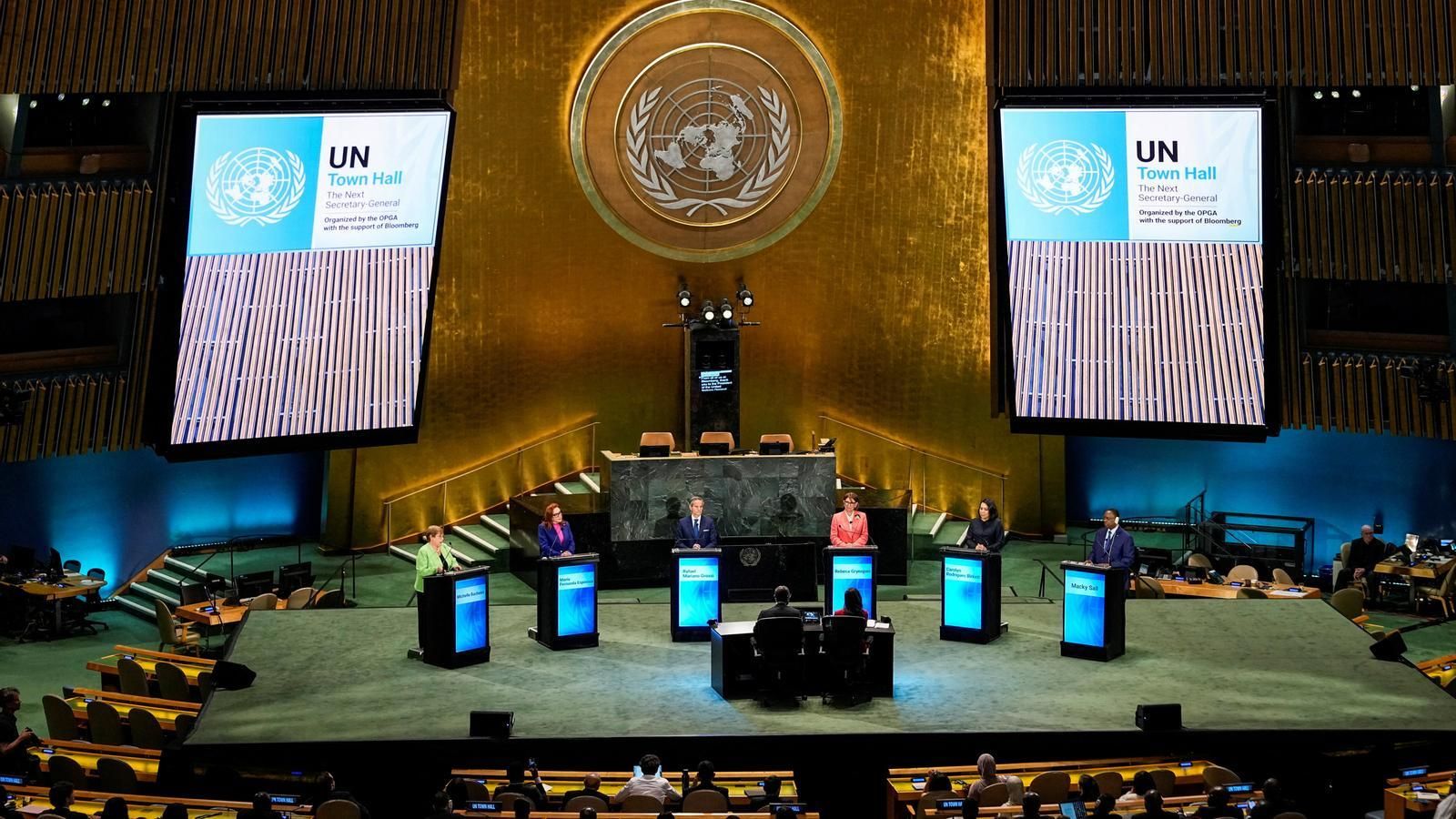
 The six contenders to succeed António Guterres at the head of the United Nations set out their proposals on Thursday in a debate held in the General Assembly Hall, a week before the formal start of the selection process. For nearly two hours they answered questions from diplomats, UN staff, and civil society representatives, in a publicly broadcast session.
The candidates are former Chilean president Michelle Bachelet, former Ecuadorian foreign minister María Fernanda Espinosa, Argentina's Rafael Grossi, currently director general of the International Atomic Energy Agency, Costa Rica's Rebeca Grynspan, secretary-general of the UN Conference on Trade and Development, former Guyanese foreign minister Carolyn Rodrigues-Birkett, and former Senegalese president Macky Sall. Five of the six come from Latin America and the Caribbean, in line with the regional rotation expectation that favors the region this cycle; Sall is the only African candidate. Guterres leaves office on December 31.
The common thread across the interventions was the need to restore the credibility of an organization facing financial strains and largely absent from negotiations over the world's major conflicts. “I would like no one to ask me again where the UN is. That will be my indicator,” Grynspan said when asked what achievements she would hope to show after five years. On Security Council paralysis, she argued that “the blockade of the Security Council is when the job of the secretary-general starts,” citing her role in the deal that allowed grain exports through the Black Sea as a precedent applicable to the Strait of Hormuz crisis.
Bachelet stressed the importance of the post's moral authority and said neutrality and independence are essential for all 193 member states to feel represented. Asked how he would act if a permanent Council member waged a war of aggression, Grossi replied that the secretary-general must “dialogue and listen” and approach conflicts realistically, examining their root causes and the situation of the party under attack. Espinosa said the organization is in crisis and must recover its capacity to prevent conflicts, while Sall focused on reforming the international financial architecture and Rodrigues-Birkett defended the scope for action despite the post's lack of executive power.
The format, with no direct exchange between participants, limited the contrast of ideas. According to analyst Richard Gowan, Grossi is the most frequently mentioned front-runner, though he has not locked up the race, and both Grynspan and Rodrigues-Birkett have significant backing. Several capitals have yet to define their positions. The decisive phase begins on July 30, when the fifteen members of the Security Council, five of them with veto power, start their closed-door voting.


Top Comments
Disclaimer & comment rules-

-

-

Read all commentsI thought President Trump had already nominated/appointed FIFA President Infantino to undertake the role? Not joking....
Jul 24th, 2026 - 11:26 am 0Hopefully Dirty Donald will this time keep his nose out of matters that are of no concern to him.
Jul 24th, 2026 - 03:50 pm 0‘Hopefully’?
Jul 25th, 2026 - 10:19 pm 0Commenting for this story is now closed.
If you have a Facebook account, become a fan and comment on our Facebook Page!