MercoPress. South Atlantic News Agency
De la Espriella to close Colombian embassies in 14 countries and cut ties with Cuba and Nicaragua
 The announcement draws a distinction between two situations. With Havana and Managua, the president-elect said there would be “no link whatsoever”
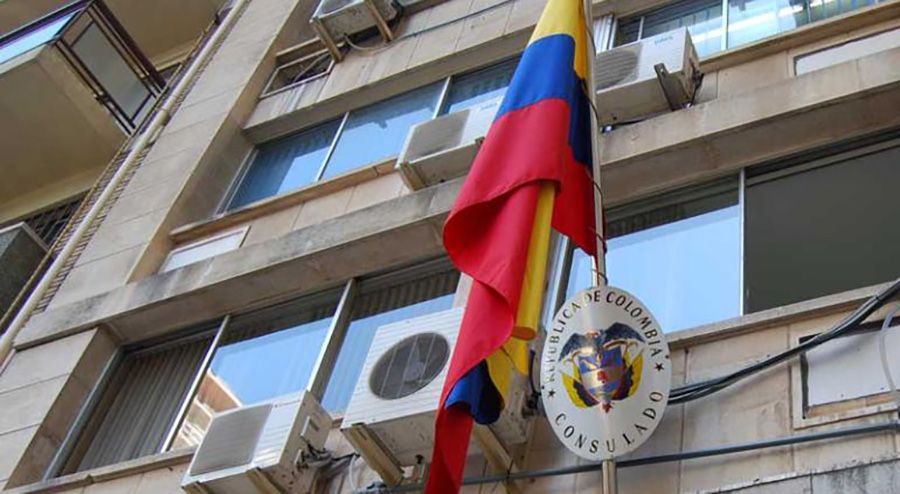
 Colombia's president-elect, Abelardo de la Espriella, announced that his government will close the country's embassies in fourteen nations and will not maintain relations with Cuba and Nicaragua, which he described as “tyrannies.” The measure, released on Sunday night in a video on his social media accounts, will take effect from his inauguration on August 7.
The announcement draws a distinction between two situations. With Havana and Managua, the president-elect said there would be “no link whatsoever.” For the remaining twelve cases he cited budgetary reasons and made clear that the decisions “do not mean breaking diplomatic relations”: those countries will instead be covered through concurrent representation from other embassies in the region. “We cannot maintain such a costly structure, which produces no concrete results for the country,” he said.
The move reverses much of the diplomatic expansion pursued by the outgoing government of Gustavo Petro, which had opened missions in Africa, the Middle East, and Eastern Europe to diversify foreign policy. Colombia will close the missions inaugurated under that administration in Senegal, Ethiopia, Haiti, Barbados, the Czech Republic, and Romania, along with pre-existing ones in Algeria, Azerbaijan, Cuba, Ghana, Hungary, Malaysia, Nicaragua, and South Africa. On the African continent only the delegations in Kenya, Egypt, and Morocco will remain.
The shift regarding Cuba and Nicaragua carries significant history. The island acted as a guarantor of the negotiations between Juan Manuel Santos's government and the FARC that culminated in the 2016 peace agreement. With Nicaragua, Colombia maintains a decades-long dispute over the San Andrés and Providencia archipelago and fishing rights in surrounding waters, largely settled before the International Court of Justice.
The plan also includes merging the dual representations in Paris and Rome, where a single ambassador will take on duties before both the host country and the international bodies based there, the closure of fifteen consulates, and the cancellation of the planned mission in Ramallah, announced by Petro in 2023 but never established. Conversely, the incoming government will reopen the embassy in Israel, with which the outgoing administration severed relations.
The decision drew opposing reactions. Former trade minister Luis Carlos Reyes, a columnist for the Spanish newspaper EL PAÍS, argued the savings will be marginal, since total spending on foreign affairs accounts for 0.35% of the national budget. Governing-party senator Johana Osorio warned about the impact on ties with the global south. Former foreign minister Julio Londoño, by contrast, defended the measure, saying that “the proliferation of embassies and consulates has lent itself to paying political favors,” while acknowledging it is not decisive in budgetary terms.
The announcement adds to other foreign policy decisions by the incoming administration, which confirmed its intention to join the regional security alliance promoted by the United States.


Top Comments
Disclaimer & comment rulesCommenting for this story is now closed.
If you have a Facebook account, become a fan and comment on our Facebook Page!