MercoPress. South Atlantic News Agency



Rhine barges run at 20% of capacity as freight rates surge
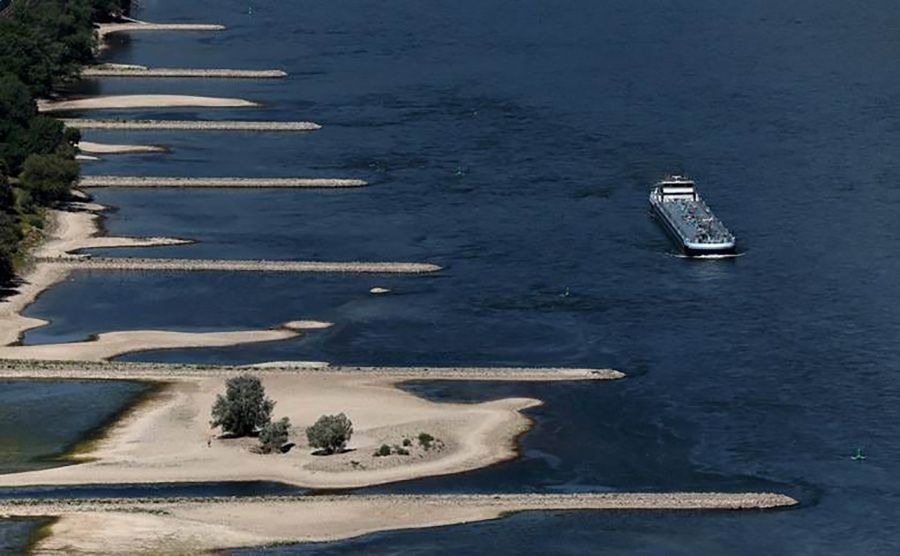 At levels of 40 to 50 centimeters, vessels can carry around 20% of their normal volume
 Falling water levels on the Rhine are forcing barges to operate with a fraction of their usual load and have sharply raised the cost of river transport, as drought and extreme temperatures affect Europe's main inland waterways.
At levels of 40 to 50 centimeters, vessels can carry around 20% of their normal volume, according to Germany's federal waterways administration; industry estimates put current operations at between 20% and 30%. Freight rates from Rotterdam have more than tripled in two months, according to figures reported by the Dutch press, which puts them at around 45 euros per ton in June and close to 150 in July.
The gauge at Kaub, near Koblenz, is the benchmark indicator because it determines how heavily vessels can be loaded. On Friday it fell to 25 centimeters, matching the 2018 low, before recovering slightly on Monday. A drop to 24 centimeters, forecast for this week, would mark the lowest level since records began in 1880, according to German federal data compiled by ETH Zurich.
Records have been broken elsewhere. At Cologne and at Lobith, where the river enters the Netherlands, levels were the lowest in the historical series: at Lobith, 6.47 meters above the Dutch reference datum, below the August 2022 low. Inflow is running at around 692 cubic meters per second, against roughly 1,900 typical for this time of year. Germany's low-water information system recorded extremely low levels at the end of July at 44% of Rhine measuring stations and 78% of those on the Danube.
An official from the Rhine waterways and shipping authority told broadcaster WDR that a full halt to traffic is unlikely, but that cargo will have to be spread across more vessels, which over time raises costs and creates bottlenecks.
The effects extend to electricity supply. Hungary shut down its only nuclear plant entirely on Sunday, for the first time in 44 years of operation, removing around 40% of its generating capacity and forcing higher imports. Serbia cut output at its coal-fired plants because of cooling problems, and Romania carried out a controlled blast on the Danube to redirect water toward the Cernavodă plant. Two Romanian car plants agreed to halt production for more than a fortnight to reduce electricity consumption.
In Italy, the Po reached a historic low near Cremona in late July and the drought alert was raised to high across the entire valley. Reduced discharge has allowed saltwater to push in from the sea, damaging irrigated crops.
David Hannah, professor of hydrology at the University of Birmingham, said warming raises baseline temperatures and reduces river flows, and pointed to diminished snow and glacier runoff from the Alps. Dominik Schumacher, of ETH Zurich, said human-induced warming has already made this drought more severe.


Top Comments
Disclaimer & comment rulesCommenting for this story is now closed.
If you have a Facebook account, become a fan and comment on our Facebook Page!